Most options traders set a stop-loss on each leg and assume they are protected. They are not. A multi-leg options position behaves like one organism, not a collection of independent trades. When you stop one leg in isolation, you can quietly turn a defined-risk structure into a naked position — and find out the hard way.
This is where the difference between a position-level and a basket-level stop-loss matters. If you run any kind of strategy on Nifty or BANKNIFTY with more than one leg, you need to understand both, and usually run them together.
What a basket stop-loss actually means
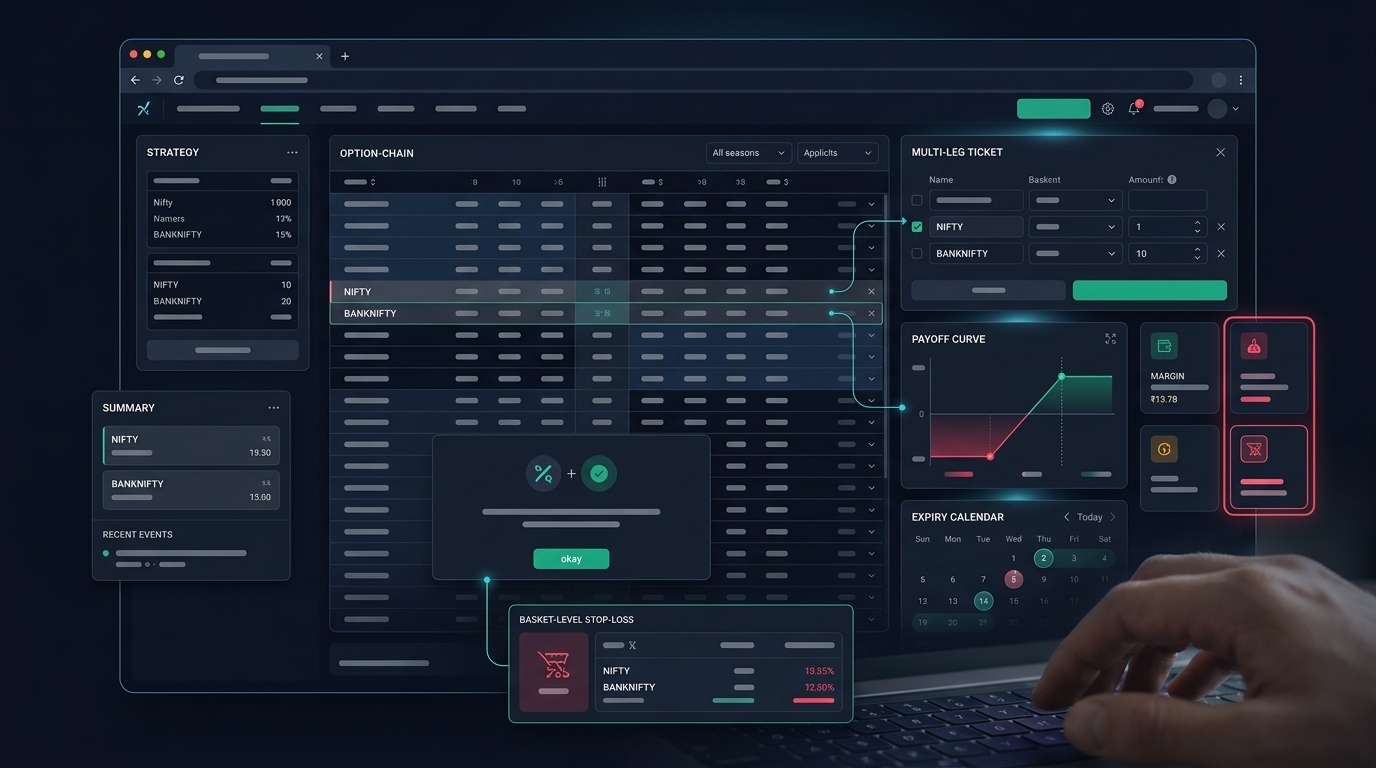
A basket is the full set of legs that make up one strategy: a short straddle, an iron condor, a calendar spread, a hedged directional play. A basket stop-loss is a single exit rule applied to the combined mark-to-market (MTM) of every leg at once.
Instead of asking "is this call leg down 30%?", a basket stop asks "is this entire strategy down ₹X or Y% of the margin blocked?" When the answer is yes, the whole basket exits together.
That last part — together — is the point. The legs were entered as a unit to create a specific risk profile. They should leave as a unit too.
Position-level vs basket-level exits
Both layers have a job. The mistake is treating one as a substitute for the other.
Position-level (per-leg) exits
A position-level stop watches one leg. Common forms:
- A percentage stop on premium (exit the short call if its premium doubles).
- A point-based stop (exit if the leg moves 40 points against you).
- A delta or underlying-based trigger (exit the leg if the spot crosses a level).
Per-leg stops are useful for managing a runaway short leg — the side that is going against you in a trending move. They cut tail risk on the leg that is bleeding.
The problem: per-leg stops are blind to the rest of the basket. Stop one leg of a short strangle and you are now holding a naked option on the other side. Your risk profile has changed completely, often into something far more dangerous than what you backtested.
Basket-level (whole-strategy) exits
A basket stop watches the combined P&L. It does not care which leg is winning or losing — only the net.
This protects the structure. A condor that is supposed to risk a defined amount stays inside that defined amount. A short straddle that you intended to manage on combined premium exits when the combined premium crosses your threshold, regardless of whether the call or put side caused the damage.
Basket stops are the cleaner expression of how much you are actually willing to lose on the idea as a whole. That is the number that matters for your capital, not the move on any single strike.
Why per-leg stops betray a multi-leg trade
Take a simple example. You sell a BANKNIFTY strangle:
- Sell 1 CE, premium ₹120
- Sell 1 PE, premium ₹110
- Combined premium collected: ₹230 per lot
You put a per-leg stop at 2x premium on each side. The market trends up hard. The call premium runs from ₹120 to ₹240 and hits its stop. You exit the call.
Now you are holding a naked short put in a fast market. If the index reverses just as sharply — which it often does after a spike — the put you are still short can move against you while you have no offsetting position and no plan. Your "protected" strangle is now a one-legged gamble.
A basket stop avoids this. If the combined MTM loss hits your limit — say a ₹4,000 loss on the basket — both legs exit at once. You never end up accidentally naked. The exit honours the structure you designed.
This is also why per-leg backtests can look misleadingly clean. If you want to see how a basket actually behaves under stress, options backtesting on combined MTM, not leg-by-leg, is the only honest way to measure it.
How to set a basket stop-loss
There is no single correct number, but there are sane ways to anchor it. Pick one frame and stay consistent.
As a percentage of premium collected. For credit strategies, many traders cap basket loss at a multiple of the net credit — for example, exit when the combined loss reaches the premium received (a 1x stop) or 1.5x. If you collected ₹230, a 1.5x basket stop exits near a ₹345 loss per lot.
As a fixed rupee amount per basket. Decide the maximum you will lose on this one idea — say ₹3,000 — and exit the whole basket there. Simple, capital-aware, and easy to automate.
As a percentage of margin blocked. If a BANKNIFTY strangle blocks roughly ₹1.5 lakh margin, a basket stop at, say, 3% of margin caps the loss at ₹4,500. This scales the stop to the capital actually at risk.
A few practical checks before you commit a number:
- Backtest the stop, don't guess it. A stop set too tight gets hit by normal intraday noise; too loose and it never protects you. Test a range and look at how often each level triggers on quiet vs trending days.
- Account for slippage on exit. In a fast BANKNIFTY move, both legs exit into a thin book. Your realised stop is usually worse than your trigger level — build a buffer in.
- Decide the exit method: market exit for certainty, or limit exit with a fallback. On stop events, certainty usually beats price.
Run both layers, not one
The disciplined setup is rarely either/or. A common structure:
- A basket MTM stop as the hard ceiling on the whole idea — the number that protects your capital.
- A per-leg stop only where it genuinely reduces tail risk, with an explicit rule for what happens to the remaining legs (re-hedge, or exit the basket).
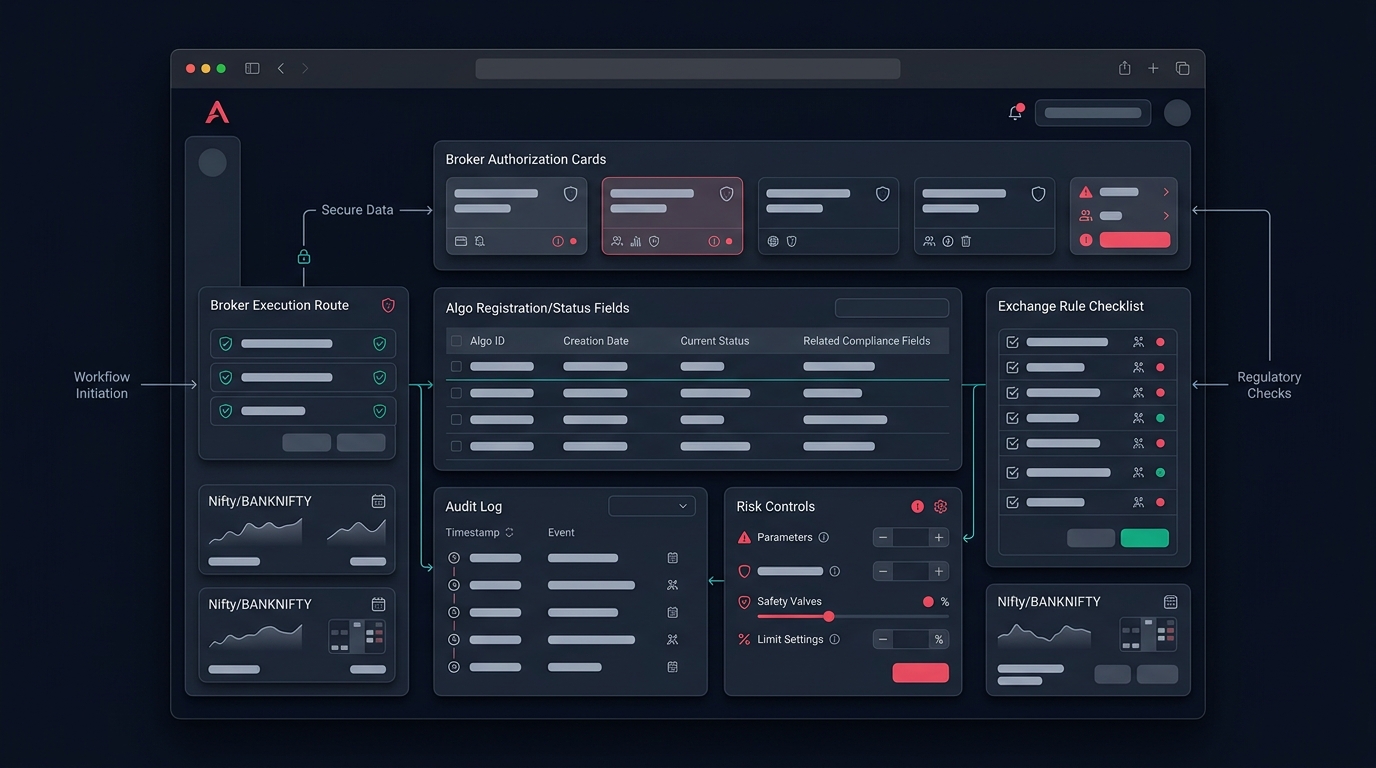
- A daily loss limit sitting above both, so a string of stopped baskets cannot compound into a bad day.
That layered view — leg, basket, day — is the core of real options risk management. Each layer catches a failure the layer below it misses.
Where automation earns its place
Basket stops are hard to honour manually. When two legs are moving fast, you are computing combined MTM in your head while prices run. That is exactly when discipline breaks.
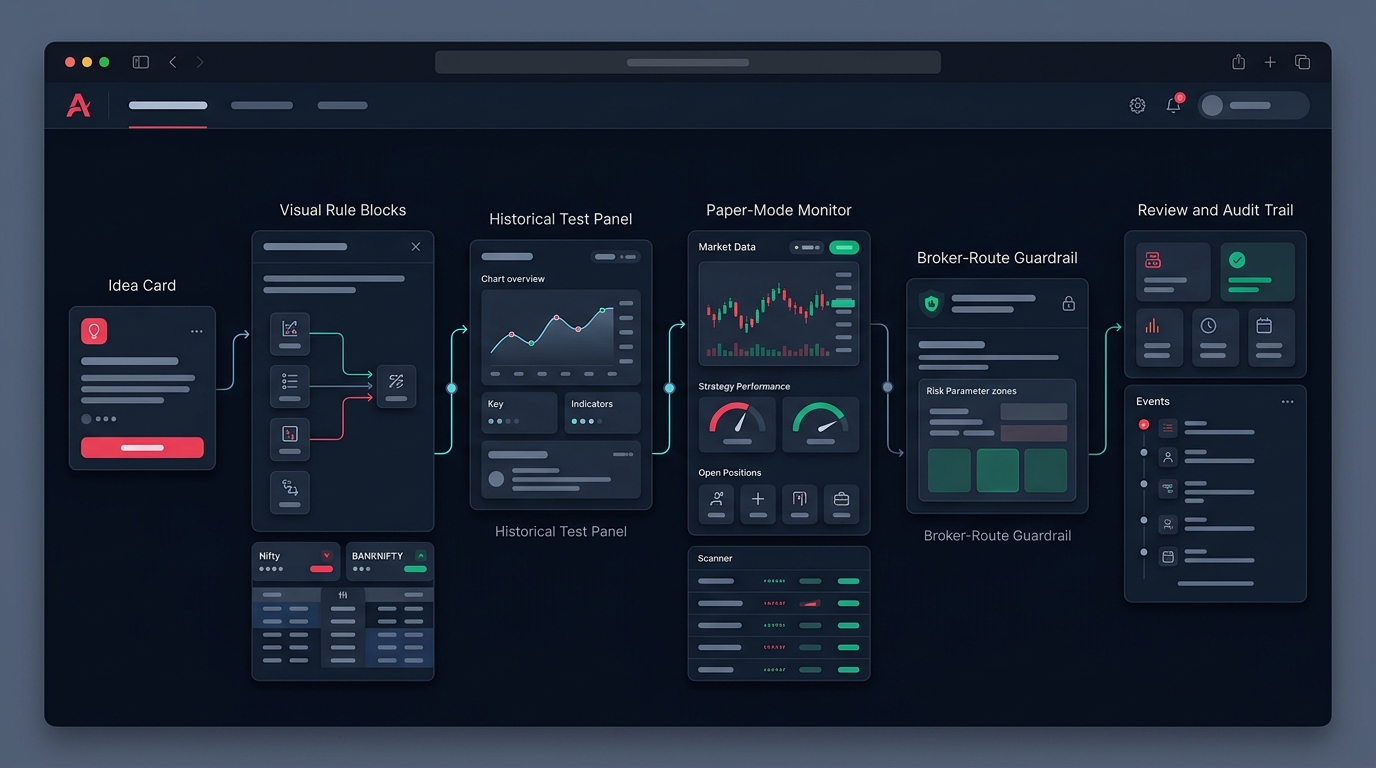
This is the case for putting the rule into the system instead of your reflexes. A platform that previews the full basket, estimates margin before you fire, and watches combined MTM in real time removes the mental math. Inside Anadi's options workspace you build the legs as one basket, see the margin with positions considered, and attach the risk budget before execution — not after the trade is already bleeding. The same applies if you scale into AutoTrade, where a max-loss mandate and a kill-switch enforce the basket and daily limits without you watching the screen.
Automation doesn't make the stop smarter. It just makes sure the stop you decided on actually fires.
Quick checklist
Before you run any multi-leg options strategy live:
- Define the basket MTM stop first — the most you will lose on the whole idea, in rupees.
- Add per-leg stops only with a clear rule for the remaining legs; never leave yourself accidentally naked.
- Backtest the stop level on combined MTM across quiet and trending days, not just on premium of one side.
- Add slippage buffer — your realised stop will be worse than your trigger.
- Sit a daily loss limit above everything, and a kill-switch above that.
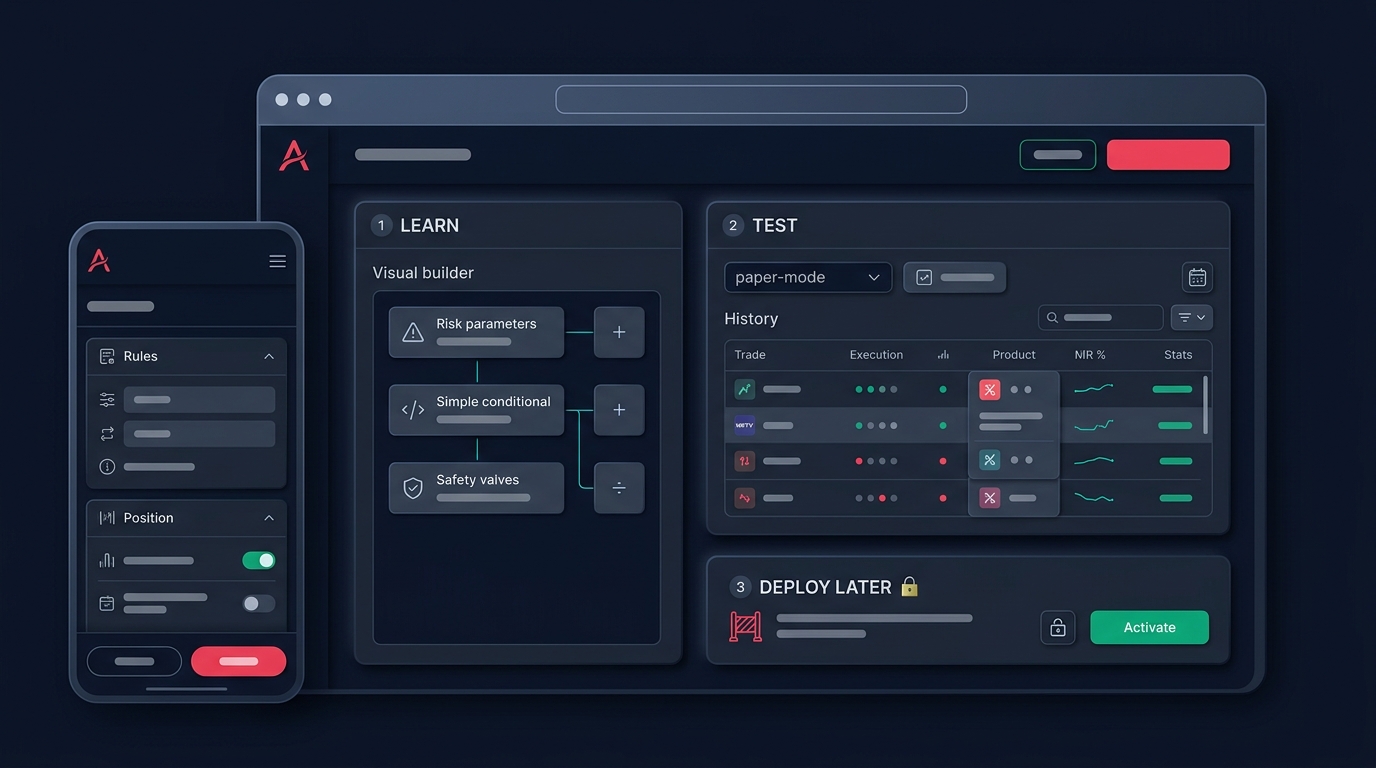
- Start in paper mode and confirm the basket actually exits as one before risking capital.
If you want to test basket-level exits on Nifty and BANKNIFTY structures with margin and risk visible up front, you can request early access and try the workflow in paper mode first.
The single biggest upgrade most options traders can make is small: stop protecting legs, and start protecting the basket.