Budget day is the one session every year where a normal-looking trading system can blow up in twenty minutes. Spreads widen, gaps explode, and the same setup that worked for eleven months suddenly hits five stops in a row.
The problem is not that Budget day is "bullish" or "bearish." The problem is that it does not behave like the data your system was built on. If your strategy was tested on regular trading sessions and you let it run untouched on Budget day, you are running it on data it has never seen.
This post is about what to avoid — concretely — when an event session like the Union Budget hits. Same logic applies to RBI policy days, US Fed days, and major election outcomes.
Why Budget day breaks normal systems
A regular Nifty session has a predictable rhythm. Open, range build, trend or chop, close. Most retail systems — breakout, mean-reversion, option selling — are tuned to that rhythm.
Budget day breaks the rhythm in a few specific ways:
- Information shock in minutes. Fiscal deficit, borrowing, capex, tax tweaks, sectoral allocations — all dropped in one speech. Markets reprice in seconds, not minutes.
- Two-way whipsaws. A single line in the speech can flip the index 200 points up, then 300 points down inside ten minutes. Reversal candles look like breakout candles in real time.
- Spreads blow out. Bid-ask on options can go from ₹0.50 wide to ₹5–₹10 wide. Your backtest assumed mid-price fills. Live, you slip badly.
- Implied volatility crush after. Even if direction is right, an option buyer can lose money as IV collapses post-speech. Sellers face the opposite: IV expansion before, then crush.
- Headline risk through the day. Unlike earnings (one number, one moment), Budget unfolds over 90+ minutes with multiple announcements.
If your system does not explicitly model any of this, you are guessing.
What to avoid on Budget day
1. Running your normal intraday system unchanged
The single biggest mistake. A breakout system tuned on six months of data has zero exposure to event-day behavior in its sample. Letting it trade Budget day is not "live testing" — it is donating capital to noise.
Before the session, decide explicitly: does this system trade Budget day, yes or no? If yes, on what reduced size? If no, the system should be flat by 10:45 AM and not re-enter until the next session.
2. Trusting your backtest's slippage assumptions
Most retail backtests use either close prices or a fixed slippage figure — say ₹0.50 per leg. On Budget day, realistic slippage on an OTM Bank Nifty option can be ₹3–₹8 per leg. Your equity curve looks fine in the backtest because the backtest never modeled it.
If you are serious about event-day P&L, run a separate backtest with stress-tested slippage (3–5x normal) and see if the strategy still has edge. Often it does not. That is useful information before you risk real money. Our options backtesting workflow lets you tag event days separately and test them with stricter assumptions.
3. Selling naked options on speech morning
Naked option selling is the strategy that most often gets retail traders into a margin call on Budget day. The math looks fine — collect premium, decay works for you, IV crush helps after the speech. The reality is that a single 1.5% gap against a naked short can multiply margin requirements before the position can be adjusted.
If you sell options as part of your system, an event-day rule of thumb worth considering:
- No naked legs. Defined-risk only (spreads, iron condors, butterflies).
- Reduced lot size — half or less of normal.
- Position sized so a 2x stop on the spread is still survivable.
4. Putting on positions inside the speech window
The 11:00 AM to 12:30 PM window during the speech is where the worst fills happen. Spreads are widest, prints are erratic, and stops trigger on bad ticks. Even directional traders who want Budget exposure usually do better entering before the speech (with a hedge) or after the dust settles (post 1:30 PM) than chasing inside the window.
If your system fires a signal during that window, the right answer is often to skip it, not take it.
5. Ignoring the volatility regime
Budget day's intraday range is heavily influenced by what India VIX is doing in the days leading up. A VIX around 12 versus VIX around 20 produces very different Budget sessions. A breakout system that works in low-vol regimes can get shredded in high-vol regimes — and vice versa for mean-reversion. This is the same reason VIX regime filters matter for option selling — event days are an extreme version of the regime problem.
6. Manually overriding the system mid-session
This one is psychological. Traders who pre-decide to skip Budget day often watch the first move, feel FOMO, and override their own rule. The override usually loses money. If the rule is "skip event days," respect it. If you want to trade Budget day, decide that in advance, with sized rules — not in the moment.
A simple event-day checklist
Before any major event session, run through:
- Is this system explicitly tested on event-day data? If not, reduce size or skip.
- What is my max loss for the day, and at what number do I stop trading?
- Are my stops realistic given 3–5x normal slippage?
- Are any naked option legs converted to defined-risk?
- Is my position size reduced (e.g., 50% of normal lots)?
- Do I have a "no new entries after X time" rule?
- Will I be at the screen during the speech, or am I leaving an algo unattended?
The point is not to never trade Budget day. Some traders genuinely have edge on event sessions. The point is that the rules need to be different, written down, and tested separately — not improvised on the morning of.
Build event-day rules into the system itself
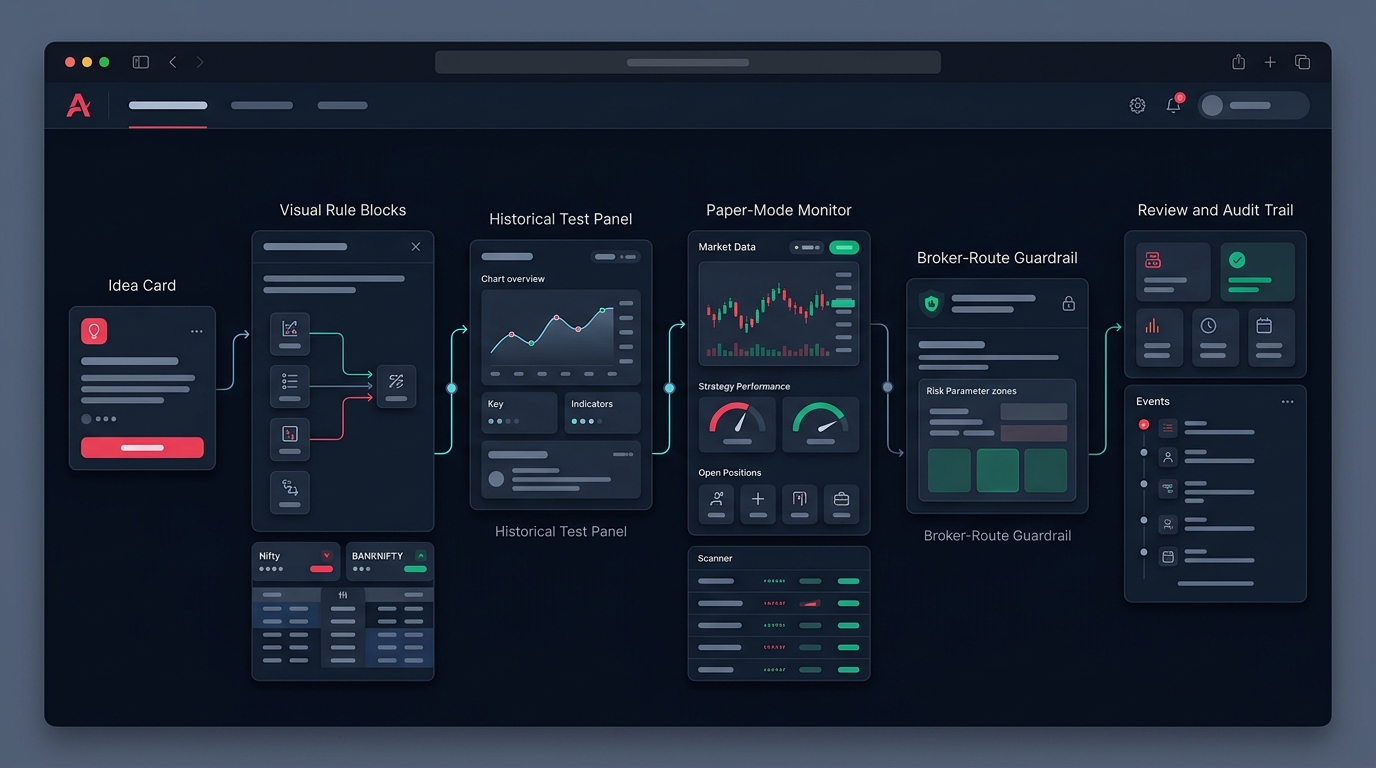
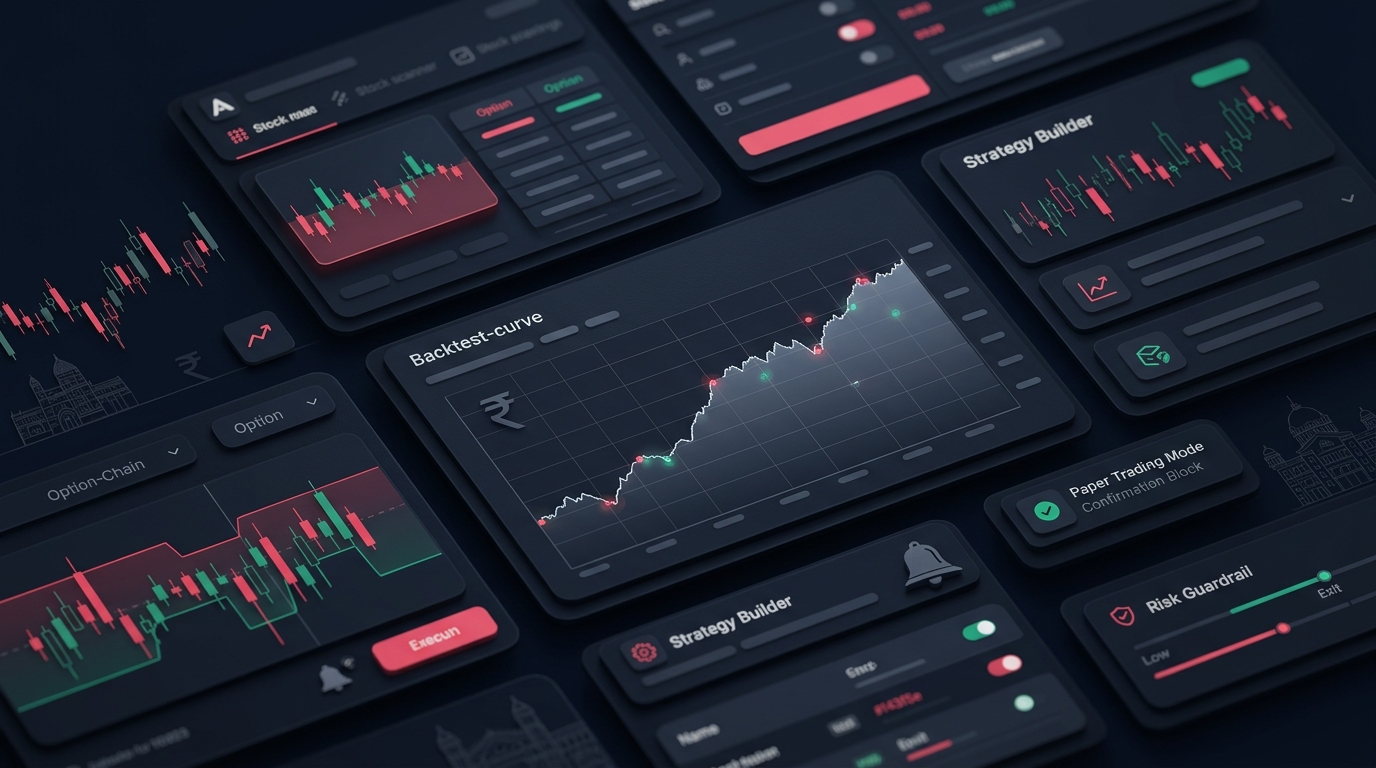
The cleanest fix is structural: don't rely on yourself to remember to disable the system. Build the rule in. Most platforms — including Anadi Algo's no-code strategy builder — let you add date-based or session-based filters so a strategy auto-skips specific dates, or only runs after a certain time of day. You can pair this with risk management caps that hard-stop trading after a daily loss threshold.
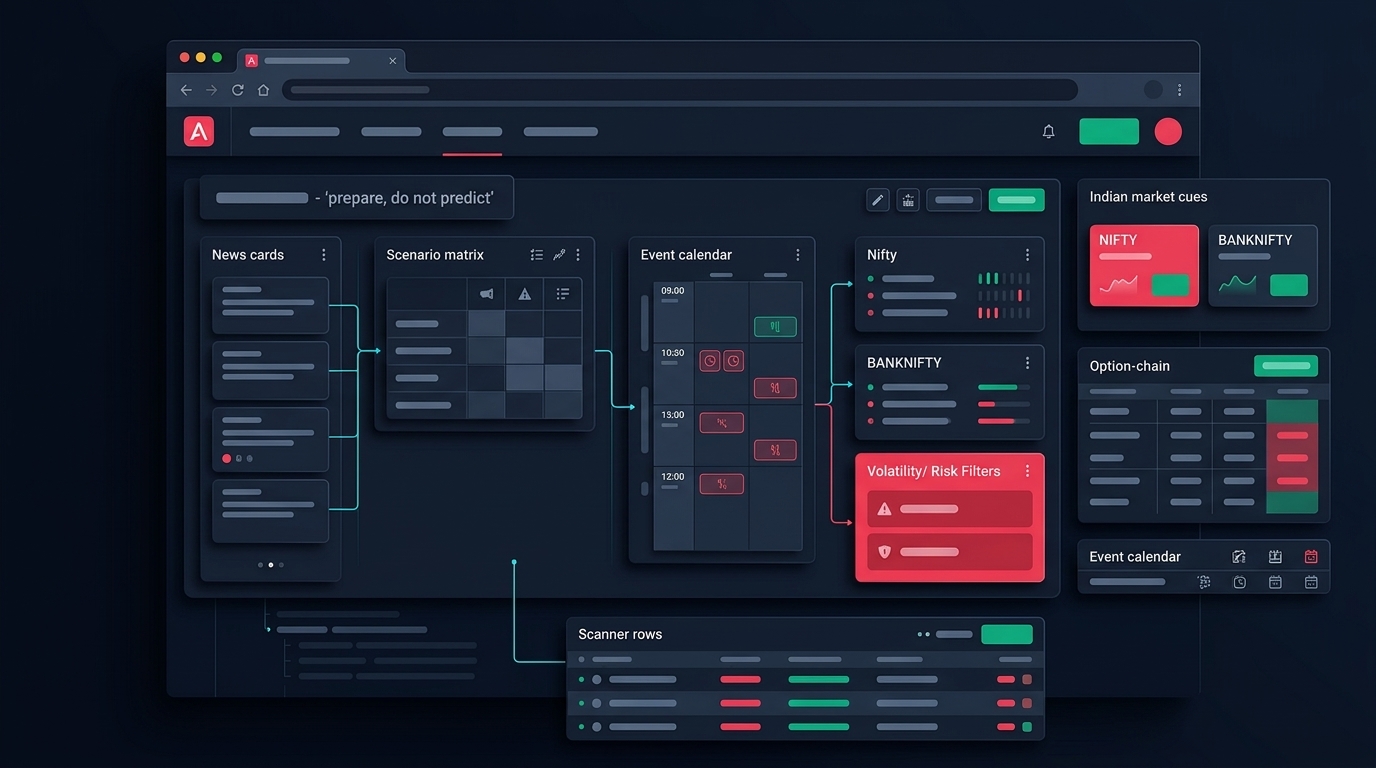
Use a weekly market outlook the night before to set context, but treat the outlook as preparation, not as a trade signal. If you want to test event-day rules without risking capital first, run them in paper trading for the next event window before going live — early access is open.
Takeaway
Budget day is not a "bigger" version of a normal trading day. It is a different distribution. Treat it that way:
- Default to sitting out unless you have explicitly tested event-day behavior.
- If you trade, use defined-risk structures, reduced size, and pre-committed loss limits.
- Avoid the speech window itself for new entries.
- Encode the rule in the strategy, not in your willpower.
The traders who survive event days year after year are not the ones with the best Budget day prediction. They are the ones whose systems behave the same on Budget day as they do on any other Tuesday — because they planned for it in advance.