What Gamma Actually Means on Expiry Day
Most retail traders learn delta first and stop there. Delta tells you how much an option price changes when the index moves one point. Gamma is the next layer: it tells you how fast that delta itself changes.
On a normal Monday, gamma is small and well-behaved. On Nifty or Banknifty expiry day, especially in the last few hours, gamma explodes for at-the-money strikes. A strike that had a delta of 0.30 at 11 AM can have a delta of 0.70 by 2:30 PM after a 50-point move — without you doing anything.
This is the core reason expiry-day option selling looks easy in screenshots and ruins accounts in real life.
Why Expiry Day Is Structurally Different
A weekly option has almost no time value left after 1 PM on expiry. What remains is mostly intrinsic value plus a thin gamma premium. Three things change at the same time:
- Theta decay accelerates sharply (good for sellers, in isolation).
- Gamma rises non-linearly for ATM strikes (bad for sellers).
- Liquidity in far OTM strikes thins out, widening bid-ask spreads.
Industry data and broker research consistently note that Nifty expiry sessions see roughly 15-25% higher intraday ranges than non-expiry days. The move itself is not the problem. The problem is that your position's risk profile is silently changing under you while you stare at the P&L.
A Simple Example That Explains the Tail Risk
Imagine you sold a 22500 CE on Nifty expiry morning when the index was at 22300, collecting ₹15 premium. Spot drifts to 22480 by 2 PM.
- At 10 AM, that strike's delta might have been 0.15.
- At 2 PM, with spot 20 points away and gamma elevated, delta could be 0.55 or higher.
- If Nifty then moves another 30 points up in 10 minutes, your loss isn't 30 × 0.15. It's closer to 30 × 0.55, plus the gamma kicker, plus an IV bump if the move is sharp.
A position that "looked safe" because spot was 200 points away in the morning can lose multiples of the collected premium in the final 90 minutes. This is the expiry-day tail every retail seller eventually meets.
The Gamma-Theta Trade-Off Nobody Tells You
The marketing pitch for expiry-day selling is theta: "premium decays to zero, just sit and collect." That part is true. What's missing is that gamma is the price you pay for that theta.
On expiry day, theta and gamma both peak around the ATM region. So when you sell ATM or near-ATM strikes for the juicy decay, you are also taking maximum gamma exposure. You are not picking up free money — you are getting paid to absorb a specific risk, and on volatile expiries the risk premium loses.
A useful mental model: theta is the rent the buyer pays you. Gamma is the fine you pay if the underlying moves a lot. On most expiries the rent exceeds the fine. On the bad expiries — Budget day, RBI surprise, global gap, index rebalance — the fine wipes out months of rent.
Practical Checks Before You Sell on Expiry
These are not trade signals. They are filters that help you decide whether to participate at all.
1. Distance from spot vs expected move
A rough expected move for the day = ATM straddle price. If Nifty ATM straddle is ₹120, the market is pricing roughly a ₹120 move. Selling strikes inside that range is selling into the market's own implied range — your margin of safety is the IV mispricing, which is small.
2. India VIX regime
A VIX under 12 historically favors option sellers; a VIX above 18 has historically punished naive expiry-day strangles. Check our note on VIX regime filters for option selling for how to formalise this.
3. Event overlap
Fed meetings, RBI policy, US CPI, Budget, monthly expiry of US markets the previous night — any of these inside a 24-hour window meaningfully changes gamma behaviour. Skipping expiry sells on event days is not cowardice; it is risk management.
4. Spread width in the strikes you plan to sell
If the bid-ask on your intended strike is wider than 5% of the premium, exits will hurt. Thin OTM strikes look great in P&L screenshots and become traps when you try to square off in a fast move.
Position Sizing Specifically for Gamma Risk
Most retail blowups on expiry day are not strategy failures. They are sizing failures. A few rules that hold up across regimes:
- Treat the worst expiry-day move of the last 12 months as your "normal" stress scenario, not your "black swan." Size so that a repeat of that day causes a drawdown you can survive psychologically and financially.
- Do not add to losing expiry positions. Gamma means each new lot is taking on a fundamentally different risk profile than the original.
- Cap total naked short premium across all strikes to a fixed rupee figure, not a margin percentage. Margin requirements rise during volatility — by the time SPAN flags you, the damage is done.
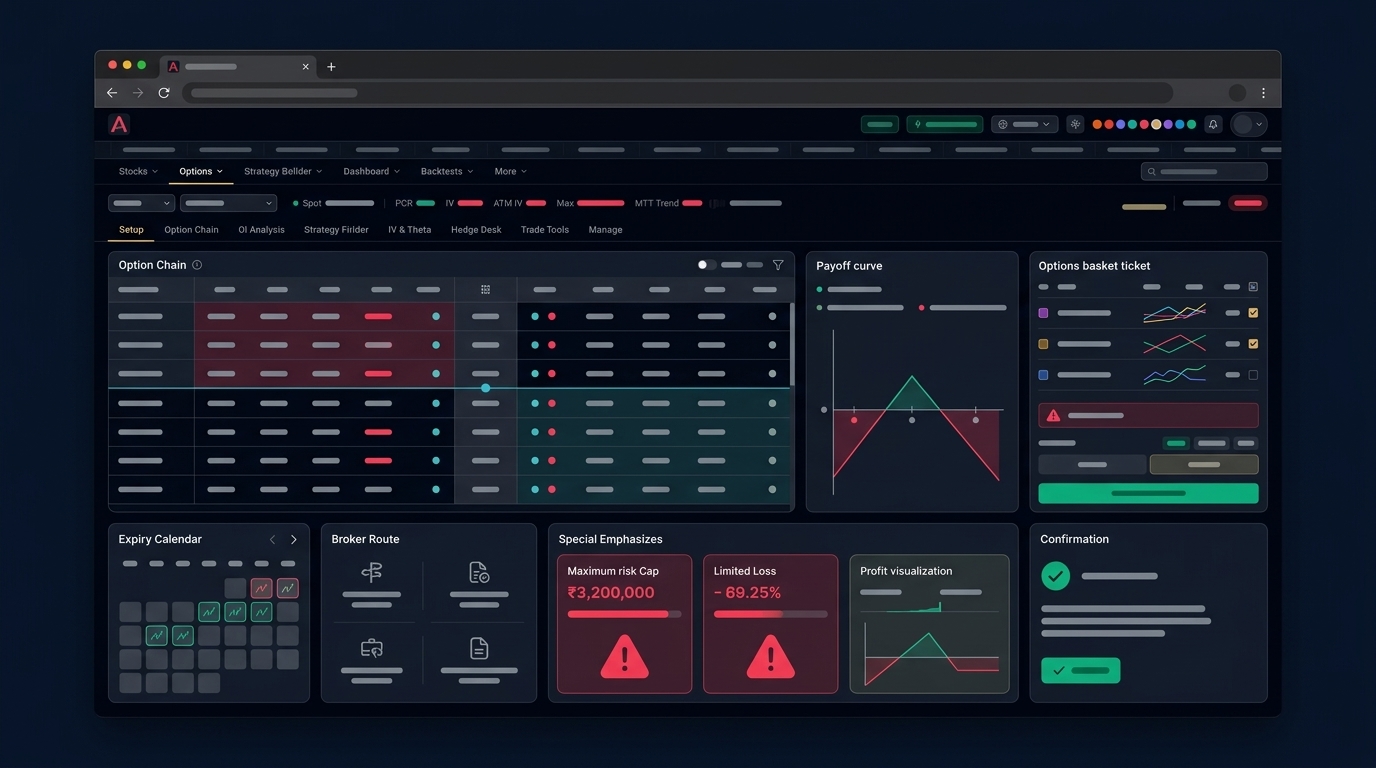
- Convert naked sells to spreads when in doubt. A 200-point credit spread caps your gamma tail, even if it caps your premium too.
Where Automation Helps and Where It Doesn't
Manual expiry-day trading has a specific failure mode: the trader watches a winning position turn into a small loser, refuses to exit, and watches it become a large loser. Hardcoded exits remove this.
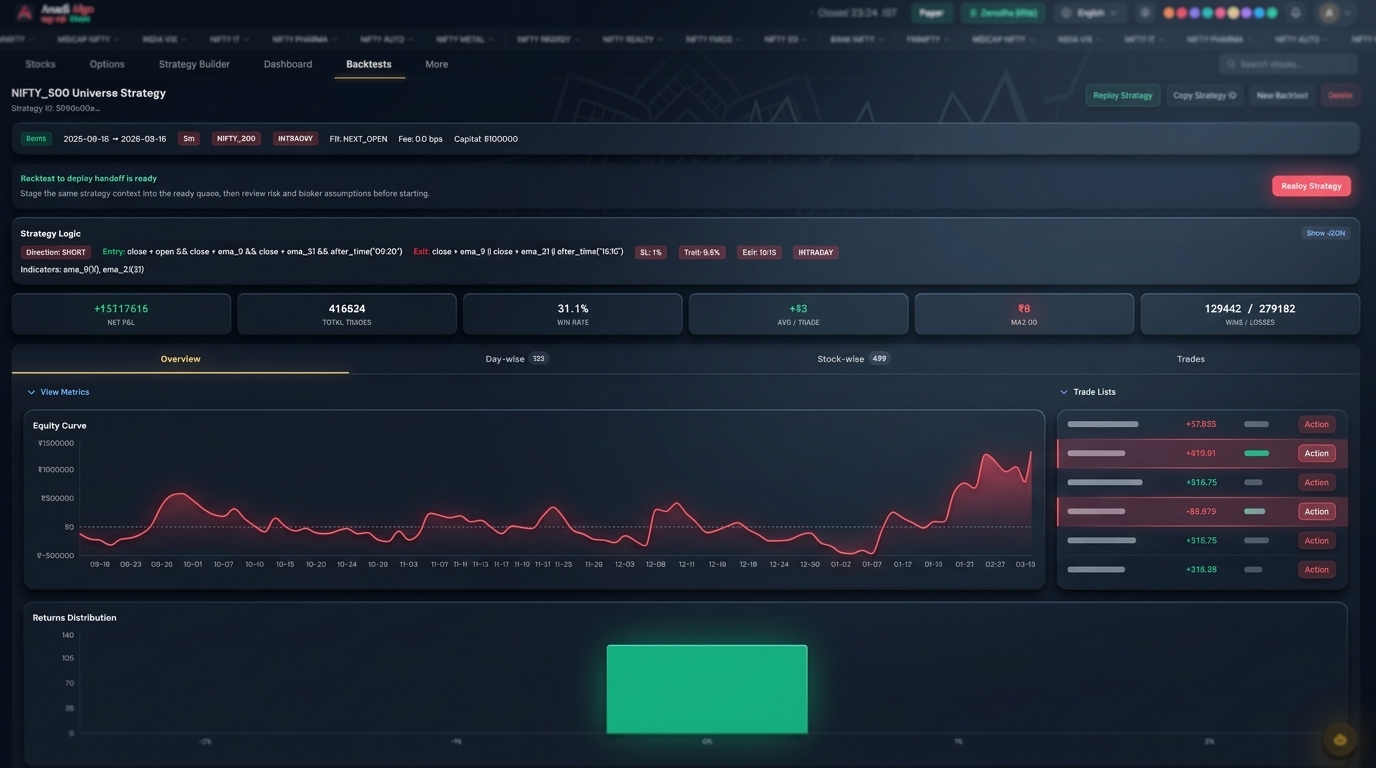
A no-code strategy builder lets you define gamma-aware rules — e.g., exit when spot crosses a defined distance from the short strike, or when the short strike's premium doubles. Backtesting these on actual expiry sessions, with realistic slippage assumptions, exposes the strategies that only work in soft regimes.
That said, automation cannot fix bad position sizing or event-day overconfidence. A kill-switch and daily loss limit is the single most useful expiry-day tool retail traders ignore. If your daily loss hits a pre-set rupee figure, every position closes and the system stops accepting new entries until tomorrow.
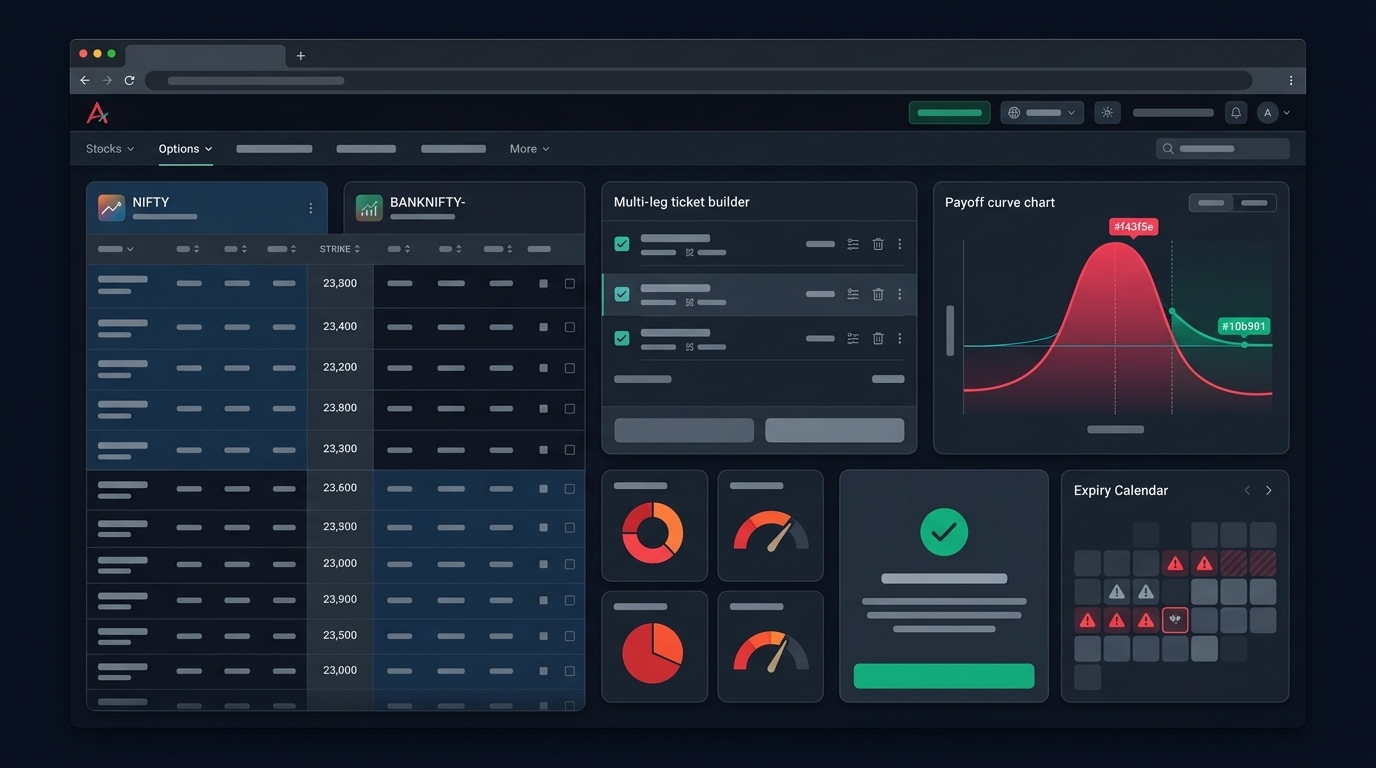
If you want to test gamma-sensitive rules on Banknifty and Nifty expiries before risking real capital, you can prototype on early access and validate behaviour across past expiry days first.
Expiry-Day Checklist
Before you click sell on an expiry-day option:
- Is the India VIX in a regime your strategy was actually backtested in?
- Is there a scheduled event within 24 hours that could create a gap or shock?
- Is your short strike beyond the ATM straddle's implied move?
- Is your total naked premium exposure within your pre-set rupee cap, not just margin cap?
- Have you defined an exit rule based on spot distance or premium doubling — not "feel"?
- Is a kill-switch active on the broker or platform side, not just in your head?
- After 2 PM, is your remaining edge worth the gamma you are absorbing, or are you trading from boredom?
Gamma is not your enemy. Ignoring it is. The traders who survive expiry day are not the ones who predict the move correctly — they are the ones whose positions and sizing assume they won't.