Most option sellers in India learn the same lesson the hard way: a strategy that prints money for six quiet months can give back a year's profit in one bad week. The common diagnosis is "volatility expansion," and the common fix people reach for is an India VIX filter.
That instinct is reasonable. But VIX filters are often misunderstood — treated as a crystal ball when they are really a regime label. This post is about using India VIX as a regime filter for option selling without pretending it predicts anything.
What India VIX actually tells you
India VIX is computed from Nifty option prices and represents the market's expectation of Nifty 50 volatility over the next 30 days, annualised. It is not a forecast in the directional sense. It is a number that summarises how much premium option buyers are currently willing to pay for protection.
Two things follow from that:
- VIX is coincident, not leading. It rises when the market is already anxious or already moving. It rarely warns you in advance.
- VIX is a premium indicator, not a direction indicator. A high VIX tells you options are expensive. It does not tell you which way the market goes.
For option sellers, this matters. Selling premium when VIX is low gives you small credits with relatively gentle moves around them. Selling when VIX is high gives you fat credits but also wider intraday ranges, larger gaps, and more violent mean reversion in either direction. Neither regime is "better." They are different environments that demand different rules.
Defining regimes you can actually use
A useful regime filter has to be simple enough to not curve-fit. A common starting frame for Indian markets:
- Low vol: India VIX under 12
- Base: 12 to 15
- Elevated: 15 to 20
- High: 20 to 25
- Extreme: above 25
These thresholds are not sacred. They drift over years — VIX in the 11–14 range looked cheap in 2020 but normal in 2024. A more robust approach is to use percentile bands over a rolling 1-year or 2-year window. For example: lowest 20% of readings in the past year is your "low" regime, highest 10% is "extreme." This adapts to how the index has actually behaved recently instead of leaning on fixed numbers.
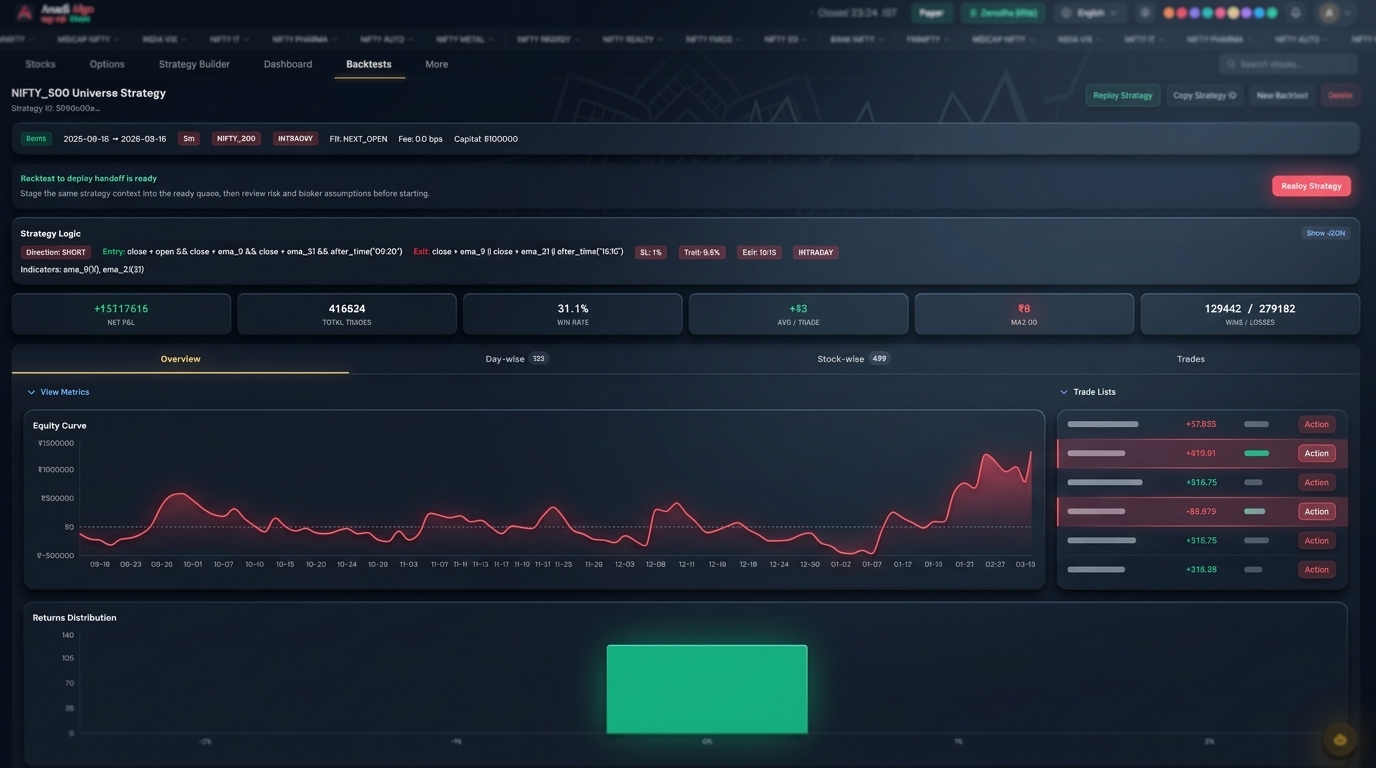
Before you trust any of this in live trading, run it through options backtesting on your actual rule set so you can see how your strategy behaved across each regime, not just in aggregate.
What option sellers typically change across regimes
There is no single right answer here, but here are the levers most experienced sellers move when regime changes:
Position size
The most basic filter. Smaller size in extreme VIX, larger in base/low. Many traders use a simple multiplier — for example, 1.0x base size in the "base" regime, 0.5x in "high," 0.25x or zero in "extreme." The point is not the exact number; the point is that you are not putting on the same size when one-day moves can be 3–4x larger than usual.
Structure
- Naked short straddles/strangles are the most exposed to vol expansion and gap risk. Many systematic sellers cap or skip these in elevated and higher regimes.
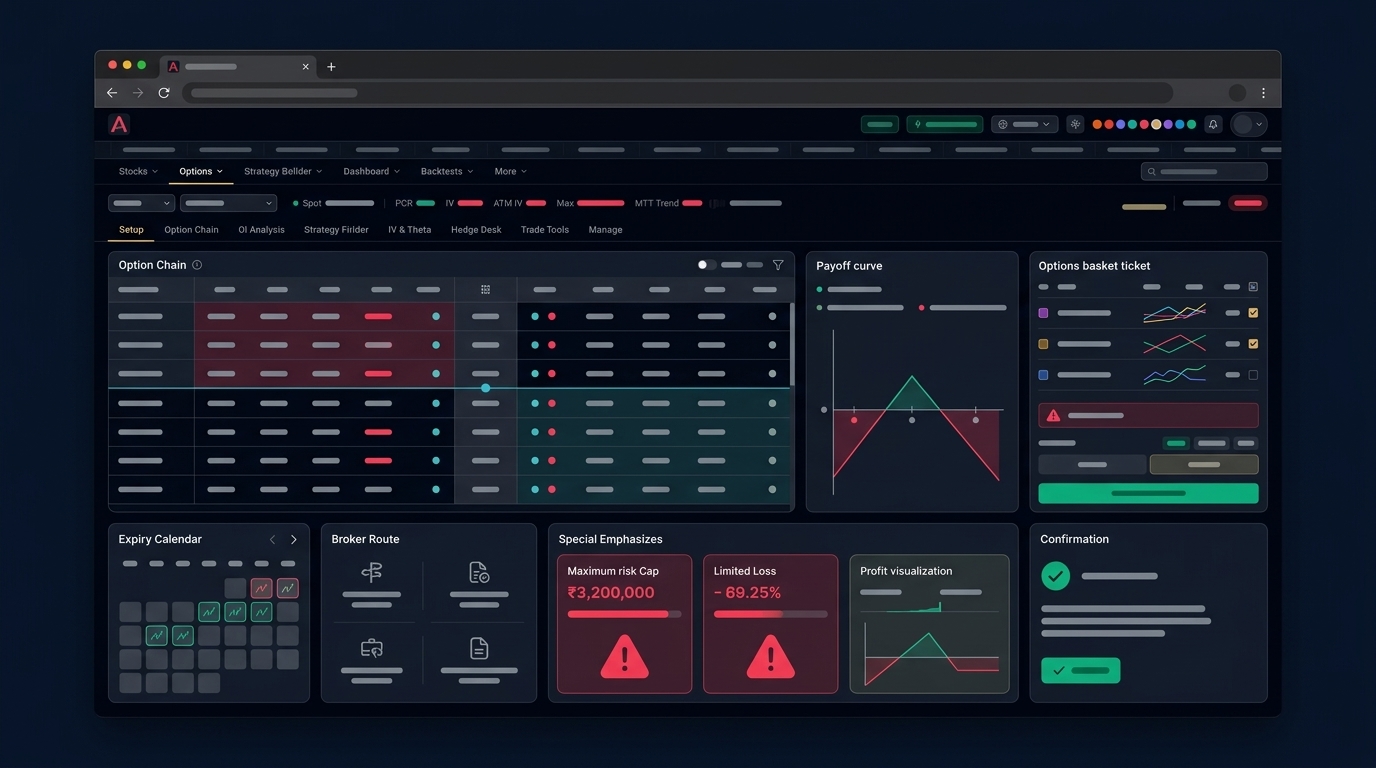
- Defined-risk structures like iron condors, iron flies, or credit spreads keep tail risk bounded, which becomes more important the higher VIX goes.
- Calendars and diagonals behave differently in low vs high IV — calendars tend to do better when IV is low and rising, while short verticals are cleaner when IV is high and stable or falling.
Strike distance
In low VIX, you sometimes have to sell closer to the money to collect meaningful credit, which means tighter delta. In high VIX, the same rupee credit is available much further out — selling 0.10 delta might be worth more than selling 0.20 delta was in a quieter week. A regime filter that does not adjust strike distance is leaving information on the table.
Take-profit and stop rules
Mean reversion of premium is faster when VIX is contracting and slower when it is expanding. Some traders take 50% of max profit by default but tighten that in elevated regimes (e.g., book at 35–40%) because the variance of outcomes is higher. Stops often have to be delta-based or underlying-based rather than premium-based in high VIX, since premium swings can stop you out on noise alone.
The honest limitations
A VIX filter does not magically protect you. A few things to keep in mind:
- Gap risk is independent of VIX. A surprise event — a global selloff, a policy decision, a geopolitical shock — can gap Nifty 2–3% overnight from any VIX level. VIX usually catches up to that move after it happens, not before. No filter substitutes for hedges or capped-risk structures.
- Low VIX is not "safe." Some of the worst drawdowns happen when complacent sellers stack large naked positions in 10–11 VIX, and then the regime shifts in a single session.
- VIX percentile lag. If you use rolling percentiles, the bands shift slowly. In a sharp regime change, your filter labels can be late by days.
- Single-factor risk. VIX alone misses important context: term structure, OI behaviour, FII positioning, event calendar (RBI policy, expiry, US Fed). A regime filter should be one input, not the whole decision.
How to backtest a regime filter properly
Before you wire a VIX filter into a live strategy, the backtest needs to be honest about a few things:
- Use the actual VIX value at the time of entry, not the daily close, if your strategy enters intraday.
- Bucket results by regime, not just overall. A strategy can look profitable in aggregate while being deeply unprofitable in one regime that it will eventually meet again.
- Check sample size per bucket. Extreme VIX days are rare. If your "extreme" bucket has 11 trades over five years, you do not really know how the strategy behaves there.
- Include slippage, brokerage, and STT. These hurt more in the wide spreads of high-VIX days than people expect.
- Walk-forward, don't curve-fit thresholds. If you tune your VIX bands on the same data you evaluate on, your "filter" is just memorisation.
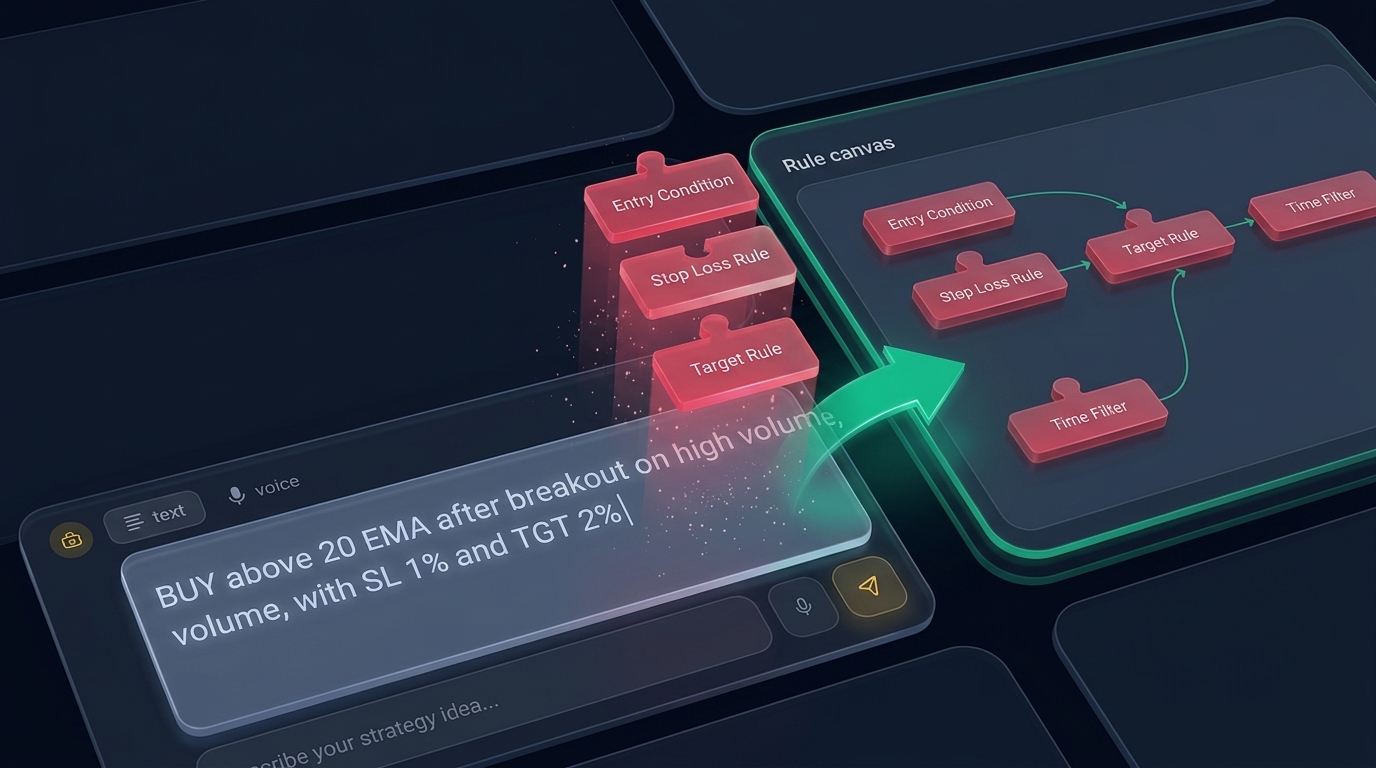
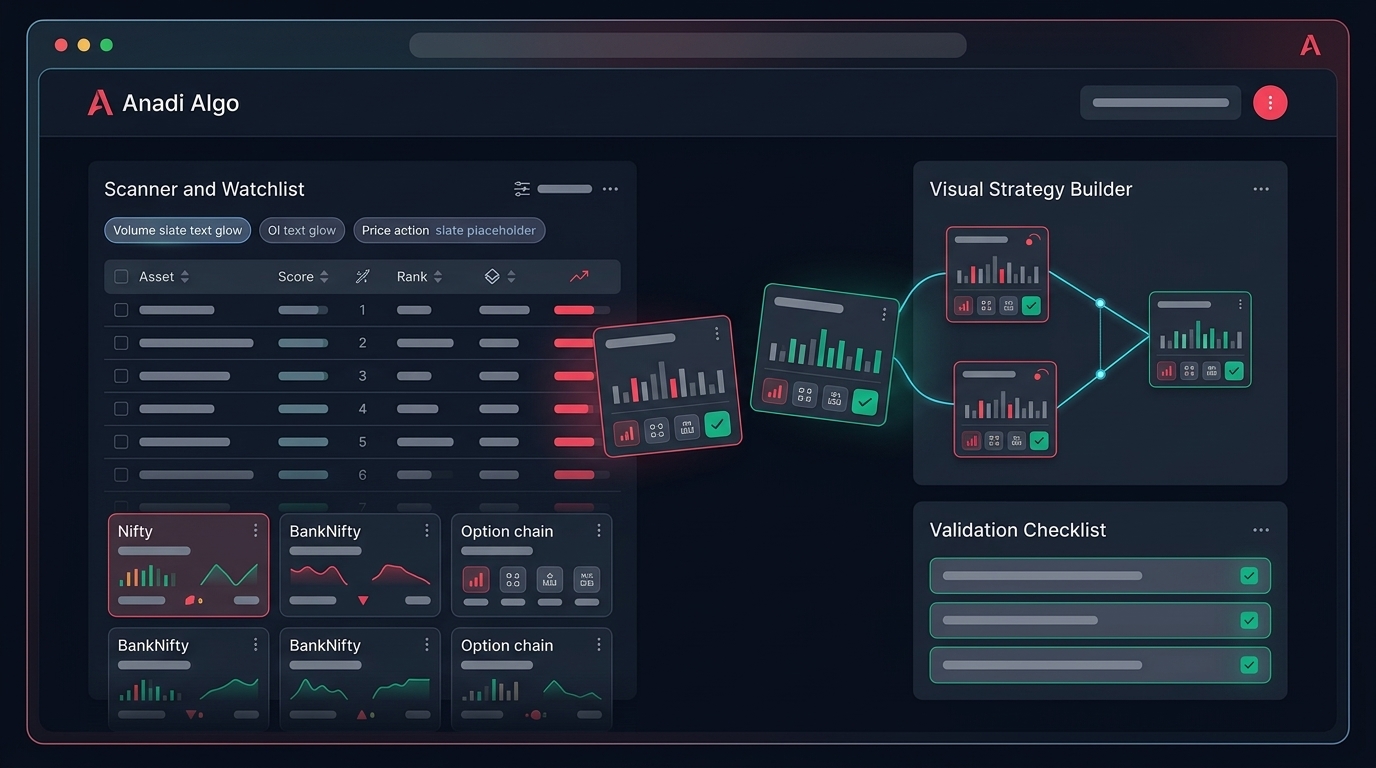
A platform that lets you express regime conditions in a no-code strategy builder and run them against historical option chain data will save you a lot of spreadsheet work here. You can also pair regime filters with portfolio-level risk management rules so a single bad day in the wrong regime does not blow up an account.
Practical checklist
If you are adding a VIX regime filter to an option selling system, this is a reasonable starting checklist:
- Define regimes using rolling percentiles, not fixed numbers
- Pre-decide what size, structure, strike distance, and stop rule you use in each regime — write it down before live trading
- Backtest results bucketed by regime, with realistic costs
- Confirm sample size in each bucket is large enough to draw conclusions
- Treat low VIX as a different risk, not a safer one
- Keep at least one defined-risk structure available for elevated and higher regimes
- Have a hard rule for what you do not sell in extreme regime — even if it costs you some good weeks
- Track outcomes by regime in your live journal so you can keep the filter honest
If you want to test these ideas against historical Indian options data with realistic execution assumptions, you can request early access to try the workflow end-to-end.
VIX regime filters are not a predictive edge. They are a discipline tool — a way to force smaller size, tighter risk, and simpler structures into the periods that have historically punished option sellers the most. Used that way, they tend to help. Used as a forecast, they tend to disappoint.