Every morning, Indian retail traders wake up to a flood of "global cues" headlines. Dow closed red. Nasdaq futures down. Crude up 2%. Dollar index strong. Asian markets mixed.
Then the same question: what should I do at 9:15?
For most retail algo traders, the honest answer is: probably nothing different. But that doesn't mean global cues are useless. They're context, not a trade signal. This post is about using that context the right way — to prepare your day, not to predict it.
What "global cues" actually mean
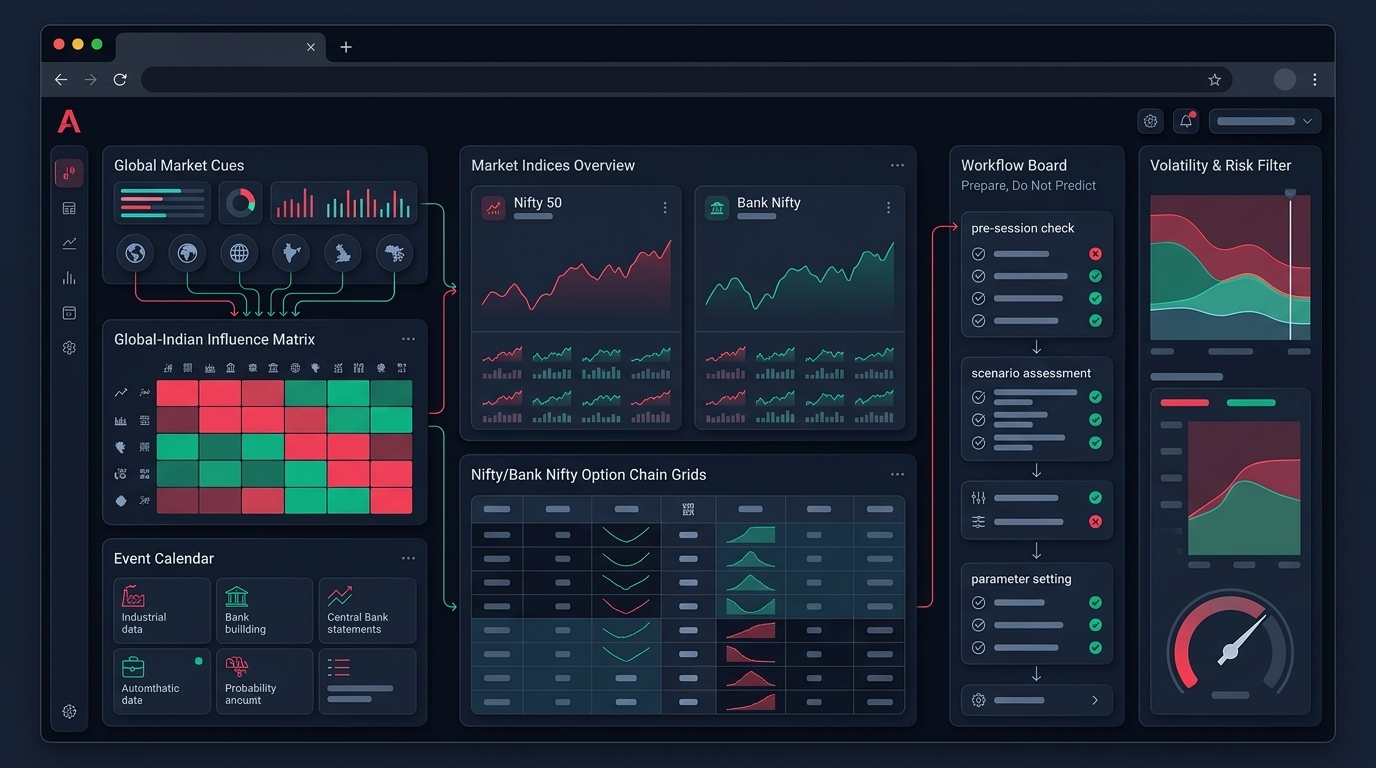
When analysts say global cues, they usually mean a basket of overnight information:
- US closing levels (Dow, S&P 500, Nasdaq)
- US index futures during Asian hours (SGX Nifty / GIFT Nifty is the closest proxy for our open)
- Asian markets in early trade (Nikkei, Hang Seng, Kospi)
- Commodity moves (crude oil, gold, copper)
- Currency moves (USDINR, Dollar Index)
- Bond yields, especially the US 10-year
- Big macro headlines (Fed minutes, US CPI, tariff news, geopolitics)
Each piece tells you something about risk appetite globally. None of them tells you where Nifty will close today.
Why retail traders misuse cues
The common mistake is treating cues as directional signals. "Dow down 500 points, so I'll go short Nifty at open." That logic ignores three things:
- The Indian market often opens with a gap that already prices in overnight moves. By the time you click, the easy move is gone.
- Correlation between global indices and Nifty is not constant. Some weeks Nifty decouples completely — Indian markets have repeatedly held up while Asian and US indices wobbled.
- Intraday flow in Indian markets is dominated by domestic factors: DII buying, F&O expiry positioning, sector rotation, and institutional block trades.
Trading the open based on a Dow headline is essentially trading a stale signal that thousands of better-equipped participants have already acted on.
A better mental model: cues set the regime, not the trade
Think of global cues as a weather report. It tells you whether to expect a calm day, a windy one, or a storm. It does not tell you exactly where the rain will fall.
For an algo trader, the practical translation is regime awareness:
- Risk-on regime: US closed strong, VIX low, crude stable, USDINR steady. Trend-following systems usually behave closer to backtest. Breakout strategies have fewer false starts.
- Risk-off regime: US sold off hard, VIX up, safe-haven flows into gold and bonds. Mean-reversion and gap-fade systems often see more whipsaws. Stop-losses get hit more frequently.
- Event-driven regime: Major Fed decision, US CPI, tariff escalation, geopolitical shock. Spreads widen, slippage rises, and most retail systems underperform because the backtest never saw this kind of day.
Your strategy doesn't need to predict the regime. It just needs to know the regime exists, so you can size positions accordingly.
A simple pre-market checklist
Here's a workflow that takes under five minutes and is far more useful than reading three columnists:
- Note GIFT Nifty level vs yesterday's Nifty close. Is it pointing to a flat, gap-up, or gap-down open?
- Check India VIX direction over the last 2–3 sessions. Rising VIX means wider expected ranges.
- Check crude (Brent) and USDINR. Sharp moves here often hit specific sectors — oil marketing, IT, paints, aviation.
- Note one or two major overnight headlines (Fed, US data, big earnings). Mark them — you're not trading them, just acknowledging they exist.
- Check the FII/DII data from yesterday. Persistent FII selling for several sessions is a regime signal, not a one-day signal.
That's it. The output is not a trade — it's a sizing and filter decision. Maybe you trade half your usual size on event days. Maybe your mean-reversion algo stays off when VIX is spiking. Maybe your breakout filter requires extra confirmation when GIFT Nifty signals a wide gap.
How algo traders can encode cues without overfitting
If you build systems, the temptation is to add global-cue inputs as features. Be careful here. A few principles:
- Use cues as filters, not entry triggers. "Don't take new longs if Nifty gaps down more than 0.8%" is a filter. "Go long because Dow was up" is overfitting to noise.
- Use regime variables, not single-day values. India VIX above its 20-day average tells you more than India VIX on one specific morning.
- Backtest the filter separately. Run your strategy with and without the global-cue filter on the same period. If the filter only helps in one specific year, it's probably curve-fitted.
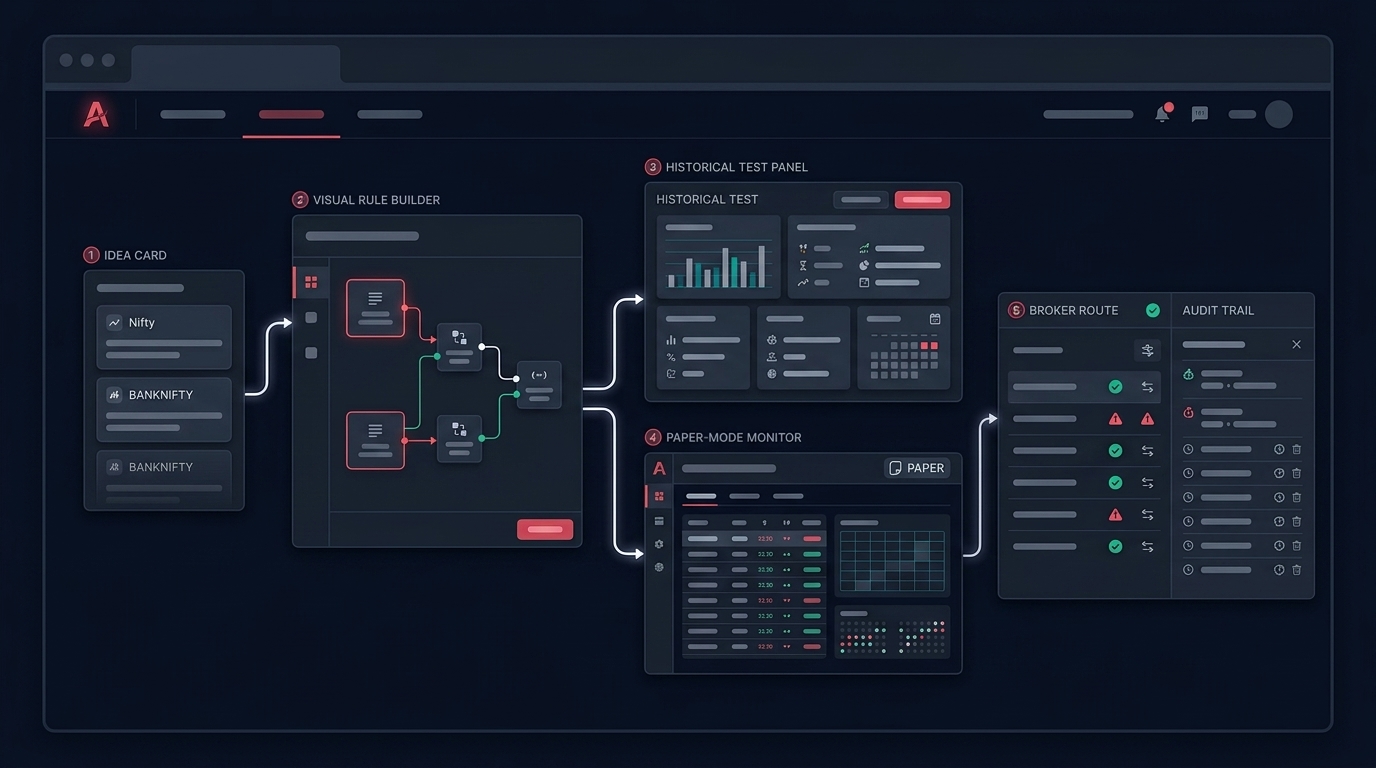
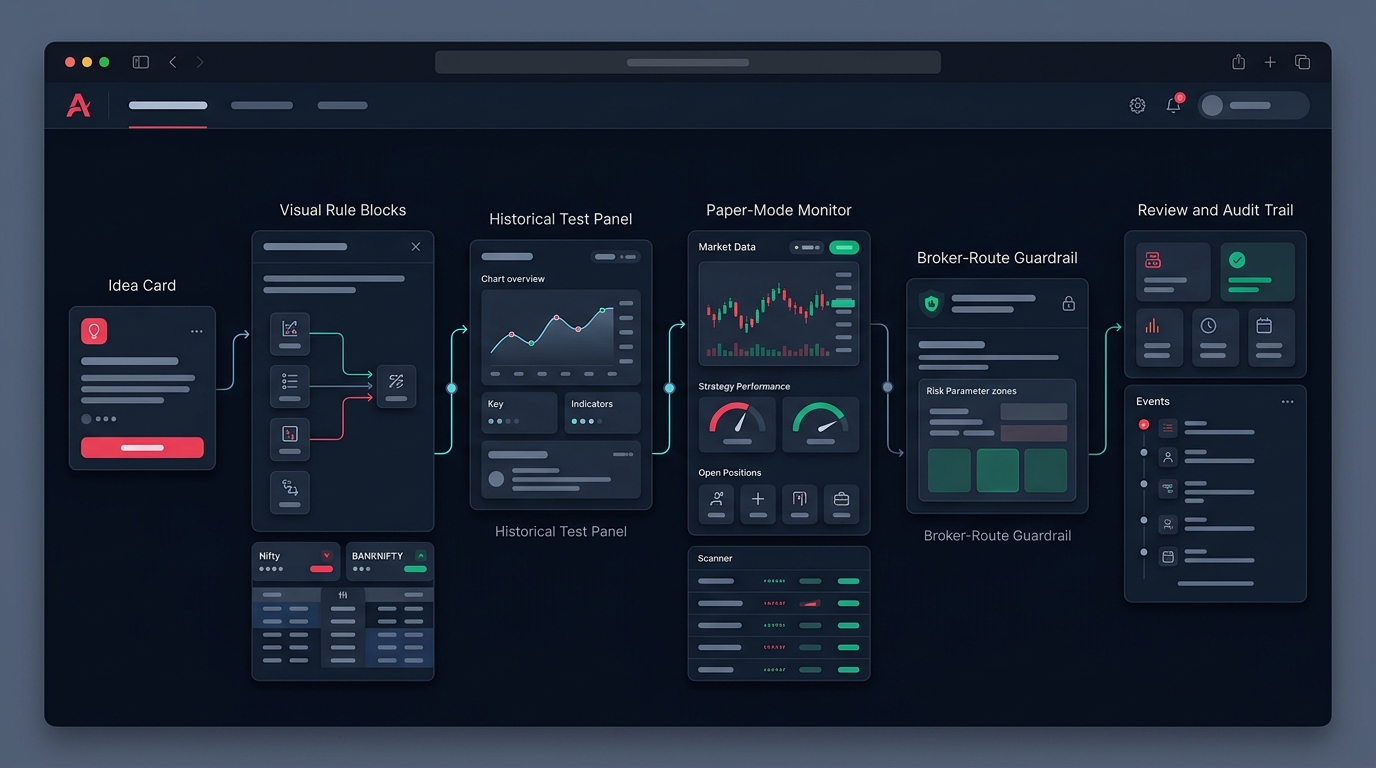
Tools like backtesting and a no-code strategy builder let you add these regime filters without rewriting code. The discipline is to test, not to assume the filter helps.
What the research actually shows
Recent market commentary keeps making one point: Indian markets do react to global cues, but the reaction is often shorter than retail traders expect. A weak US close might cause a gap-down open, but mid-day flows from domestic institutions can absorb the move within an hour. A strong overnight rally can fade by lunch if FIIs continue selling.
This is why "Dow up, so buy Nifty" fails so reliably. The cue is real; the trade is wrong because the holding window is wrong.
Risk framing
A few honest reminders:
- No global cue gives you an edge that institutions don't already have, faster.
- Position sizing matters more than predicting the open.
- Most retail accounts that blow up don't blow up because they read cues wrong. They blow up because they doubled size on a "high conviction" overnight read.
- If your system was profitable in backtest without any global-cue input, adding one rarely makes it dramatically better. It just makes it more fragile.
Keep risk management ahead of conviction. Always.
Putting it together
If you want a weekly view that summarises the macro setup without screaming predictions, the weekly market outlook is built for exactly that — context for preparation, not noise for trading. If you're still building your workflow, you can grab early access and try the regime-aware filters inside the strategy builder.
Takeaway checklist
- Treat global cues as regime context, not directional signals.
- Use cues to adjust sizing and filters, not to pick entries.
- Build a five-minute pre-market routine — GIFT Nifty, VIX, crude, USDINR, FII/DII.
- Backtest cue-based filters separately to avoid curve-fitting.
- Accept that on most days, your system should trade roughly the same way regardless of what Dow did overnight.
The goal isn't to predict the day. It's to show up prepared for whichever day the market actually gives you.