If you've searched "is algo trading legal in India," you've probably seen answers ranging from "totally fine" to "SEBI is about to ban it." Both are wrong. The real answer is simple, and it's worth getting right before you automate a single order.
Yes — retail algo trading is legal in India. SEBI explicitly permits it. What changed recently is that there's now a formal framework around how you're allowed to do it. Legality was never really the question. Compliance is.
Where the "is it even allowed?" fear comes from
Algorithmic trading isn't new here. It was formally permitted back in April 2008 with Direct Market Access (DMA). For over a decade it stayed with institutions and HFT desks, because the infrastructure and compliance costs were high.
The confusion is recent. As broker APIs made automation cheap, thousands of retail traders started running Python scripts and third-party algos — often in a grey zone the rules hadn't caught up with. SEBI's response wasn't a ban. It was a framework to bring that activity into a supervised structure. That's the part people mistake for a crackdown.
If you're new to the whole space, it helps to first understand what algo trading in India actually involves before worrying about the legal wrapper around it.
What SEBI's framework actually requires
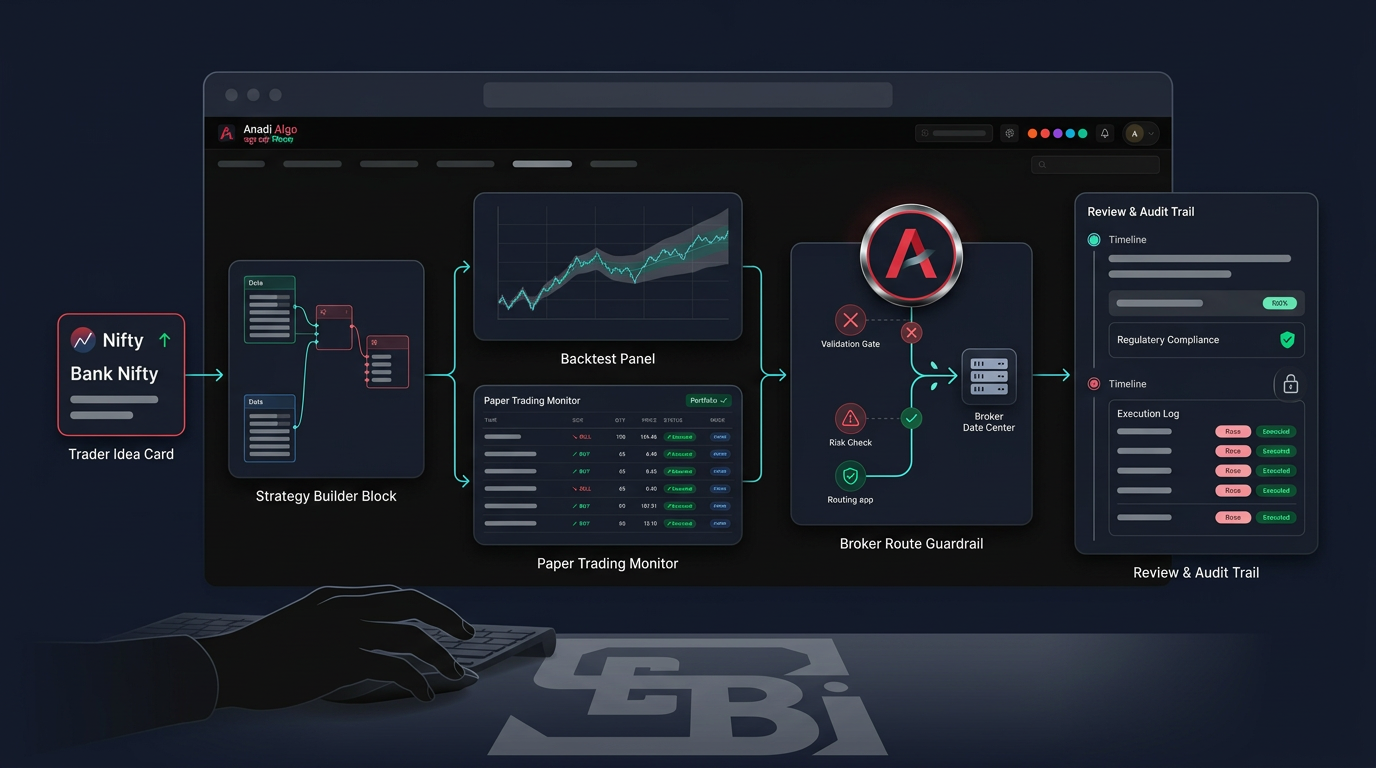
The framework (fully mandatory from 1 April 2026) doesn't restrict retail participation. It defines the channel you're allowed to use. A few core pieces stand out.
Use broker-provided APIs, not backdoor access
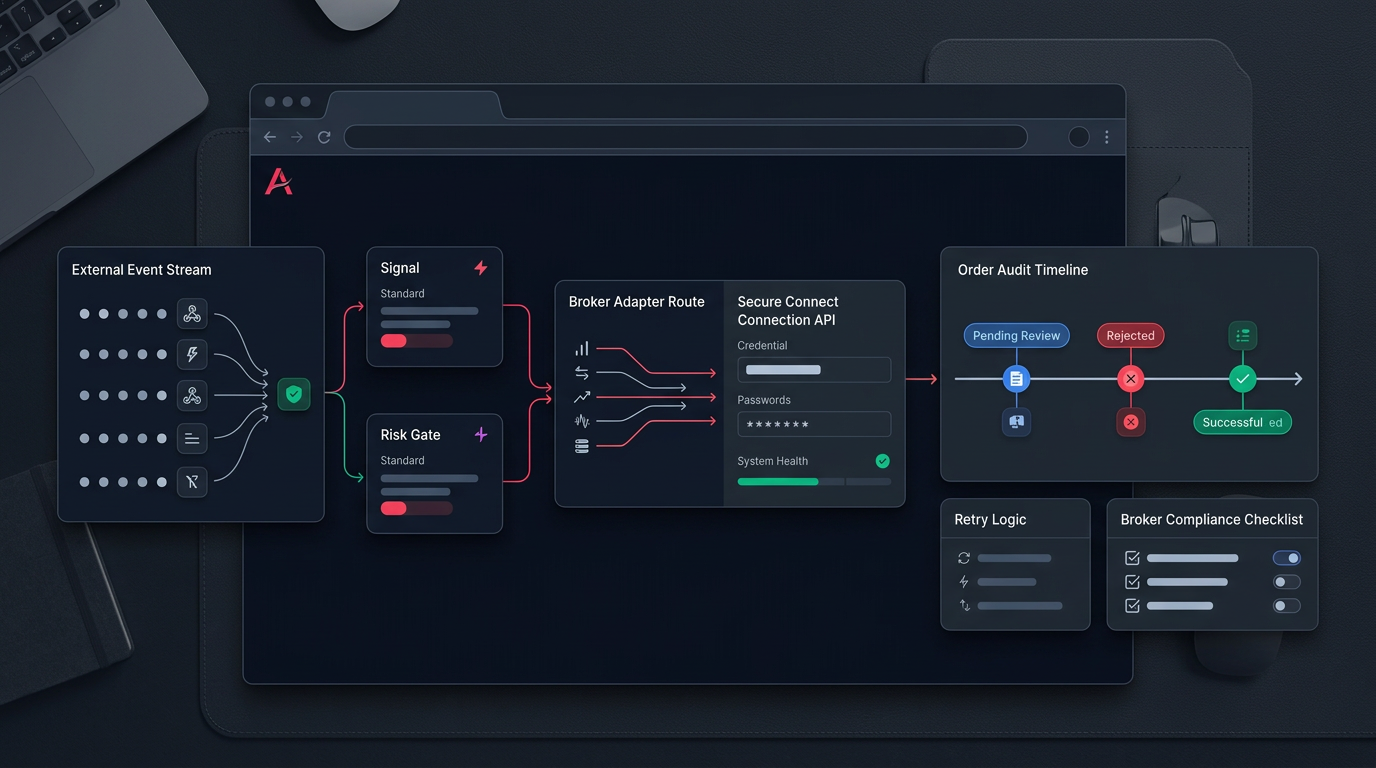
You automate through your broker's approved API or an empanelled algo platform — not through screen-scraping or unofficial logins. The broker is treated as the principal, and the algo provider as its agent. In plain terms: your broker is accountable for what your automation does, so access has to run through channels they can actually supervise.
Every algo order carries a unique ID
Orders generated by an algorithm get tagged so the exchange can identify them as algo orders. This is how oversight works — automated flow becomes distinguishable from manual clicks. You don't do anything extra for this; it happens at the broker and exchange layer when you route through an approved API.
Registration kicks in above a certain order rate
Not every automated order needs formal registration. The framework draws a line around order frequency — roughly 10 orders per second is the commonly cited threshold. Below it, a broker's standard API handling applies. Above it, the strategy is treated as algo trading that must be registered and routed through exchange-approved systems.
White box vs black box matters
A "white box" algo has logic you (and the broker) can see and explain. A "black box" algo hides its logic. The framework treats these differently, with more scrutiny on black-box systems. Practically, a rule-based strategy you built and understand is far easier to run compliantly than an opaque vendor product you can't inspect.
What this means for you in practice
You don't need to be scared, and you don't need a compliance lawyer to place a moving-average crossover order. But you do need to run your automation on legitimate rails.
That means three things:
- Trade through a compliant broker and a platform that routes via approved broker APIs. If you're comparing options, check the supported brokers and how broker API access is handled.
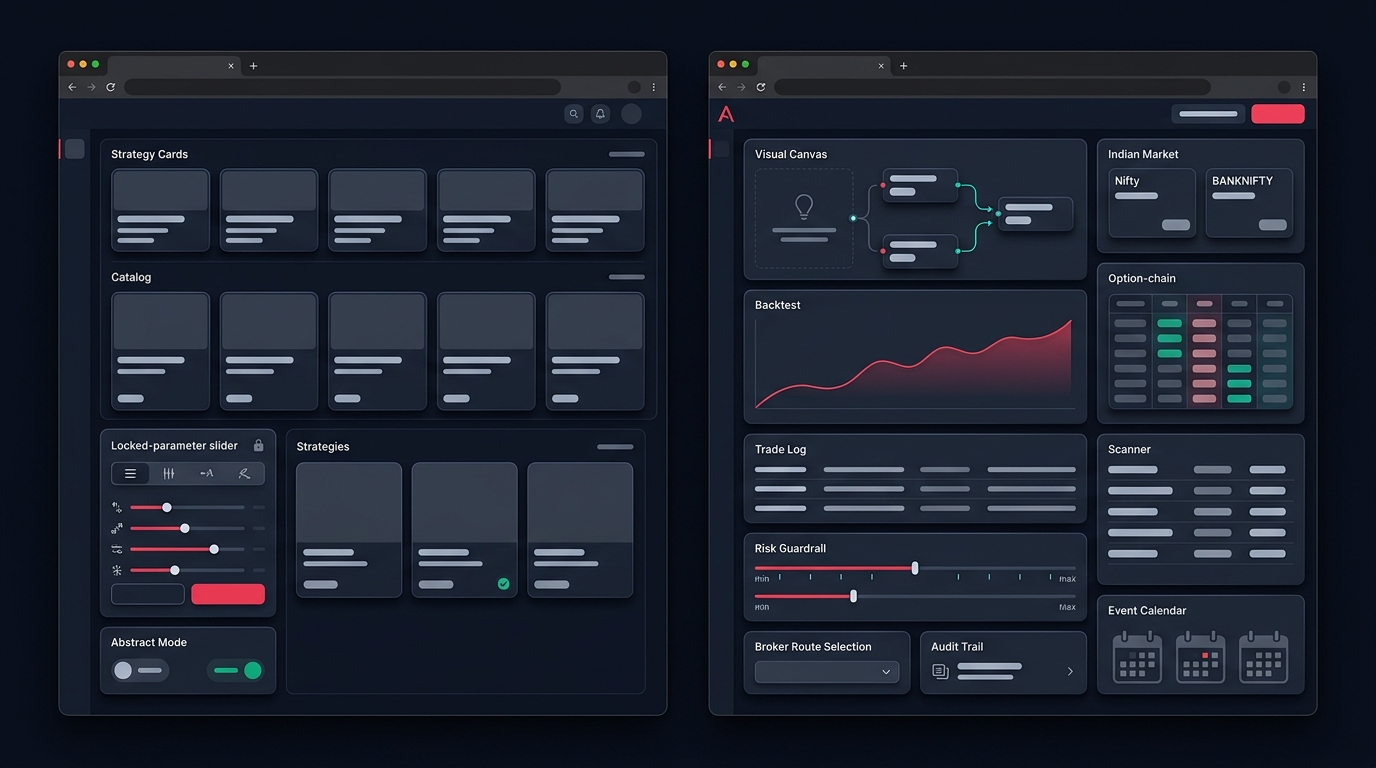
- Keep your strategy logic something you can explain. Rule-based, inspectable strategies fit the white-box expectation naturally. A no-code strategy builder or your own Python script both qualify, as long as the logic is transparent.
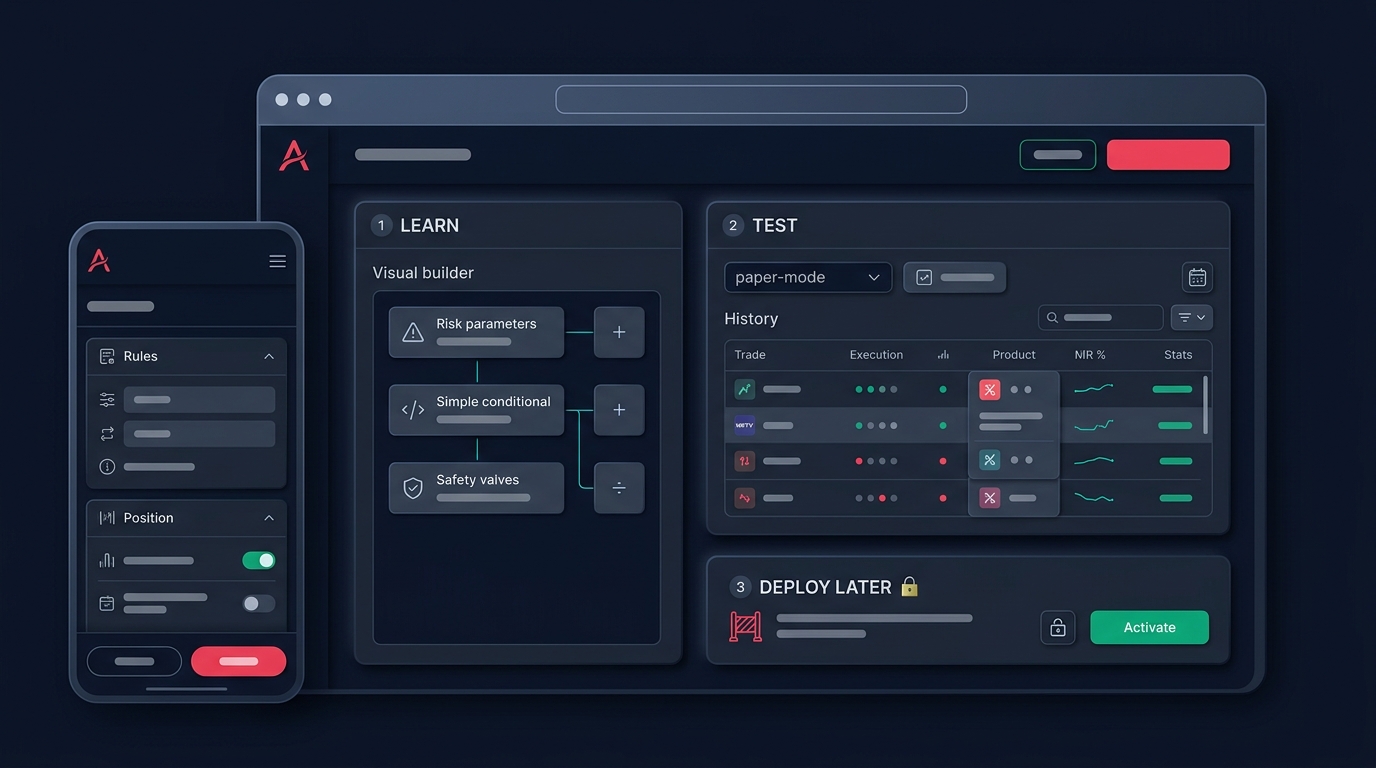
- Validate before you automate. Legality doesn't make a strategy profitable. This is where backtesting and paper trading matter — they de-risk your logic before real money and real order flow are involved.
A quick example. Say you want to short a NIFTY straddle at 9:20 and square off at 3:15 with a stop. Running that through your broker's API on an approved platform is fine. Running it by faking a browser session to bypass API limits is exactly the kind of thing the framework is designed to shut down. Same strategy — different rails, different legality.
A quick compliance self-check
Before you deploy anything automated, run through this list:
- Am I routing orders through my broker's official API or an approved platform — not an unofficial workaround?
- Can I explain my strategy's logic in plain rules (white box), or is it an opaque black box I can't inspect?
- Is my order rate within normal limits, or am I firing fast enough to trigger registration requirements?
- Has my broker or platform confirmed the setup complies with the current framework?
- Have I tested the logic in backtest and paper mode before pointing it at live capital?
If you can answer those cleanly, you're operating inside the framework, not around it.
The takeaway
Algo trading in India is legal for retail traders. It always was in principle, and it's now formally structured. The work isn't proving it's allowed — it's staying inside the approved channel, keeping your logic transparent, and testing before you go live.
If you want to build and validate rule-based strategies on that kind of compliant, broker-routed workflow, you can request early access and start in paper mode first.
One last thing: this is educational, not legal advice. Rules and thresholds evolve, and the specifics of your setup can matter more than a blog post can cover. When in doubt, confirm with your broker or a qualified professional before automating live orders.