Why Most Traders Lose Money on News Days
You've seen it. RBI announces a rate hold, NIFTY drops 200 points in ten minutes, and your trading group is on fire — "sell everything," "market will crash," "buy the dip."
By end of day, half those calls are wrong. The people who acted on them are confused. The people who didn't are relieved, but still directionless.
The problem isn't the news. The problem is treating news as a signal.
News is context. And context doesn't tell you what to trade — it tells you how to trade. There's a big difference.
What "Context" Actually Means in Trading
Think of your trading system like a filter stack. At the top are your core rules — entry, exit, stop-loss. But context sits above all of that. It's the layer that decides whether your system should even be running that day, at what size, and with what caution level.
When INDIA VIX spikes above 20, that's not a "sell signal." It's information that says: volatility is elevated, expected moves are wider, premiums are expensive. Your system should respond — but systematically, not emotionally.
- VIX below 14 → normal position sizing
- VIX between 14–20 → reduce size by 25–30%
- VIX above 20 → half size or skip entirely (depending on strategy)
That's it. One rule. Derived from one context signal. No panic, no guessing.
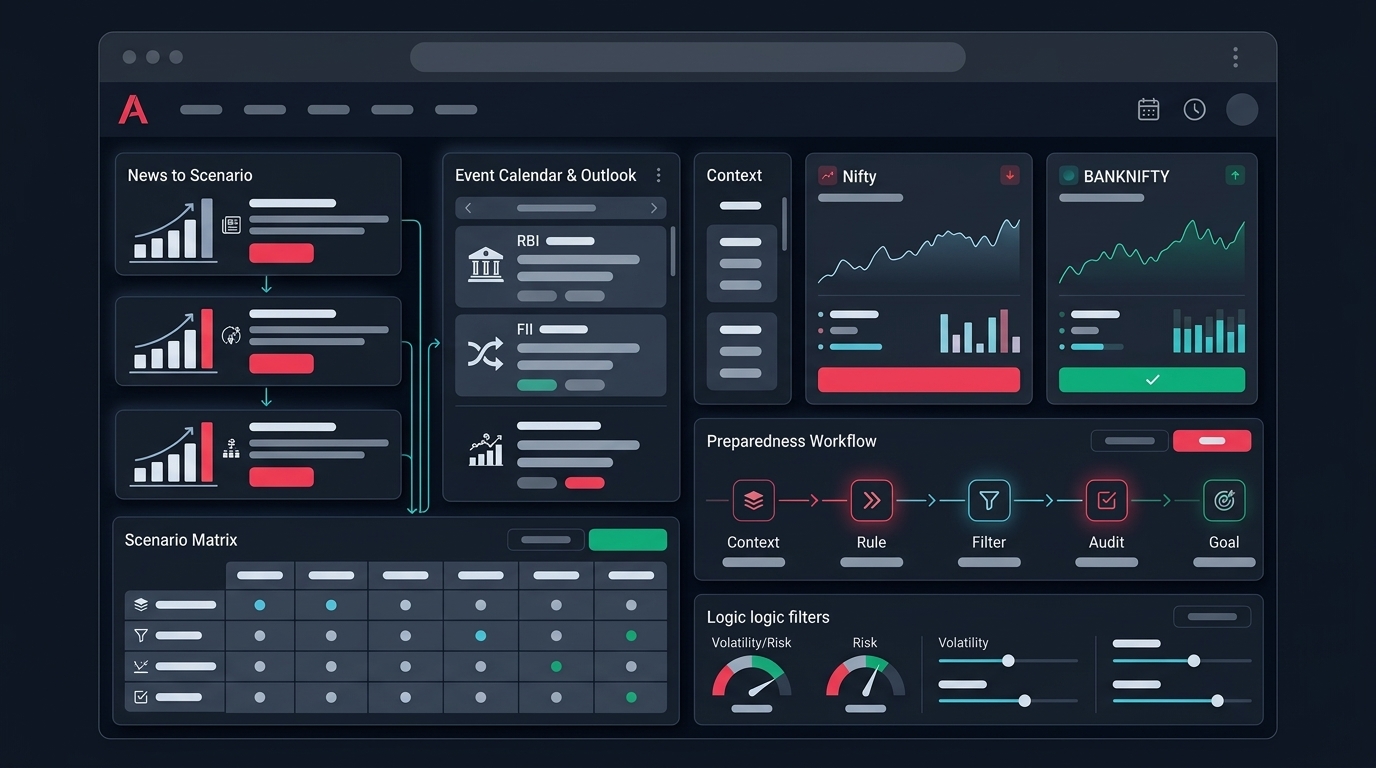
Four News Types, Four Context Filters
Here's how to think about the most common Indian market news events.
RBI Policy Announcements
RBI meetings (every 6–8 weeks) create predictable volatility clusters. In the 48 hours around a policy announcement, IV tends to rise, premiums expand, and BANKNIFTY moves erratically.
Context rule you can encode: Do not sell naked options in the 2 sessions before and 1 session after an RBI announcement. Or: Widen stops by 30% on breakout trades during RBI week.
That's not a prediction. It's a risk posture. You're not saying what the market will do — you're saying how your system will behave given the environment.
FII/DII Flow Data
FII selling pressure over 3–5 consecutive sessions is not a one-day news item. It's a trend signal. When FIIs are net sellers for a sustained stretch, index momentum strategies tend to underperform.
Context rule: Track 5-day net FII flow. If net negative beyond a threshold, avoid fresh long momentum trades on NIFTY.
This isn't about the single daily headline. It's about encoding the trend into a system condition that you can later backtest against historical flow data.
Earnings Season
Q1 and Q3 earnings seasons (April–May, October–November) bring stock-specific IV spikes. Stocks in reporting week often have distorted option pricing.
Context rule: No directional option trades on a stock in the 3 days before its earnings announcement. Spreads only, with defined max loss.
You're not predicting the earnings. You're acknowledging the uncertainty and building a rule around it.
Geopolitical Events
India-Pakistan tensions in May 2025. The market opened lower, fear was high, WhatsApp groups were catastrophising. By the end of the month, NIFTY had recovered.
Those who panicked sold at the bottom. Those with a pre-written rule — if a macro event causes a sudden gap-down beyond X%, reduce position size but don't exit existing hedged positions — held through.
Geopolitical events are unpredictable in outcome but not in market behavior pattern. Panic, V-recovery, new normal. That pattern is worth encoding.
The Real Problem: Reacting vs. Encoding
Here's the mental shift that separates systematic traders from reactive ones.
Reacting looks like: you read a news headline at 9:15 AM, feel anxious, cut your position, miss the recovery, feel foolish.
Encoding looks like: last month, when a similar event happened, you noticed your stop-loss was getting triggered more often. So you wrote a rule: during high-volatility news weeks, widen stop-loss by 0.5x and reduce quantity by 20%. Now the news doesn't make decisions — your system does.
The second approach feels boring. That's how you know it's working.
How to Translate a News Event Into a Rule
Here's a simple four-step process you can use after any significant market event.
Step 1 — Name the event type. Was it a scheduled announcement (RBI, earnings, budget) or unscheduled (geopolitical, crisis)? Scheduled events are easier to encode in advance.
Step 2 — Observe the market behavior. What happened to VIX? Did NIFTY gap? How did premium levels change? Write this down — not your P&L, just market behavior.
Step 3 — Draft a conditional rule. If this event type occurs again, what should your system do differently? Smaller size? Wider stops? Skip trading? The rule should be specific and testable.
Step 4 — Backtest the rule. Go back to similar historical periods. Would this rule have helped or hurt? Use backtesting to validate before you trust the rule with live capital.
That last step is critical. Rules that feel smart in hindsight often fail in testing. Testing is what separates your opinion from your edge.
Building This Into Your System
This is exactly what algo trading in India enables at a practical level. You're not just automating entry and exit — you're encoding your entire context layer: volatility filters, flow conditions, calendar-based rules.
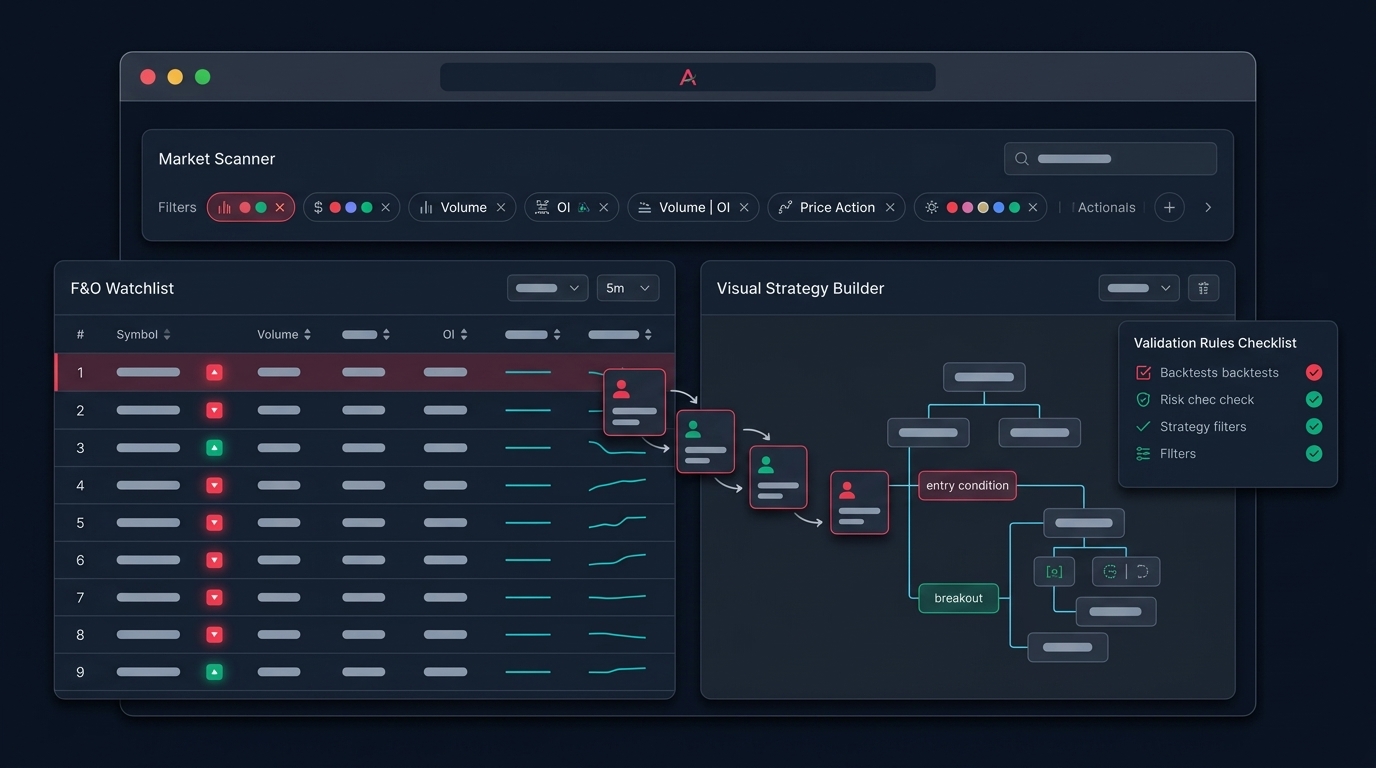
The strategy builder lets you add conditional logic — if VIX is above a level, if it's within N days of an event, if the trend condition is met. These aren't advanced quant concepts. They're just your rules, written down and tested.
If you haven't started building rule sets from news context yet, the weekly market outlook is a good anchor — it frames the week's major events so you can decide in advance how your system will handle them.
Before You Trade This Week — A Practical Checklist
Run through this before the market opens on any high-news week:
- What scheduled events are happening this week? (RBI, earnings, expiry, macro data)
- Where is VIX? Have I adjusted position sizing accordingly?
- What is the 5-day FII trend? Am I trading against or with it?
- Do I have written rules for how my strategy behaves in elevated volatility?
- Have I backtested those rules, or am I going on intuition?
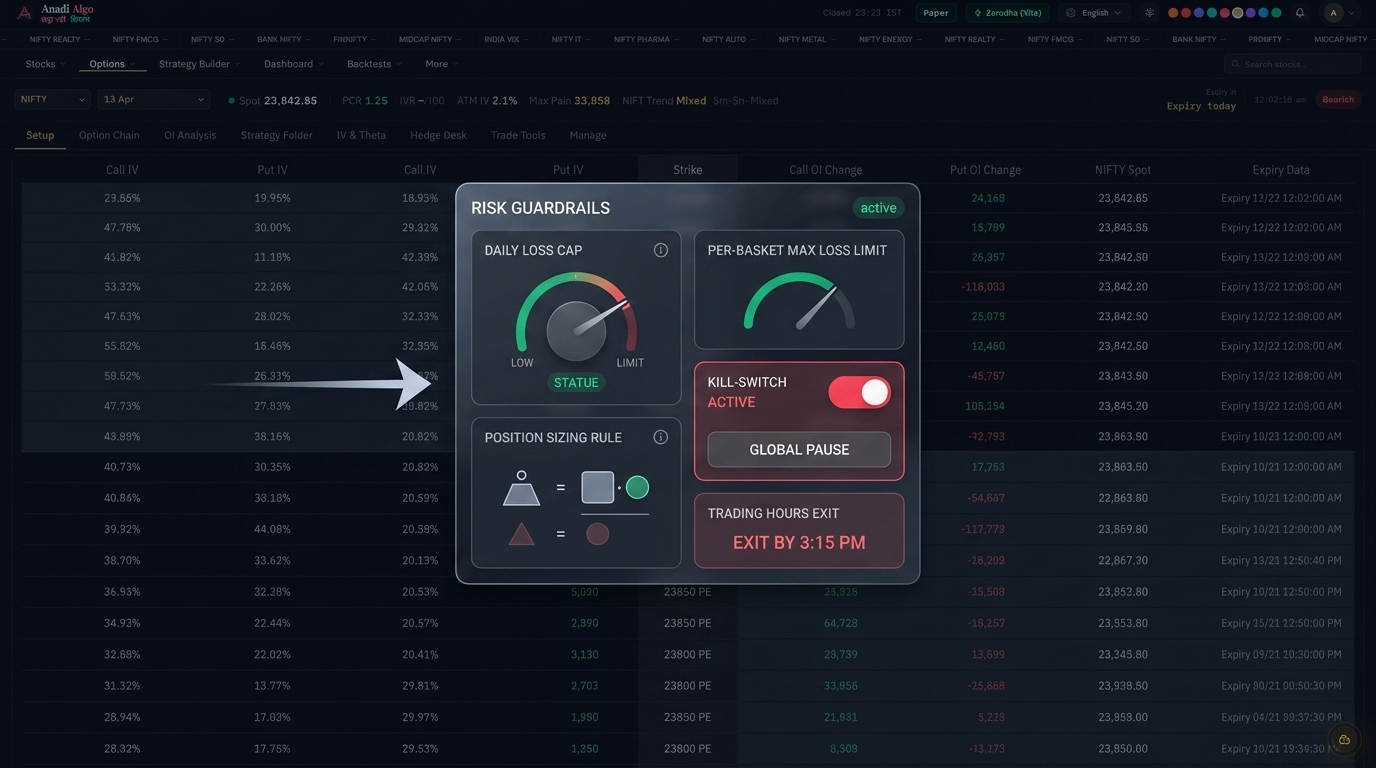
- Is my max loss for the week defined before I enter anything?
If you can answer all six — great. You're trading with context, not reacting to it.
If you're still building that rule set, the early access program gives you structured tools to do exactly this: encode your context, backtest your conditions, and trade with a system that doesn't panic.
News will always be noisy. Markets will always overreact. Your job isn't to predict what happens next — it's to have a written rule for every scenario you can anticipate, and the discipline to follow it when the moment comes.
Yahi hai systematic trading. Context se rules, rules se system, system se consistency.
Suggested slug: news-to-trading-rules-market-context-filters