Search "algo trading" and half the results promise a hands-off money printer. The other half warn it's only for quants with server farms. Both extremes are wrong, and both cost retail traders money — one by overpromising, the other by scaring people away from a workflow that can genuinely make their trading more disciplined.
Algo trading, at its core, is just rule-based trading that a computer executes for you. No emotion, no "let me wait one more candle." That's the whole idea. Everything else is folklore. Let's clear the common myths, one at a time, with a conservative eye on risk.
Myth 1: Algos are money-printing machines
This is the most expensive myth, because it's the one people pay for.
An algo does exactly what you tell it. If your rules have no edge, automating them just loses money faster and more consistently. The computer doesn't add alpha — it adds discipline and speed to whatever logic you already have.
The reality: profitability comes from the strategy, not the automation. A tested set of rules with positive expectancy, sensible position sizing, and honest cost assumptions is what makes or breaks the result. Before you trust any strategy live, it should survive backtesting across different market conditions — trending, choppy, high-VIX, low-VIX — not just the six months where it happened to work.
If someone shows you an equity curve that only goes up, ask for the drawdown, the slippage assumptions, and the sample size. Real systems have losing streaks.
Myth 2: Set it and forget it
The "fully passive" dream. Deploy once, sip chai, collect returns.
Live algos need supervision. Not because you'll manually override every trade, but because the plumbing breaks in ways your backtest never modelled:
- Broker sessions expire mid-day and orders silently stop firing.
- A data feed hiccups and your indicator reads a stale price.
- An order gets rejected for margin and the strategy keeps assuming it holds a position.
- Corporate actions, expiry rollovers, and holidays confuse naive logic.
None of these show up in a clean historical test. That's why serious retail setups pair automation with a monitoring layer and clear risk management — daily loss limits, max positions, and a kill switch. SEBI's 2025 retail framework even builds a kill switch in as a systemic safety net. "Automated" means the execution is automated, not that your attention can be zero.
Myth 3: It's a black box you can't understand
People imagine a mysterious bot making decisions no human can explain. For institutional machine-learning systems, maybe. For retail rule-based trading, no.
A retail algo is usually a handful of if-then conditions: entry rule, exit rule, stop-loss, position size, time filter. You can read every line of that logic. You should be able to answer "why did it take this trade?" in one sentence.
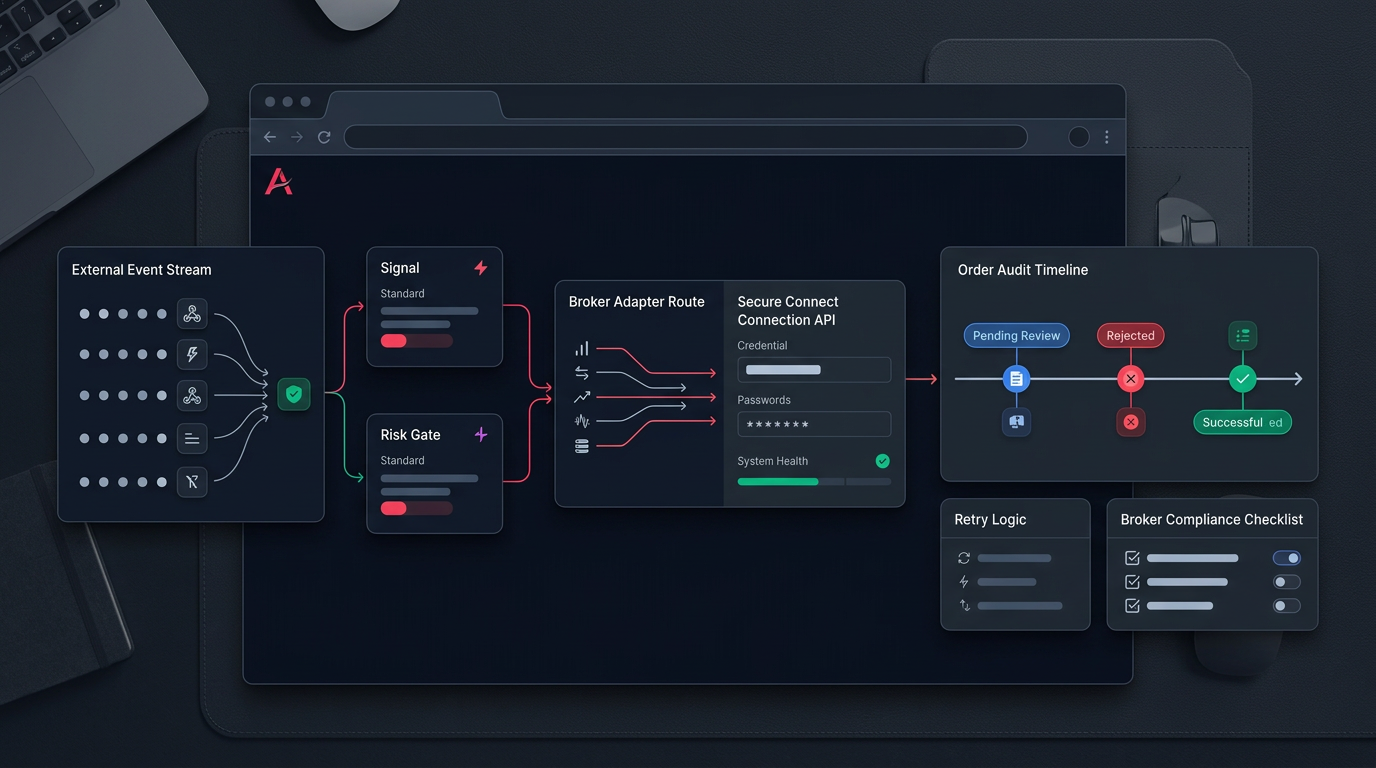
The place this actually matters is execution. When a trade goes wrong, the problem often shows up in the order layer before it shows up in your P&L — a partial fill, a rejected order, a wrong quantity. A platform that keeps an auditable order table with status and cancel controls lets you inspect what the broker actually did, instead of guessing. That's the opposite of a black box.
If you can't explain your own strategy in plain Hindi or English, that's not the algo's fault — the rules just aren't defined tightly enough yet.
Myth 4: You need to code, or need big capital
Two myths, same root: "this isn't for people like me."
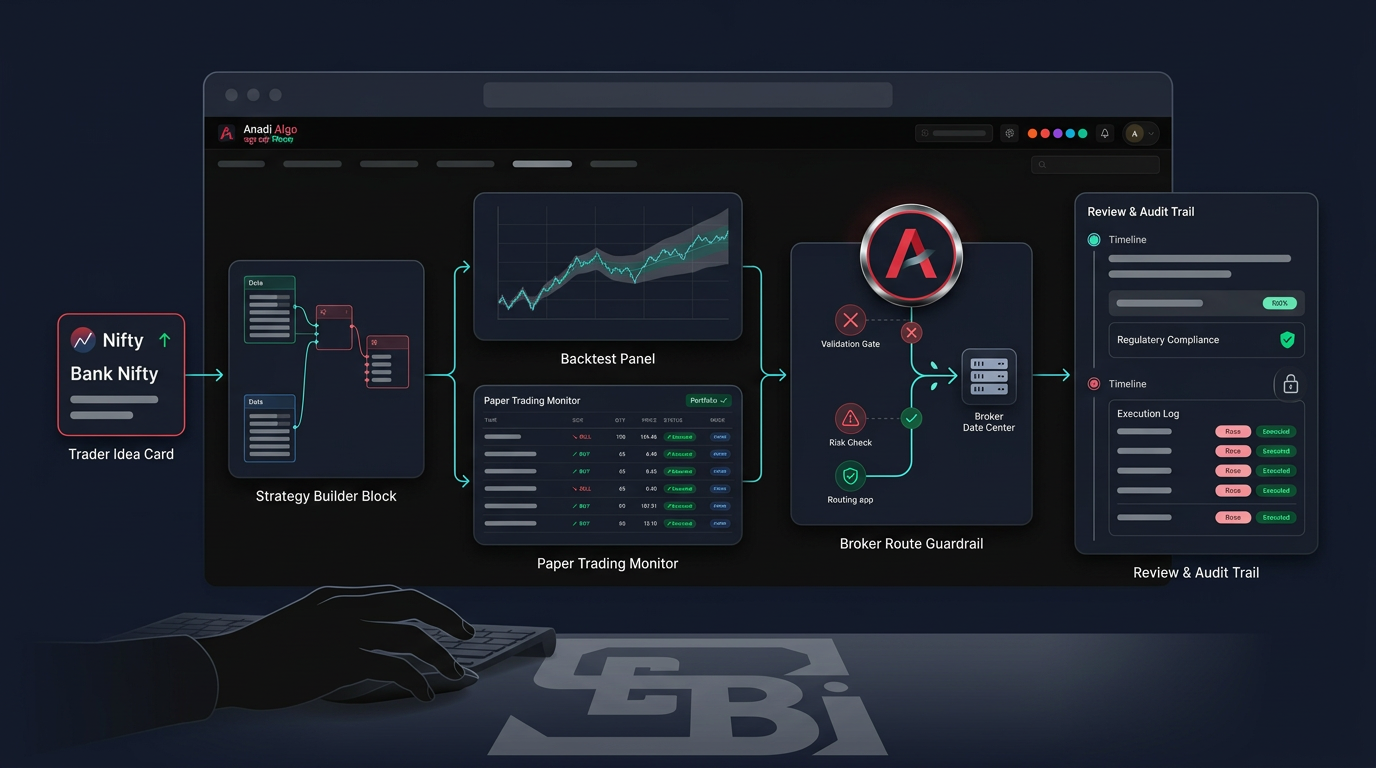
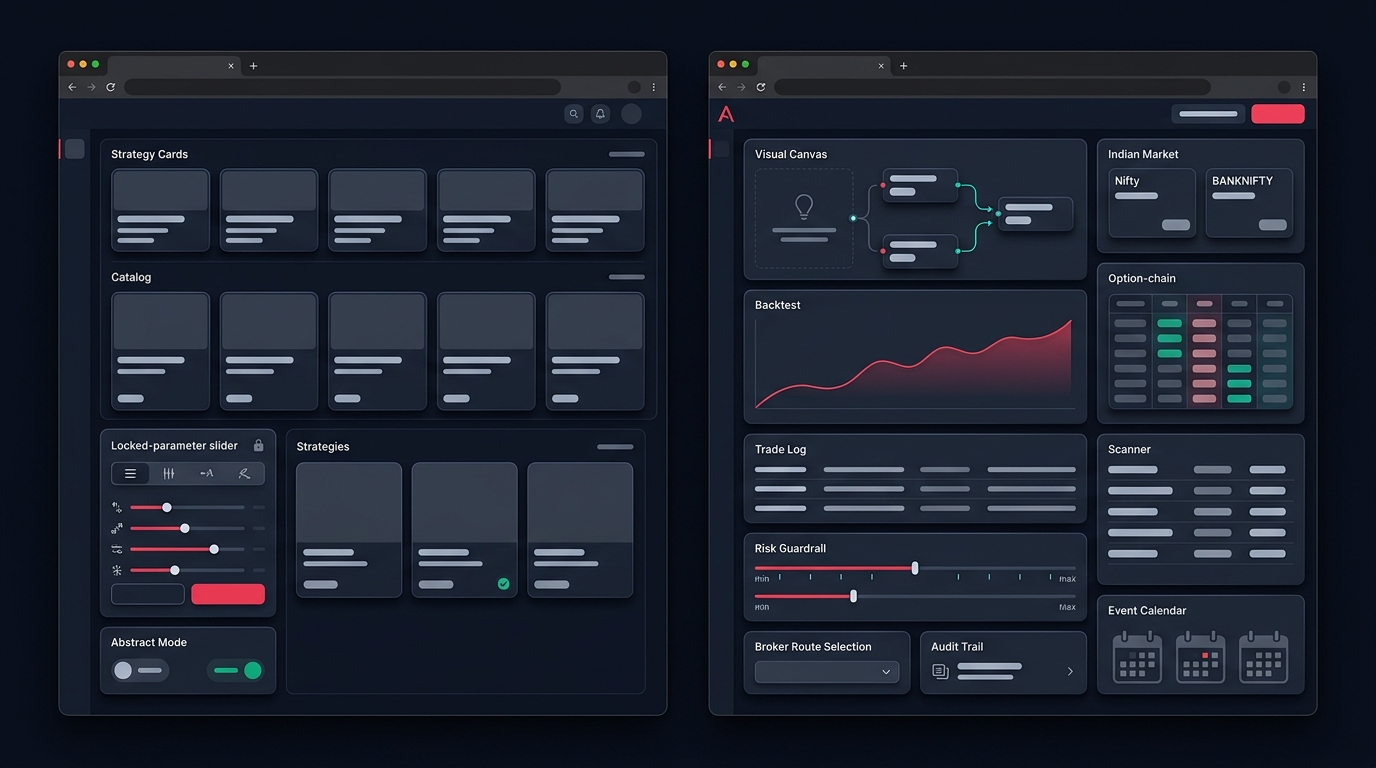
You don't need Python to start. Modern platforms let you build strategies with plain if-this-then-that conditions using a no-code strategy builder. Coding gives more control later, but it isn't the entry ticket.
You also don't need ₹10 lakh. You can test with one lot or one stock, on paper first, and scale only after the logic proves out. The discipline of testing small and honestly matters far more than the size of the account.
Myth 5: Retail algo trading is illegal or shady in India
For years this sat in a grey zone, which fed the myth. That changed. From 1 August 2025, SEBI's framework gives retail investors formal, supervised access to algo trading through registered brokers.
The trade-off is honest: retail algos run under stricter checks and slower execution than institutional systems, so you're not going to out-race the big machines. But it's a legitimate, regulated place to start. Legality isn't the myth to worry about; overestimating your speed edge is.
What to actually do instead
Skip the magic. Build a boring, testable process:
- Write your rules explicitly — entry, exit, stop, size, time window. If you can't write it down, you can't automate it.
- Backtest across regimes, with realistic slippage and brokerage. Distrust any curve without a drawdown number.
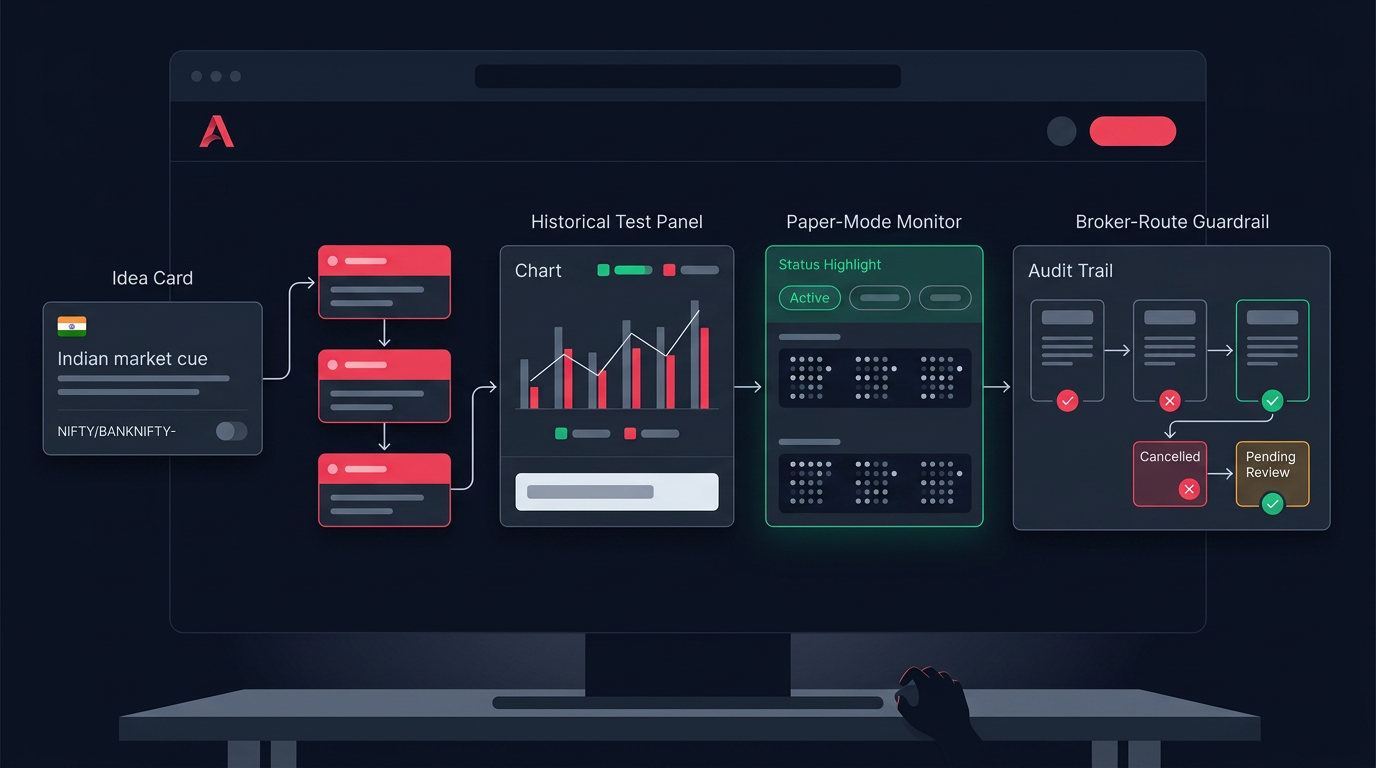
- Paper trade before real money. Anadi's paper trading lets you watch the same logic run live without capital at risk.
- Start with one lot. Scale only after live results roughly match the test.
- Monitor daily. Watch orders, sessions, and your loss limit — not the P&L alone.
- Keep a manual override rule for days the system shouldn't be trading at all.
Algo trading isn't a shortcut past learning the market. It's a way to execute a strategy you already understand, without your emotions in the loop. Treat it as disciplined execution, not a slot machine, and it earns its place in a retail workflow.
Curious to test the workflow yourself, paper-first? Get early access and build a rule before you risk a rupee.
Quick myth-check:
- Profits come from the strategy, not the automation.
- "Automated" execution still needs daily supervision.
- Rule-based retail algos are readable, not black boxes.
- No coding or big capital required to start.
- Legal and regulated in India since August 2025 — but there's no magic speed edge.