As of today, 24 June 2026, the front-month Bank Nifty derivatives contract expires on Tuesday, 30 June — six trading sessions away. For a discretionary trader that is a calendar note. For anyone running an algo, scanner, or backtest on Bank Nifty, the contract specification behind that date is the actual rulebook your system has to obey.
Most retail traders read the chart and skip the spec. That is backwards. The NSE contract definition for Nifty Bank F&O decides when your positions expire, how large one order can be, and which assumptions in your backtest are quietly wrong. This post walks through what those rules mean for process and risk around an expiry week. No predictions, no trade calls — just the mechanics you should encode before you automate anything.
Read the contract spec before you read the chart
NSE publishes a fixed contract specification for Bank Nifty futures and options. Four parts of it matter most to an algo workflow.
Underlying and trading cycle. Bank Nifty F&O is built on the BANK NIFTY index. Per NSE, the futures contract runs on a maximum three-month trading cycle: the near month, the next month, and the far month. A new contract is introduced on the trading day after the near-month contract expires. So at any time there are three monthly contracts live, and your system needs to know which one it is trading.
Expiry day. This is the rule that trips up the most automation. NSE states that BANKNIFTY contracts expire on the last Tuesday of the expiry period. If that last Tuesday is a trading holiday, the contract expires on the previous trading day. That single conditional — "unless it's a holiday, then shift back" — is where a lot of hardcoded expiry logic breaks.
Lot size. Bank Nifty trades in a fixed lot. Your position sizing, margin estimate, and per-trade risk all have to be expressed in multiples of that lot, not in rupee notional that you back-solve later.
Quantity freeze. NSE caps how many units can be sent in a single order (the quantity freeze). Orders above that limit are not silently filled — they are rejected or frozen for review. An algo that builds a large basket in one shot can hit this wall on expiry week, when it least wants a rejected leg.
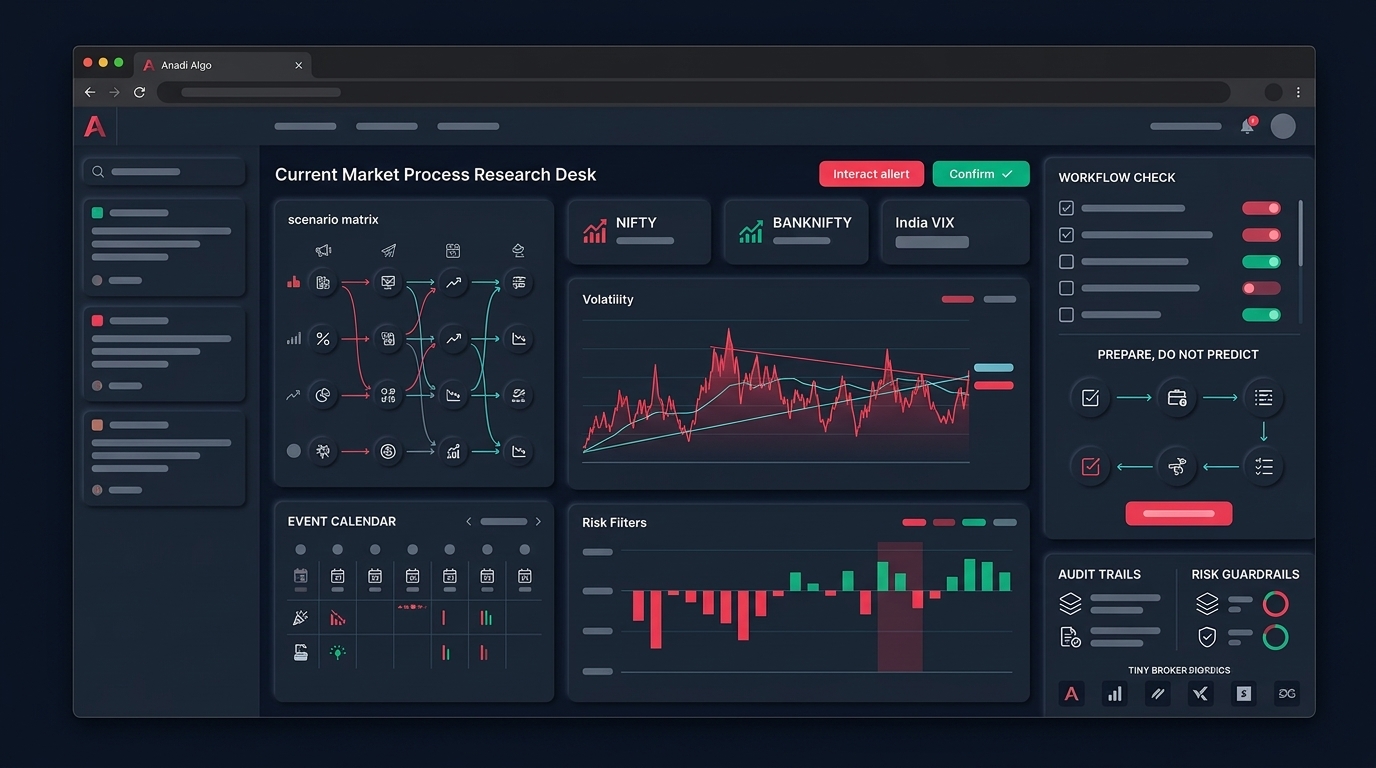
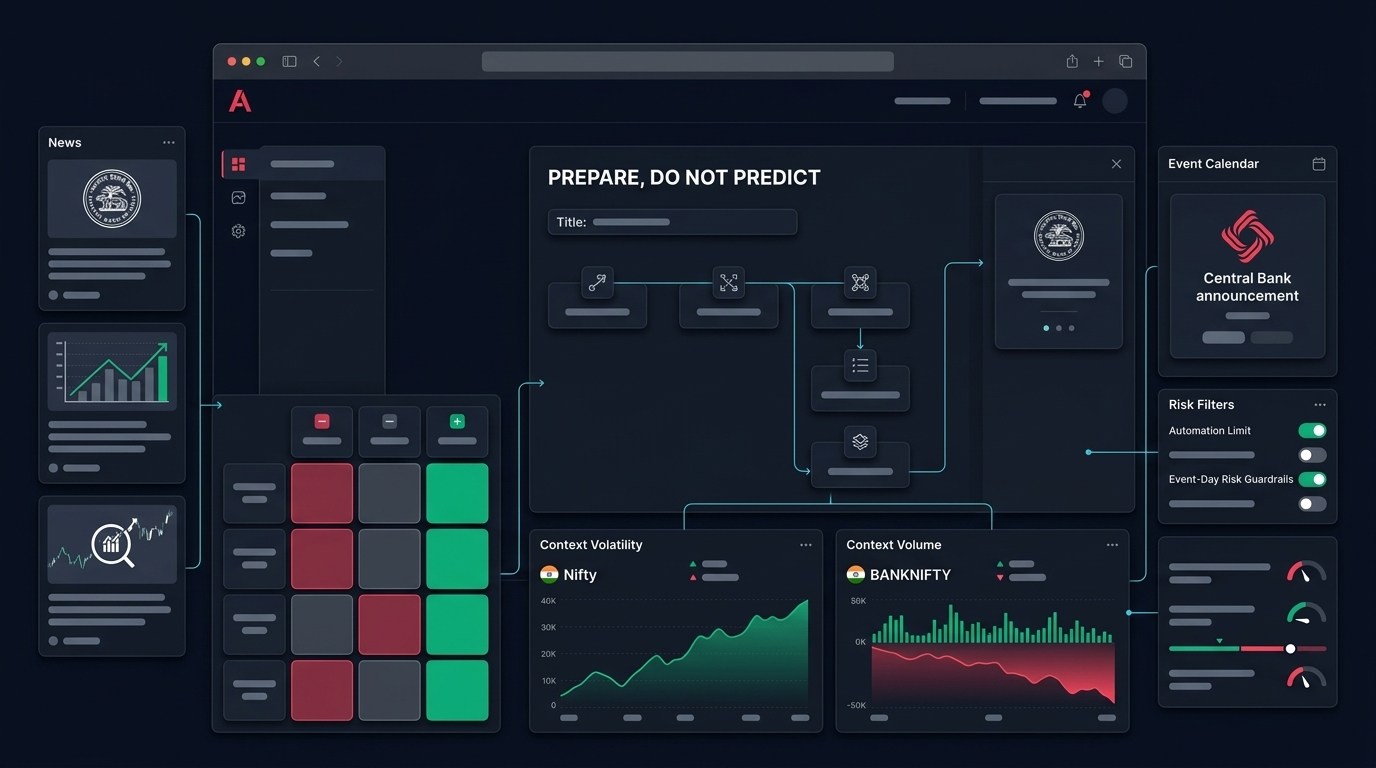
If your strategy logic does not read these four values from a maintained source, it is running on assumptions. The point of the weekly market outlook workflow is to prepare against exactly this kind of structural detail, not to chase a noisy intraday call.
Why the expiry day matters for algo scheduling
The shift from "weekly habit" to "last Tuesday monthly" expiry changes how an automated Bank Nifty system should think about time.
Confirm the current expiry calendar on NSE rather than assuming what was true last year. Expiry-day conventions for index derivatives have been revised in the Indian market more than once, and weekly versus monthly availability is the kind of thing that changes by circular. Your system should treat the expiry calendar as live config, not a constant baked into code two years ago. This is the same single-source-of-truth discipline you would apply to broker symbols or lot sizes.
Holiday-shift logic in code
The "last Tuesday, unless holiday" rule needs to be explicit. A naive implementation that just picks the last Tuesday of the month will be wrong in any month where that Tuesday is a holiday, and it will be wrong silently — your positions will look like they have one more day than they do.
A safe pattern:
- Pull the official NSE trading holiday list into config.
- Compute the last Tuesday of the contract month.
- If that date is a holiday, walk backward to the previous trading day.
- Store the resolved expiry date and the number of sessions remaining, and re-check it daily.
Then make every time-sensitive rule reference that resolved date — square-off timers, rollover triggers, theta-decay assumptions, and "do not open new positions inside N sessions of expiry" gates. If even one module computes its own expiry independently, you have orphan state and a future mismatch.
Quantity freeze and lot size: the silent order-rejection risk
This is the contract rule that hurts live execution the most, and it never shows up in a backtest.
Lot size and quantity freeze together define the largest clean order your algo can send. Suppose your sizing logic decides on a position whose quantity exceeds the freeze limit. In a backtest, the fill is instant and total. In live trading, that order can be rejected or held, and a multi-leg structure can end up half-filled — one leg in, the hedge missing. On an expiry day, that is the difference between a defined-risk position and an open one.
Slicing baskets the right way
The fix is to make order construction freeze-aware before it ever reaches the broker:
- Read the current quantity freeze for the symbol from config, not from memory.
- If the intended quantity is over the limit, split it into child orders under the freeze size.
- For multi-leg baskets, slice each leg in proportion so the structure stays balanced as it fills — never let one leg complete while another lags.
- Estimate margin with all legs considered, so a partial fill cannot blow your margin assumption.
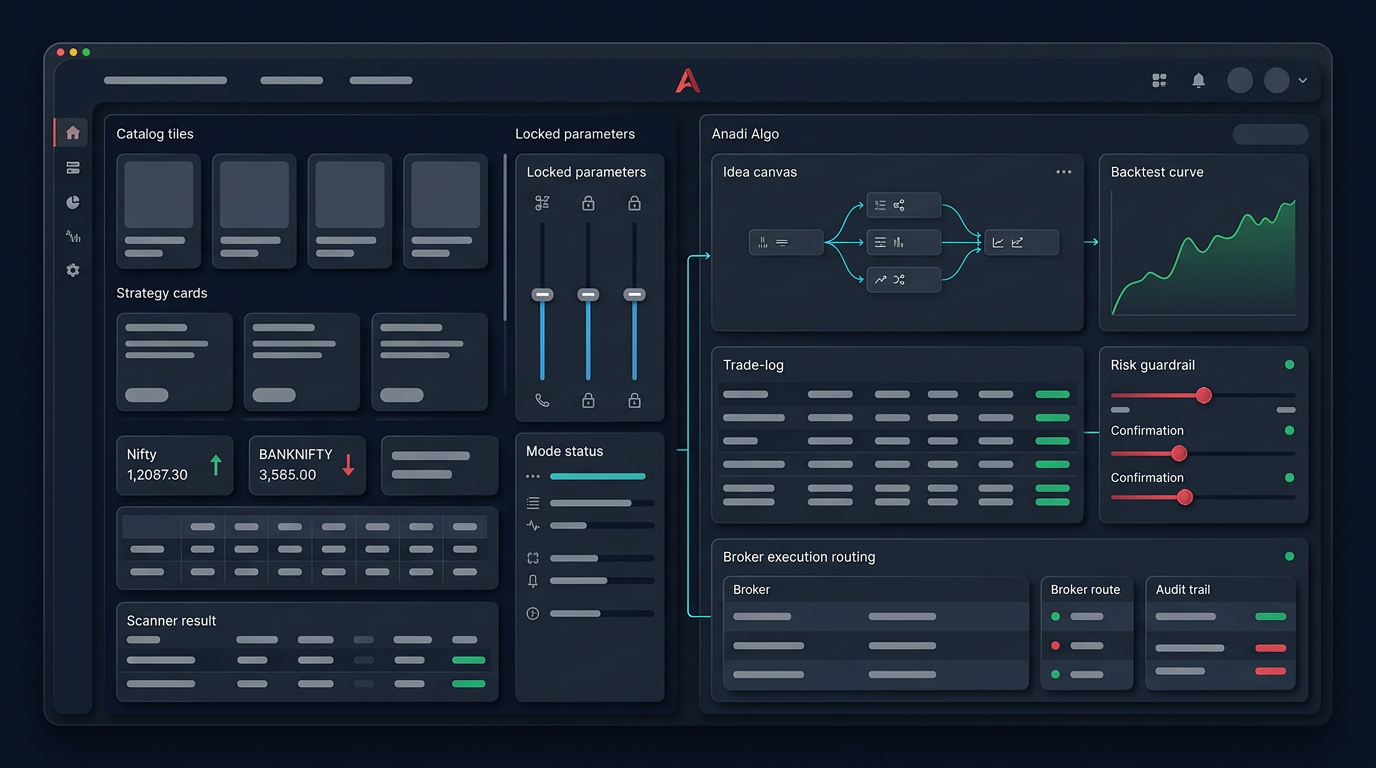
A controlled options workspace helps here because chain inspection, basket preview, and margin estimate sit in one flow — you see the structure and its risk before execution instead of discovering a rejected leg after. The discipline still has to live in your rules, though. Sound risk management is about refusing the order your system cannot actually place cleanly.
Volatility around monthly expiry: scenarios, not predictions
Bank Nifty is among the more volatile Indian index underlyings, which is exactly why so many traders use its option chain for short-term work. The week into a monthly expiry tends to compress that behavior. Here is how to think about it as a set of scenarios your process should be ready for — not as a forecast.
Scenario one: open interest concentrates. As expiry approaches, OI often clusters at round strikes that act as rough support and resistance reference points. That can pin price or it can break violently if those strikes get defended and then abandoned. Your system should treat heavy-OI strikes as context, not as a guaranteed wall.
Scenario two: IV behaves unevenly. Implied volatility can stay elevated on uncertainty and then drop fast once an event passes. A short-premium algo that ignores the IV regime is selling cheap volatility and calling it edge. A simple regime filter — pause or resize when volatility is outside a defined band — is more honest than assuming theta always wins. The bigger point: theta is not the whole edge in option selling.
Scenario three: gap and event risk. Monthly expiry weeks often overlap with macro events, results, and global cues. A backtest that fills at the previous close underestimates gap risk badly. Build your expectations around the worst plausible gap, not the average one.
The job of index context here is to align, not to predict. Looking at the broader index and sector tape before acting on a single Bank Nifty setup is the difference between trading with the regime and fighting it.
Turning contract rules into algo risk filters
Here is how the spec converts into concrete filters you can encode and test. None of these are trade calls — they are guardrails.
- Expiry-proximity gate. Block new position opens inside a set number of sessions before the resolved expiry date, or reduce size as expiry nears. Gamma risk rises sharply into expiry; a fixed stop is not enough protection against it.
- Freeze-aware sizing. Cap any single order under the quantity freeze and auto-slice the rest.
- Lot-multiple sizing. Express risk per trade as a number of lots derived from a fixed rupee risk budget, so position size scales with the lot value rather than guesswork.
- Volatility regime filter. Define an IV or India VIX band; outside it, pause entries or cut size. This keeps a premium-selling system from running flat-out into a volatility spike.
- Rollover rule. Decide in advance whether positions roll to the next month or square off, and automate the trigger off the resolved expiry date.
- Event blackout. Maintain an event calendar (policy days, major results, scheduled data) and suppress fresh entries through high-uncertainty windows.
Every one of these should be tested before it goes live. Run them through options backtesting with realistic fill and gap assumptions, and rebuild your expiry-specific rules in a BANKNIFTY strategy builder so the contract logic and the strategy logic share the same expiry calendar instead of drifting apart. If you are still finding raw setups by eye, a disciplined scanner-to-validation flow keeps signal noise out of the part of the system that places real orders.
A pre-expiry workflow check
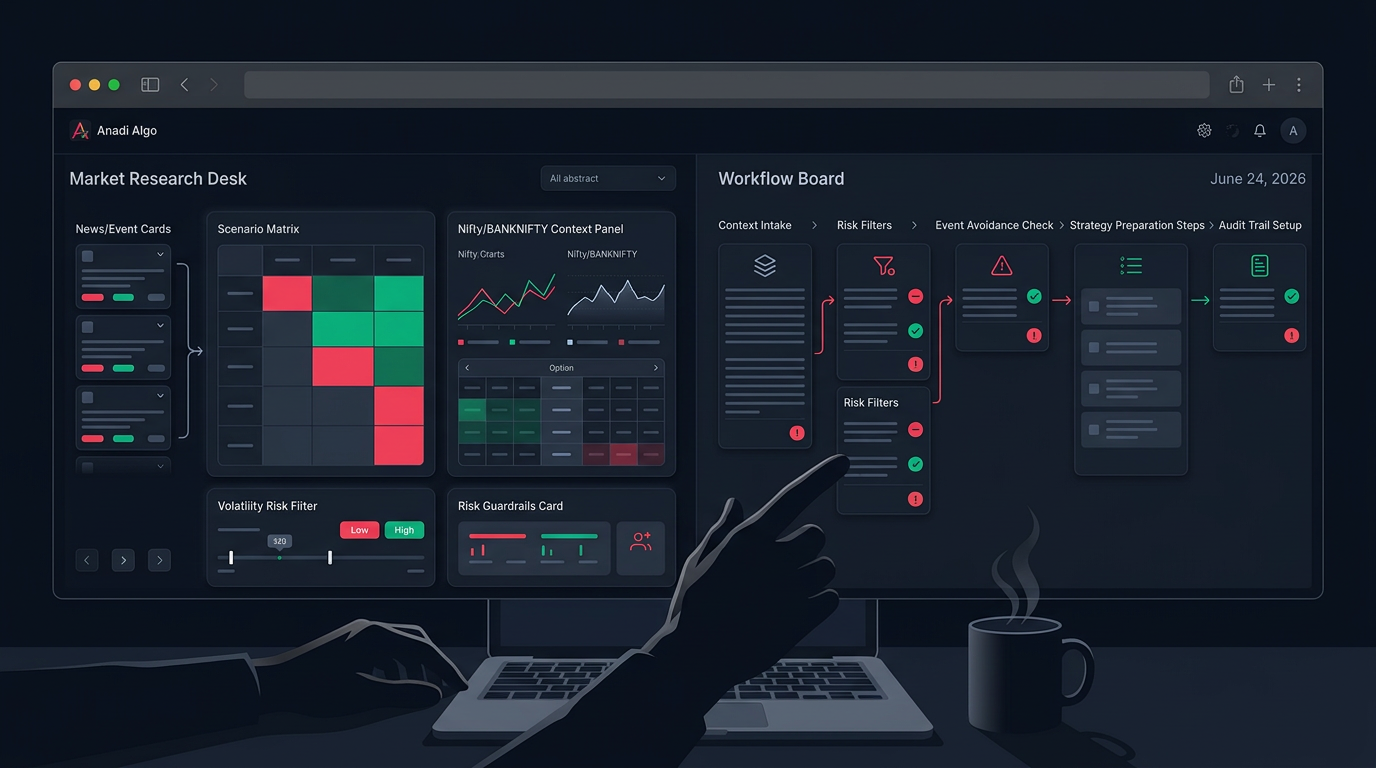
Before the 30 June expiry — and before every monthly expiry after it — run this short checklist against your Bank Nifty automation:
- Is the resolved expiry date confirmed against the NSE holiday calendar, with the last-Tuesday holiday-shift rule applied?
- Does every time-based rule read that one resolved date, with no module computing expiry on its own?
- Are lot size and quantity freeze pulled from live config, and is order slicing freeze-aware for both single legs and baskets?
- Does margin get estimated with all legs considered, so a partial fill cannot break your assumption?
- Is there a volatility-regime filter and an expiry-proximity gate, both tested in a backtest with honest gap and fill assumptions?
- Is your rollover-or-square-off decision automated, not left to a manual scramble on expiry morning?
The contract specification is the least glamorous document in derivatives trading and one of the most important for anyone automating it. Read it, encode it, and re-check it every cycle. A system that respects the expiry day, the lot, and the freeze limit survives the weeks where a system built on chart instinct gets a rejected leg at the worst moment.
If you want to build and test these expiry-aware rules in one place before risking live capital, you can start with early access and run them in a backtest first.
The takeaway: treat the Nifty Bank F&O spec as live config, build your risk filters from its rules, and let market context prepare you for scenarios — never to call the next candle.