It is September 1, 2026. A new month, a fresh Bank Nifty derivatives series, and — because the calendar landed this way — a Tuesday, which is now the expiry anchor for NSE index derivatives. If you run algos on Bank Nifty futures or options, today is one of those days where the boring exchange contract page matters more than any market opinion.
NSE's Nifty Bank F&O specification page is not exciting reading. It lists the underlying, the trading cycle, the expiry day, lot sizes, and quantity freeze limits. But almost every silent algo failure we see traces back to one of those fields being wrong inside someone's system: a stale lot size, a hardcoded expiry weekday, an order that exceeded the freeze quantity and got rejected mid-strategy.
This post walks through what the Bank Nifty contract structure actually means for your process at the start of a new series — risk filters, workflow checks, and the things worth verifying before your first order of the month. No predictions, no trade calls. Just the mechanics and how to encode them.
The calendar as NSE defines it, not as you remember it
Per NSE's contract specifications, Bank Nifty futures run a three-month trading cycle: near month, next month, and far month. A new contract is introduced on the trading day following the expiry of the near-month contract. Expiry falls on the last Tuesday of the expiry period — and if that Tuesday is a trading holiday, the contract expires on the previous trading day instead.
Read that last sentence again, because it is where hardcoded logic dies. "Last Tuesday of the month" is not a fixed rule; it is a rule with a holiday exception. If your algo computes expiry dates locally instead of reading them from your broker's instrument master or the exchange, a holiday-shifted expiry will eventually hand you a position you thought had one more day of life.
What today's date means in practice:
- The August series expired on the last Tuesday of August. September contracts are now the near month, with roughly four weeks of life — the last Tuesday of September 2026 is the 29th.
- A new far-month contract was introduced after the August expiry. If your system builds its tradable-instrument list from a cached snapshot, that list is now stale.
- Bank Nifty option expiries follow a monthly cycle. The days of weekly Bank Nifty expiries are behind us, and any intuition — or backtest — built on that weekly rhythm needs conscious adjustment. More on that below.
One more Tuesday-specific point: September 1 being a Tuesday means a weekly Nifty expiry may land on the very first trading day of the Bank Nifty series. Before your algo goes live, check the actual expiry calendar for today. An expiry-day session behaves differently from a normal Tuesday, and a strategy that treats them identically is making an assumption it never tested.
Why the start of a series trades differently from expiry week
Expiry volatility gets all the attention, but the start of a series has its own character, and your risk filters should know which regime they are in.
Early series: time value is thick, positioning is thin
With about four weeks to expiry, Bank Nifty options carry meaningful time value. Theta decay is slow. Gamma is muted. A short-premium strategy that looks calm here can behave completely differently in the last week of the month. If your algo runs the same strike selection and stop distances across the whole series, you are effectively running two different strategies and calling them one.
Open interest is also still building. On day one of a new series, the OI picture in the Bank Nifty option chain reflects fresh positioning plus whatever rolled over — not a month of accumulated conviction. Support and resistance readings from OI concentration are simply less reliable today than they will be in two weeks. An algo filter that says "fade moves toward the highest-OI strike" is working with thin evidence on September 1.
Expiry week: gamma takes over
In the final days of the series, small index moves produce large option price swings, and the cost of a late stop-loss grows. This is not a prediction about September — it is the structural behaviour of options approaching expiry, every month.
The practical takeaway is not "avoid expiry week." It is: encode the regime. A simple days-to-expiry variable in your strategy — wide behaviour early in the series, tighter risk and smaller size near expiry, or a full stand-down rule if that is your policy — beats one static configuration pretending the month is uniform. If you build strategies in a BANKNIFTY strategy builder, days-to-expiry belongs in the rule set, not in your head.
Contract mechanics that silently break algos
These are the fields from the NSE specification page that cause real, boring, expensive failures.
Lot size
Lot sizes are revised by the exchange from time to time. If your position-sizing logic carries a hardcoded lot size, a revision turns "2 lots" into a different rupee exposure than you designed. The fix is structural: lot size must be read live from your broker's instrument master or contract file at the start of every session, never from a constant in code. This is the same single-source-of-truth discipline you would apply to any config value.
Quantity freeze limits
NSE enforces a maximum order quantity per single order — the freeze quantity. Orders above it are not partially filled; they are rejected. For a retail algo this usually surfaces at the worst time: a scaling-up strategy or a panic exit that tries to close the full position in one order and bounces. Your order layer should know the current freeze limit and slice orders below it automatically. If you have never tested your exit path at maximum position size, you have not tested your exit path.
Expiry-day mapping
The expiry weekday itself has changed in recent years — Indian index derivatives moved from the old Thursday rhythm to Tuesday. Any code, spreadsheet, or mental model that still assumes Thursday is not just outdated; it is a live bug for position management, rollover timing, and historical data alignment. Derive expiry dates from the exchange or broker data, and log the resolved expiry date at order time so you can audit it later.
Rollover and basis
Around the turn of a series, futures basis — the gap between the future and spot — can be noisy as positions roll. If your strategy uses futures price as a signal input against a spot-based indicator, the first sessions of a new series deserve a sanity check: is the basis within its normal range, or is your signal reading rollover mechanics as a directional move?
Reading the option chain on day one of a new month
The search that probably brought you here — Bank Nifty options expiry volatility today — usually ends at a live option chain. The chain is the right place to look, but early-series data needs different scepticism than expiry-week data.
Checks worth running before trusting any chain-based signal today:
- Liquidity first. Confirm bid-ask spreads at your intended strikes are tight enough for your slippage assumptions. Early in a series, liquidity concentrates near the money and thins out fast at distant strikes.
- OI change over OI level. Absolute OI is part-rollover, part-fresh today. Change in OI during the session tells you more about current positioning than the standing number.
- IV in context. An implied volatility reading means little in isolation. Compare it against where IV has been over recent weeks. Elevated IV with a known event ahead (an RBI policy date, major data releases) is priced information, not an anomaly to fade.
- PCR with a grain of salt. Put-call ratio computed on one day of fresh positioning is a weak signal. Let the series mature before weighting it heavily in a filter.
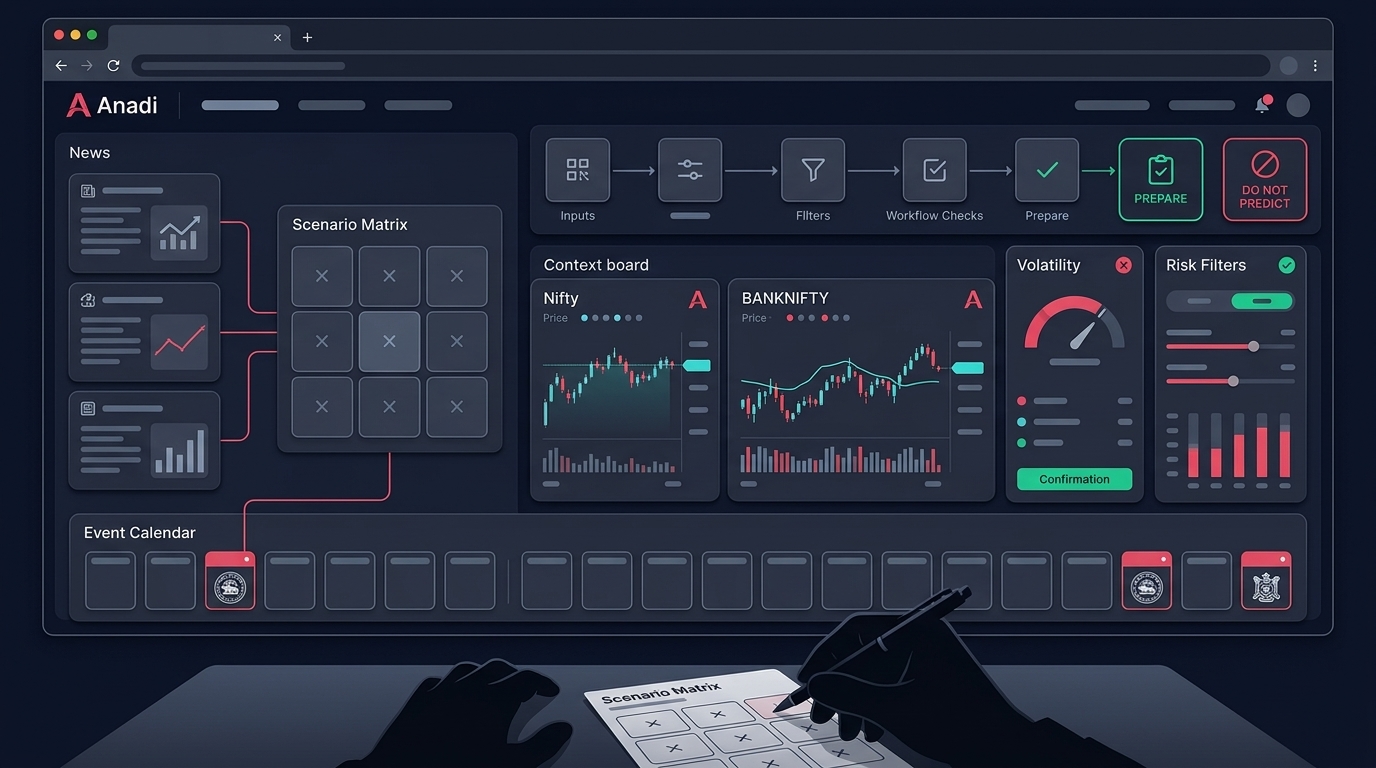
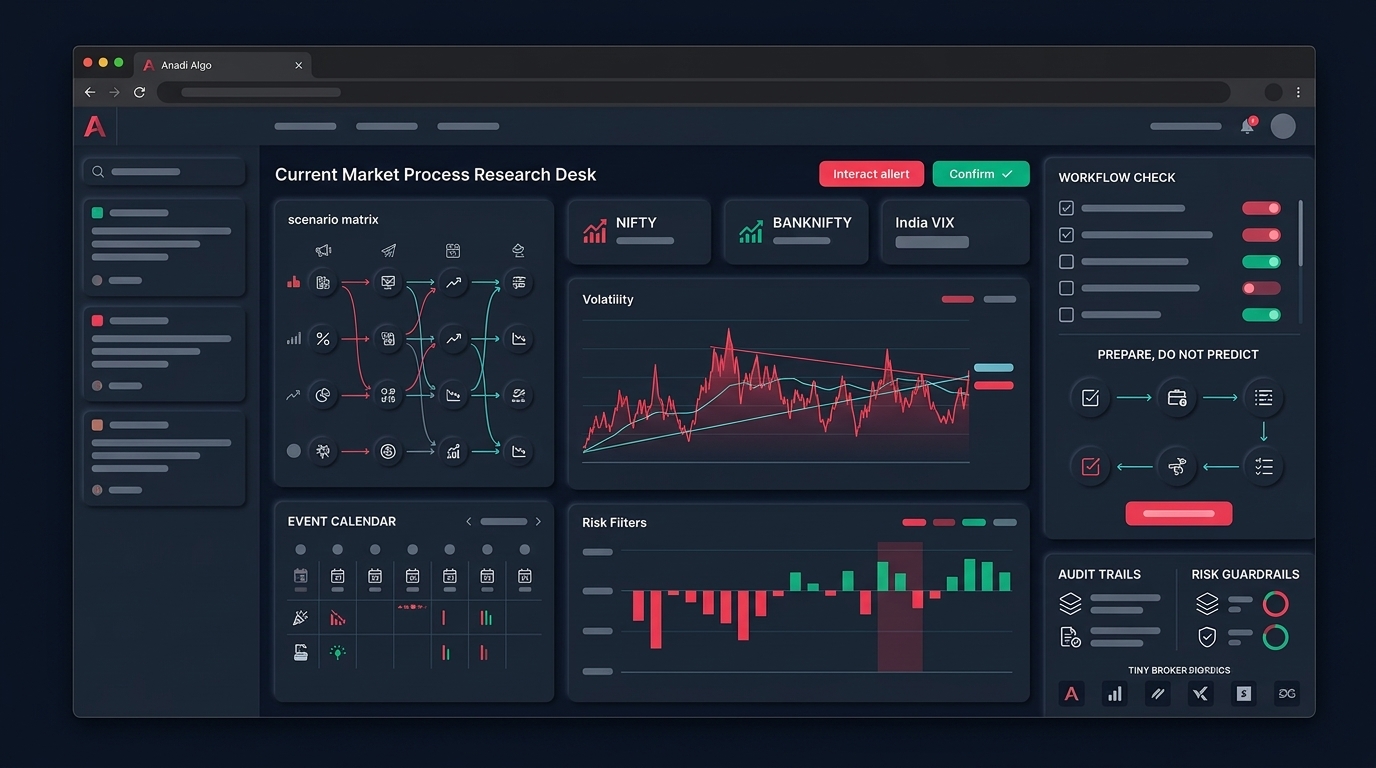
This is exactly why treating the chain as a workflow — signal, then chain inspection, then structure, then margin and risk, then execution — beats strike-picking. In Anadi's options workspace, the chain sits alongside OI analysis, Greeks, basket preview, and a margin estimate, so the risk numbers appear before the order does, not after. Whatever platform you use, that ordering is the point: no leg should reach your broker before you have seen its margin and worst-case loss.
Risk filters worth encoding for the September series
A new month is a natural moment to review the guardrails around your strategies rather than the strategies themselves.
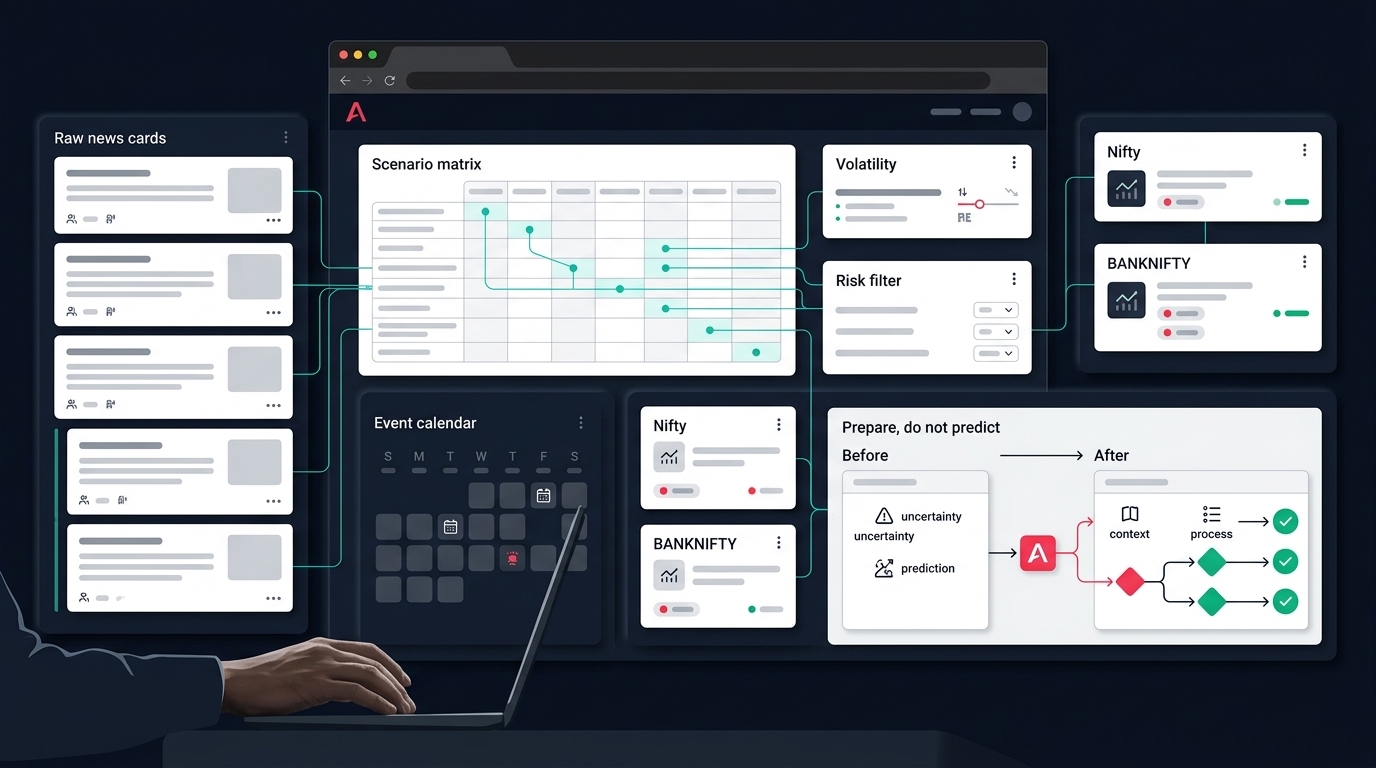
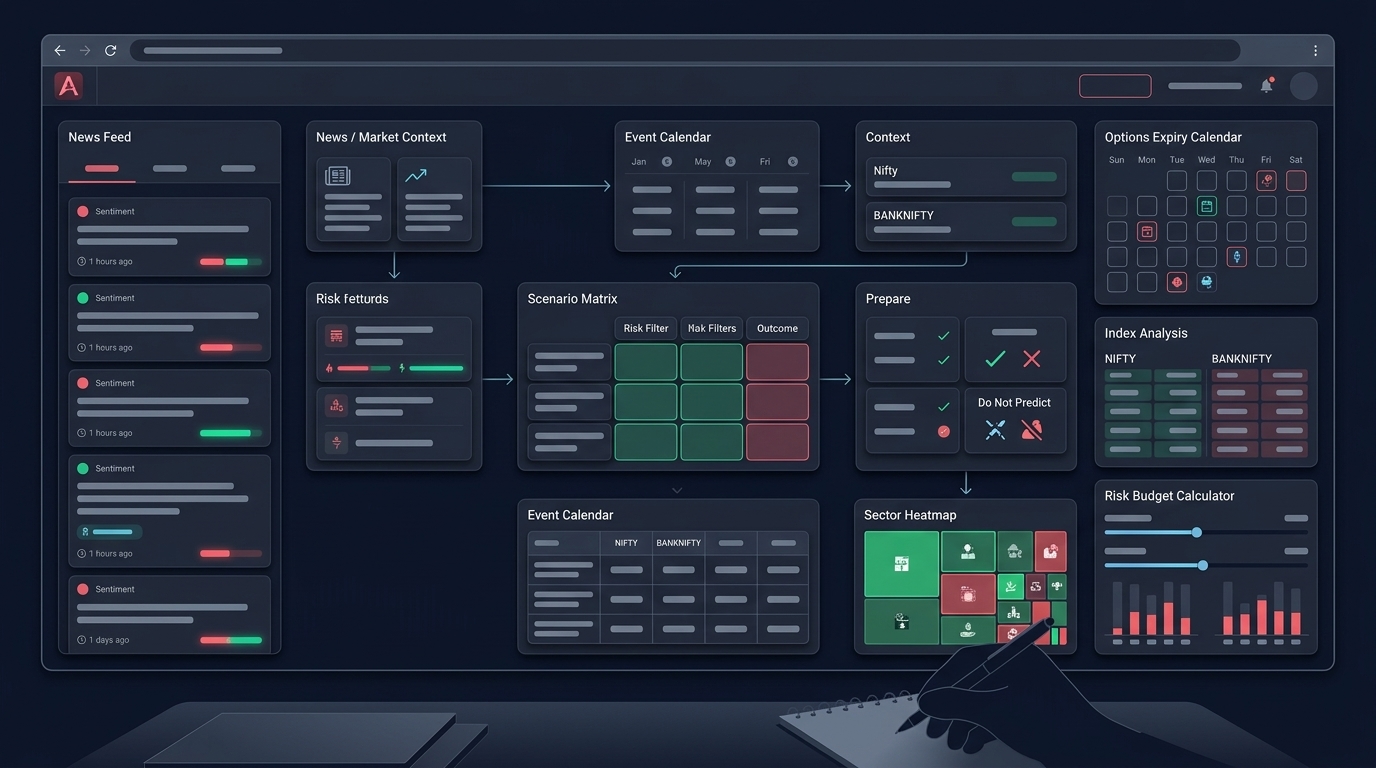
Event calendar awareness. September carries its usual schedule of monthly data and policy dates. Your algo does not need to predict outcomes; it needs to know when to reduce or pause. A simple event-avoidance table — dates on which new entries are blocked or size is halved — is one of the highest-value, lowest-complexity risk controls a retail algo can have. Our weekly market outlook exists for exactly this: using context to prepare, not to chase trade calls.
Daily loss limit. Monthly expiries mean Bank Nifty positioning can build over weeks and unwind fast. A hard daily loss limit at the account level — enforced by the system, not by your discipline in the moment — is the guardrail that keeps one bad session from becoming a bad month. If your platform's risk management layer supports a max-loss kill switch, it should be on before your first September order.
Regime switches, not regime opinions. You do not know whether September will be a low-volatility grind or an eventful month. Nobody does, and this post will not pretend otherwise. What you can do is define, in advance, how your system behaves in each scenario: what changes if India VIX crosses a threshold you consider elevated, what changes in expiry week, what changes on event days. Scenario-based configuration is process; scenario-based prediction is gambling with extra steps.
Freshness and chase protection. Early-series moves can be sharp as positioning builds. A scanner that surfaces a breakout is only half the job — the other half is refusing entries that are already too far from the trigger level. This is why Anadi's Action Center attaches blocked reasons like chase distance to scanner candidates: the signal being real does not make the current price a good entry. If your own stack lacks this, add a simple max-distance-from-trigger rule to every entry.
Backtesting the September series without fooling yourself
Two structural traps specific to Bank Nifty history:
First, the weekly-to-monthly shift. Historical Bank Nifty option data includes years when weekly expiries existed. A strategy backtested across that era — especially anything expiry-day-centric — was tested against a market structure that no longer exists. Either restrict the test window to the monthly-only period or explicitly model the difference. Otherwise your equity curve is measuring a ghost.
Second, expiry-day alignment. If your historical data or backtest engine maps expiries to the wrong weekday for part of the sample, every days-to-expiry calculation in that window is off, which quietly corrupts theta and gamma assumptions. When running options backtesting, verify that the engine's expiry calendar matches the actual exchange calendar, holiday shifts included, before trusting a single metric.
And the evergreen one: backtest the regime split. Measure early-series performance and expiry-week performance separately. Many option-selling strategies earn their whole edge in one part of the month and give it back in the other; a blended average hides this completely.
A September 1 checklist before your first order
Run through this before the session, and again at every series start:
- Instrument master refreshed — new near/next/far month contracts loaded, stale August symbols purged.
- Lot size and freeze quantity read live — from broker data, not from constants; exit path tested at full size.
- Expiry dates derived, not assumed — holiday shifts handled; today's possible weekly Nifty expiry checked.
- Days-to-expiry wired into strategy config — early-series and expiry-week behaviour defined in rules.
- Event dates loaded — entry blocks or size reductions set for policy and data days.
- Daily loss limit armed — system-enforced, account-level, on before the open.
- Chain checks defined — spreads, OI change, IV context validated before any option entry.
- Backtest window sanity — monthly-expiry era only, expiry calendar verified.
None of this predicts what Bank Nifty does this month, and that is the point. The traders who survive many Septembers are not the ones who guessed the direction; they are the ones whose systems knew the contract rules, respected the calendar, and had the guardrails on before the first tick.
If you want this workflow — scanner to chain to margin to risk to execution — in one place instead of stitched across tabs and spreadsheets, you can request early access to Anadi Algo and build the September checklist into the platform itself.