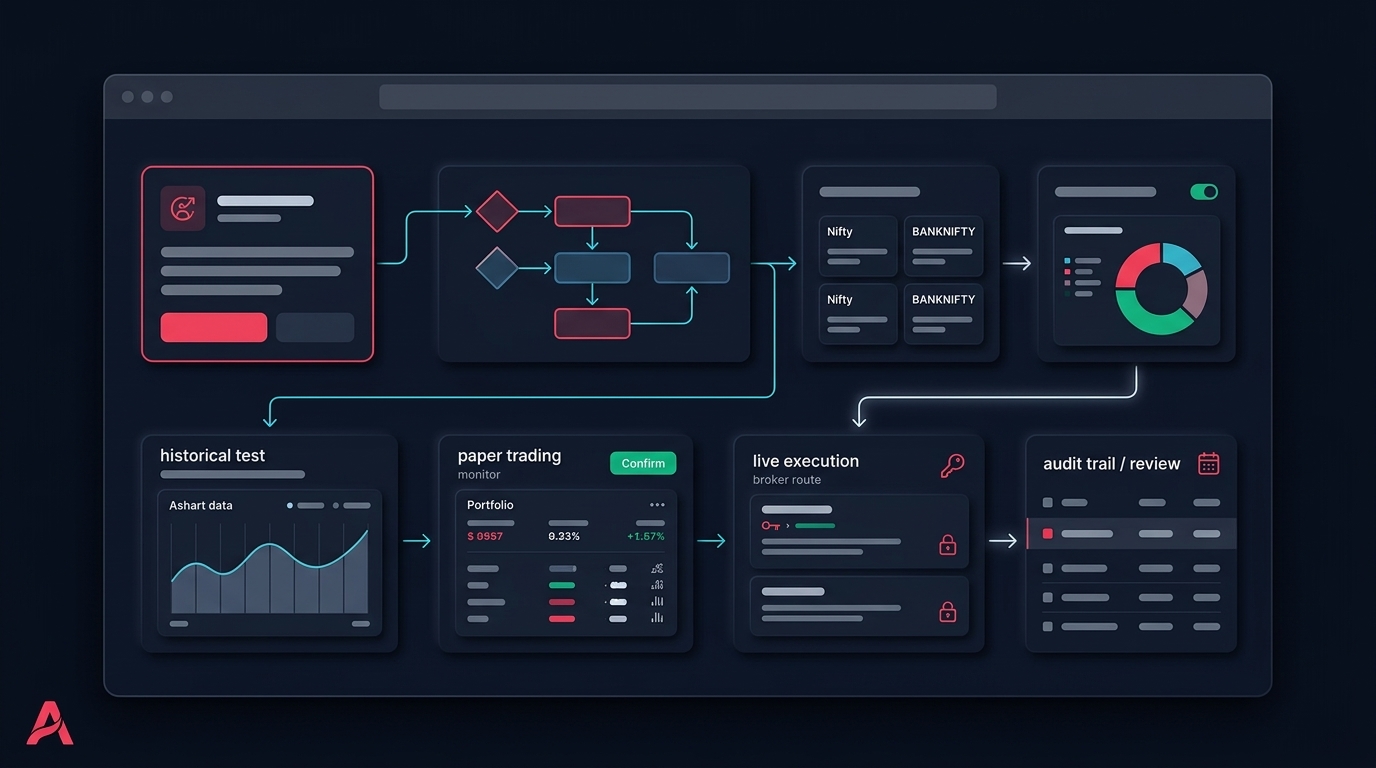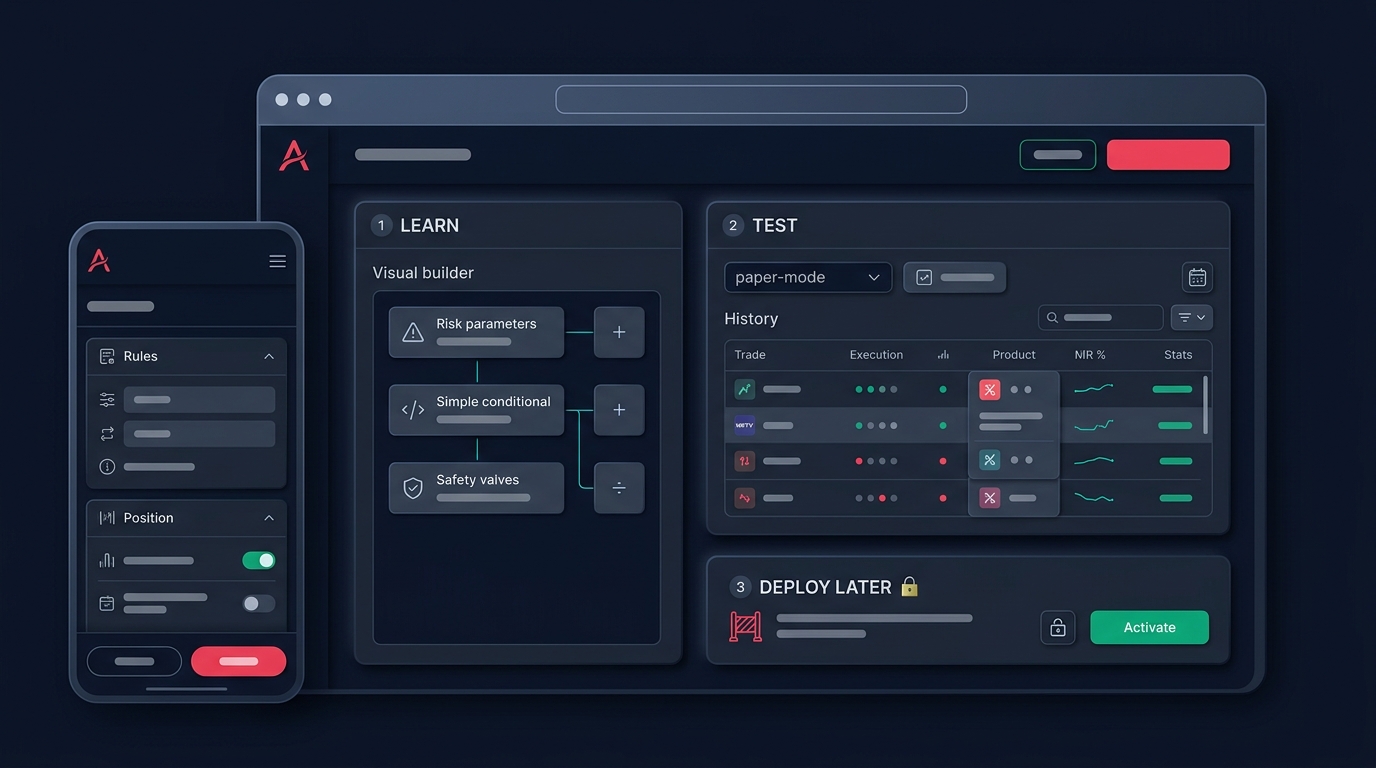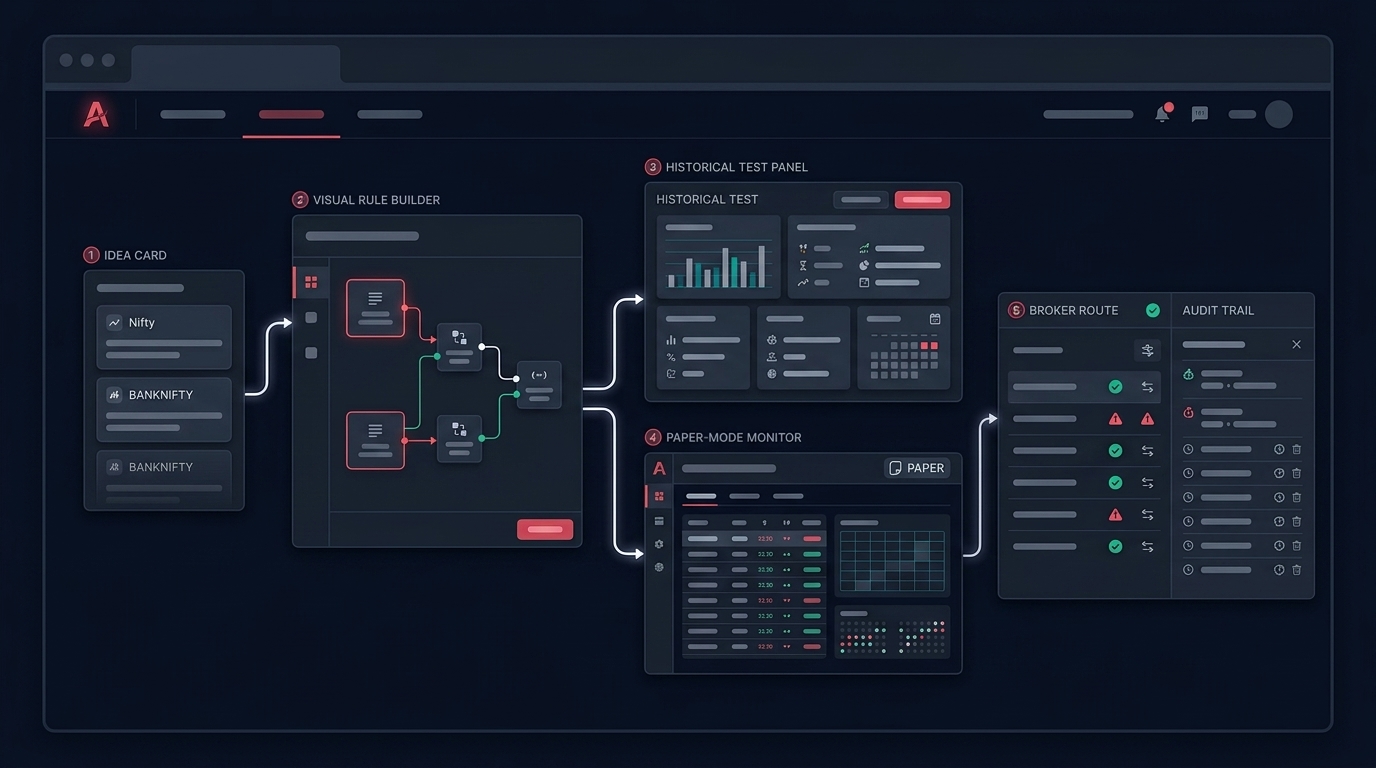
Your algo is live. The strategy backtested well, the paper trading run looked clean, and now real money is flowing through it. This is the part where most retail traders go wrong — they assume "automated" means "ignore it."
It doesn't. Live algos need active supervision, especially in the first few weeks. Markets shift, broker APIs hiccup, internet drops, and your strategy can quietly drift from its tested behavior. The job during market hours is not to override the algo on a whim, but to catch the small failures before they become large ones.
Here is a practical checklist you can run through during the trading day.
Pre-Market: 9:00 to 9:15 AM
The fifteen minutes before the open decide whether your algo even gets a fair chance.
Broker session check. Most Indian brokers require a daily login or TOTP refresh. Zerodha Kite, Dhan, Flattrade, Upstox — all of them expire access tokens daily. Confirm your session is active before 9:14 AM. A stale token means your first signal will fail silently.
Margin and funds. Look at your available margin in the broker terminal, not just your platform. Pledged collateral, MTF dues, and pending settlements can all reduce what your algo can actually deploy. If your strategy assumes ₹2 lakh of margin and you have ₹1.4 lakh free, position sizing will misfire.
Instrument subscription. If you trade NFO options, confirm today's expiry instruments are loaded. Weekly expiries roll every Thursday for indices, and the new contract sometimes takes a few minutes to appear in symbol masters.
Strategy state. Check that overnight positions, pending orders, and stop-losses carried over correctly. A square-off that did not execute yesterday will leave your algo in an unexpected state.
The First 15 Minutes: 9:15 to 9:30 AM
This window is the noisiest part of the day. Spreads are wide, circuits hit fast, and order rejections spike.
Watch for these specifically:
- Order rejections. Margin shortfall, freeze quantity breached, scrip not allowed for intraday, circuit limit hit. Each rejection reason tells you something different. Log them.
- Partial fills. A 75-lot Nifty order that fills only 50 lots changes your position sizing. Your stop-loss logic needs to handle the actual filled quantity, not the requested one.
- Tick latency. Compare your platform's last traded price against the broker terminal. A lag of more than 2-3 seconds means your signals are stale.
If you are running multiple instruments, sort your monitoring view by entry time. The first trade in each instrument is where most setup bugs surface.
Mid-Day Monitoring: 9:30 AM to 3:00 PM
Once the morning chaos settles, shift to periodic checks rather than continuous staring. Every 30-45 minutes is enough for most systems.
Position vs. Intended Exposure
Your algo wanted to be long 1 lot of BANKNIFTY 50000 CE. Is that actually what you hold? Reconcile broker positions against your platform's view at least twice mid-session. Mismatches usually come from:
- Manual interventions you forgot about
- Stop-loss orders that executed but were not acknowledged back
- Hedge legs that failed to place while the main leg went through
For options strategies, an unhedged naked leg is the most common silent failure. If you built a BANKNIFTY strategy with a spread structure, both legs must be in. One leg alone changes your risk profile completely.
P&L Drift Signals
Live P&L should track expected P&L within a reasonable band. If your backtest at this point in the day showed average drawdown of ₹3,000 and you are sitting at ₹12,000 down, something is off. Possible causes:
- Slippage worse than modelled
- Spread costs you ignored in backtesting
- Wrong instrument (illiquid strikes, far OTM)
- Strategy entering in a regime it never saw in test data
Data Feed Health
If your platform's chart freezes or your indicator stops updating, do not assume the broker feed is fine. Cross-check against NSE's official site or a second data source. A frozen feed combined with a live order router is dangerous — the algo may exit on stale prices.
Risk Guardrails You Should Have Pre-Configured
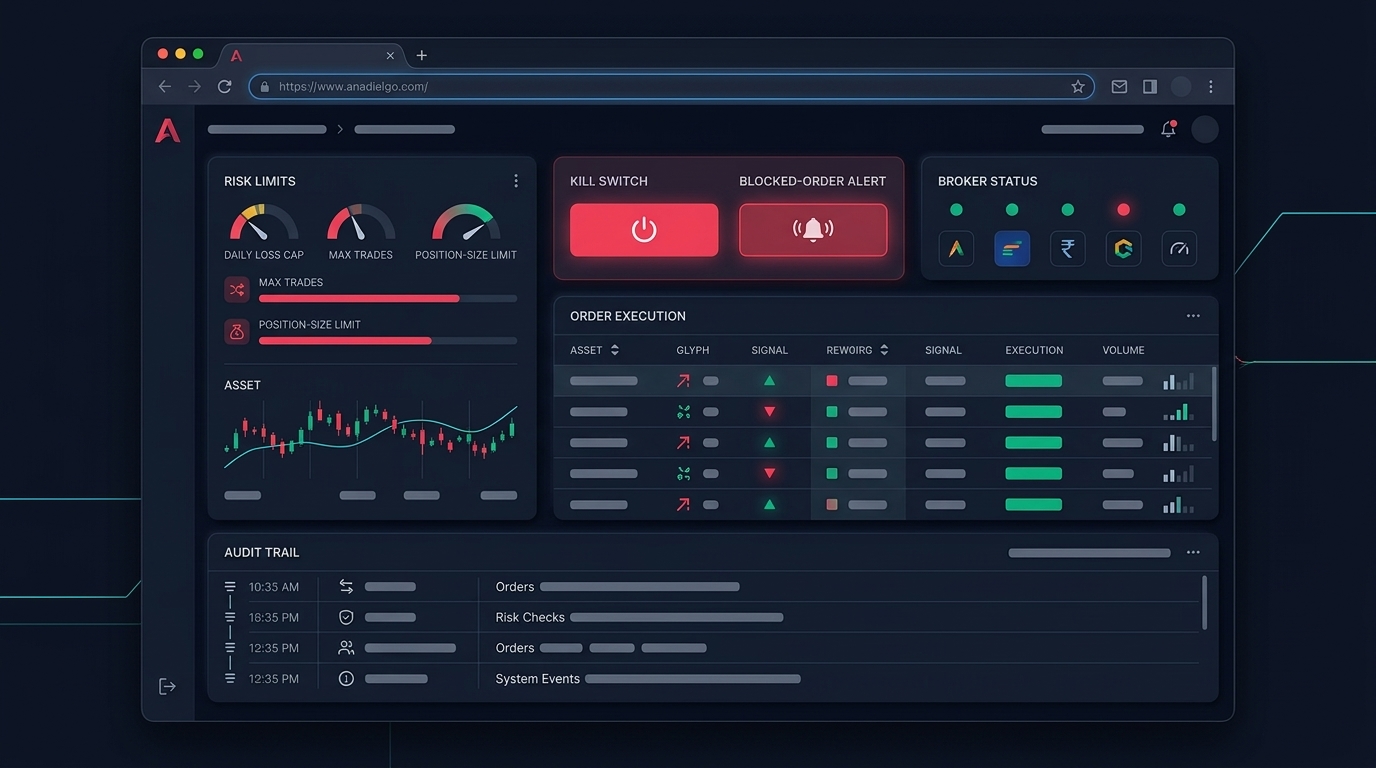
Monitoring is the second line of defence. The first line is automated cut-offs that do not need your attention. Before you go live, these should be set:
- Daily loss limit. A hard rupee figure that flattens all positions and blocks new entries.
- Per-trade max loss. Stop-loss must be on the broker side, not just in your strategy code. Network drops should not become open-ended risk.
- Max concurrent positions. Caps runaway entries if a signal generator misbehaves.
- Order rate limit. Prevents an infinite-loop bug from firing 200 orders in a minute.
Strong risk management here means you don't have to babysit every tick. The system fails safe, not loud.
Last 30 Minutes: 3:00 to 3:30 PM
Intraday systems need clean exits. Check that your square-off logic is armed and that broker MIS/CO positions will not be auto-squared by the broker before your strategy gets to exit them. Zerodha's MIS auto-square is typically 3:20 PM for equity and 3:25 PM for derivatives — your strategy's exit time must respect this.
For positional carryovers, confirm that overnight margin is available and that any roll logic (for expiring contracts) ran correctly.
Post-Market: 3:30 PM to 4:00 PM
Run a quick reconciliation:
- Total trades expected vs. executed
- Slippage per trade (entry and exit)
- Rejected orders with reasons
- Any positions still open that should not be
This is also when you note anomalies for the next session. A platform like AutoTrade gives you the execution layer and monitoring view in one place, but the discipline of reviewing the log is on you.
If you are still evaluating execution platforms or want guardrails built around your existing strategies, you can request early access and walk through your workflow with the team.
The Short Daily Checklist
Pin this somewhere visible:
- Broker session refreshed before 9:14 AM
- Margin matches strategy assumption
- First 15 minutes — watch every order and rejection
- Mid-day — reconcile positions every 45 minutes
- Cross-check live P&L against expected range
- Verify data feed is updating, not frozen
- Confirm hard stop-loss is at broker, not just in code
- Last 30 minutes — square-off logic armed
- Post-market — log slippage, rejections, anomalies
Automation does not remove the trader from the loop. It just changes what the trader watches. Get the watching right, and the algo gets to do its job.