Option selling feels systematic. You collect premium. Time passes. Theta decays. Premium reduces. You profit.
That logic is not wrong — theta is real. But thousands of retail traders in India have found out the hard way that theta is only one part of the story. The traders who survive long-term are not the ones who collected the most premium. They are the ones who understood what theta does not protect them against.
What Theta Actually Tells You (And What It Doesn't)
Theta is the daily decay of an option's time value. If you sell a Nifty 25000 Call at ₹120 with theta of ₹8, you theoretically earn ₹8 per day as time passes — assuming everything else stays constant.
That "everything else" is doing a lot of heavy lifting.
Theta only tells you what happens when the market does nothing — no price move, no volatility change, no news. In reality, markets move every session. Theta is the salary. Gamma and vega are the unexpected bills.
Understanding theta without understanding gamma and vega is like knowing your monthly income without knowing your rent, EMI, and whether a medical emergency is coming.
Gamma: The Risk That Theta Sellers Ignore
Gamma measures how fast delta changes as the underlying moves. When you sell an option, you are short gamma. This means your directional exposure (delta) grows against you as the market moves toward your strike.
The critical detail: gamma is highest for at-the-money (ATM) options and increases sharply as expiry approaches.
On a Monday with 10 days to expiry, a 200-point Nifty move might shift your short call's delta from 0.20 to 0.35. Painful, but manageable.
On expiry day, the same 200-point move can shift delta from 0.15 to 0.75. Your ₹120 premium can move to ₹350 in under an hour. The theta you collected over the past week becomes irrelevant.
This is not theory — it is documented consistently in Nifty and BANKNIFTY options around weekly and monthly expiries. The gamma risk on expiry day is a well-known phenomenon, and it is disproportionately punishing for retail sellers who hold positions into the final session.
If you are selling options and not tracking how close your short strikes are to ATM as expiry approaches, you are flying with instruments covered.
Vega and the VIX Spike Problem
Vega measures how much an option's price changes with a 1-point move in implied volatility. Sellers are short vega — when IV rises, option premiums inflate, and your short position loses.
India VIX can spike sharply and quickly. A Union Budget, an unexpected RBI rate decision, a global geopolitical shock — these events can push India VIX from 13 to 20 in a single session. Option premiums can double or triple in that window.
A seller who patiently collected ₹80–100 in theta over three calm sessions can find those positions showing a ₹300–400 loss in 40 minutes during a VIX spike.
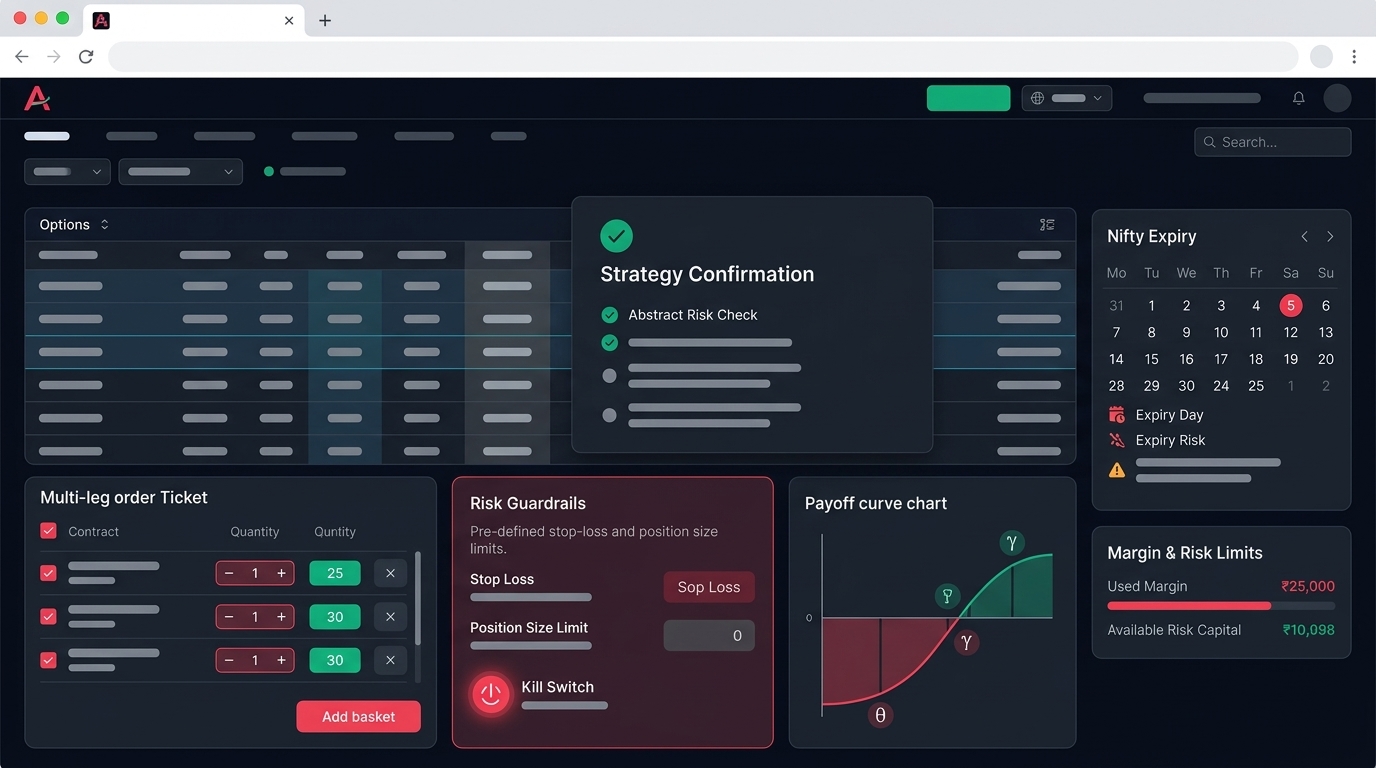
This is why risk management is not optional for option sellers — it is the only thing standing between you and an account-level drawdown. Stop-losses, position size limits, and kill-switches are not conservative choices. They are survival tools.
The Tail Risk Sellers Underestimate
Beyond gamma and vega, option sellers face tail risks that backtests routinely understate.
Gap openings are common in Indian markets. Nifty can open 200–400 points away from the previous close due to overnight global cues, pre-market FII activity, or a sudden macro event. If you are short an OTM call and the market gaps past your strike at open, there is no stop-loss that triggers in between. You take the full gap.
Weekend and overnight holds compound this. Retail sellers often hold positions from Thursday to Monday, through two full days of news flow they cannot react to.
Event-driven moves — budget day, US Fed announcements, general election results — create the kind of single-day moves that do not show up in most standard backtests. The data is there, but platforms that smooth historical data or exclude specific event days will miss these outliers.
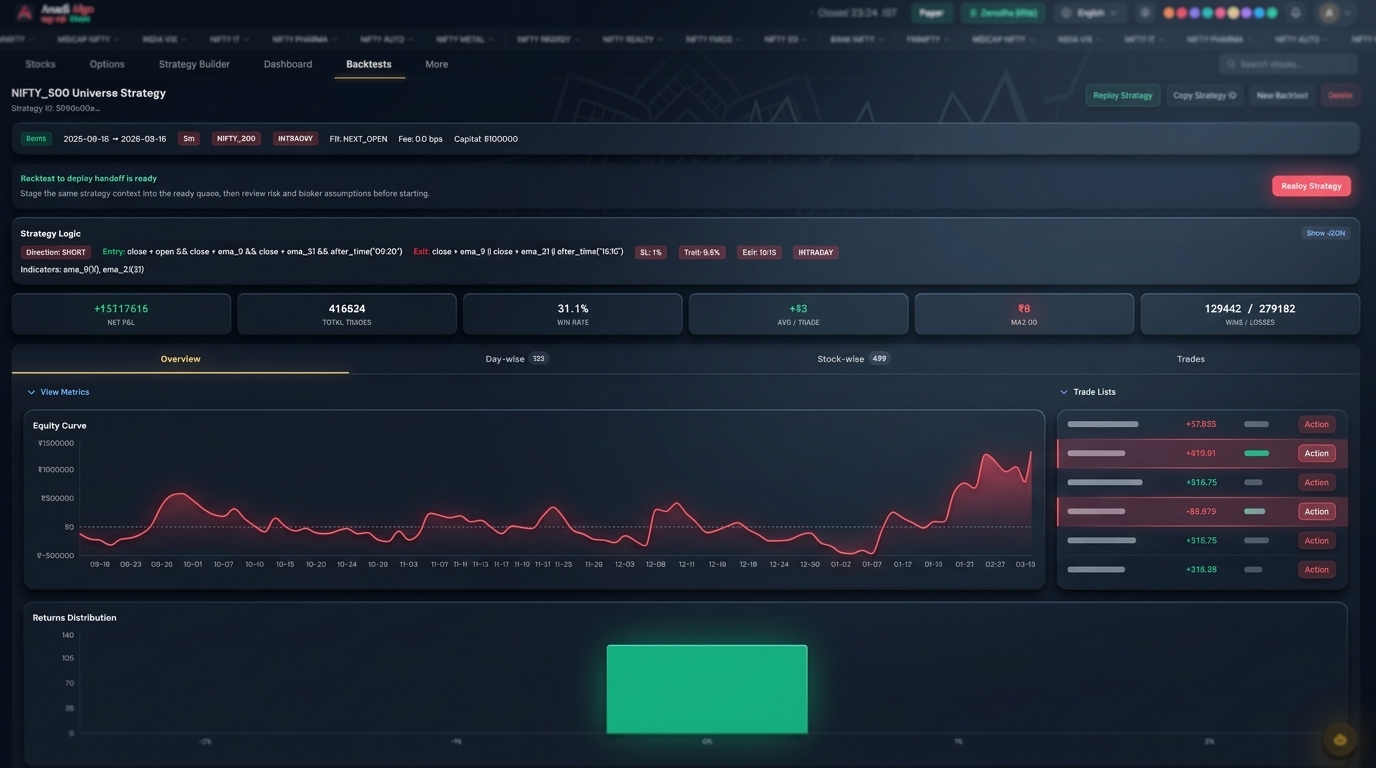
Testing your setup through options backtesting on actual expiry-day and event-day data is essential before going live — not just on calm, trending market data.
Position Sizing Is the Real Edge
Theta gives you a probability edge. Position sizing determines whether that edge is actually profitable in rupee terms.
If one adverse move can erase 10 days of theta collection, your expected value is not positive — even if you win 7 out of 10 trades. The math only works if your loss on the bad days is bounded.
Practical position sizing for option sellers:
- Risk no more than a defined percentage of your account on any single trade — many experienced traders use under 2%
- Set a hard daily loss limit — once hit, no new trades that day
- Limit the number of short option positions open at once, especially in the same underlying
- Use stop-losses on your short positions, even if they feel costly in theta terms
The traders who run option selling strategies at scale always have these rules codified — not as intentions, but as hard constraints.
A Practical Risk Checklist Before You Sell Options
Before entering any option selling trade, run through this:
- Max loss is defined before entry: Know the worst-case loss, not just the expected one. If it is uncomfortable, size down.
- Check IV rank before selling: Are you selling into elevated IV, or historically low IV where there is very little margin for error?
- Gamma check: How many days to expiry? How close is your strike to ATM? Both factors together determine your real gamma exposure.
- Overnight and event risk: Is there a budget announcement, RBI policy decision, or major global event before your next trading session?
- Stop-loss and kill-switch configured: Are they set and tested — not just planned? Use platform-level controls, not manual discipline alone.
- Daily loss limit active: At what P&L do you stop trading for the day, regardless of conviction?
- Backtested on expiry and event days: Has this setup been tested against the sessions where it would hurt most, not just the average session?
If you are automating any part of your option selling workflow, these controls need to be enforced at the platform level — not left to execution-time judgment.
Theta Is an Income, Gamma Is the Bill
Theta is real. Selling options has a genuine statistical edge in calm market conditions. Premium decay is not a myth.
But theta is income. Gamma and vega are the unexpected bills. In Indian markets — with weekly Nifty expiries, high intraday volatility, and frequent event-driven moves — those bills can arrive without warning and be far larger than the income you built up.
The traders who stay in the game are not necessarily the ones with the best strike selection or the most premium collected. They are the ones who understood that managing the downside — through sizing, stop-losses, and structured risk controls — is what makes the theta edge sustainable over time.
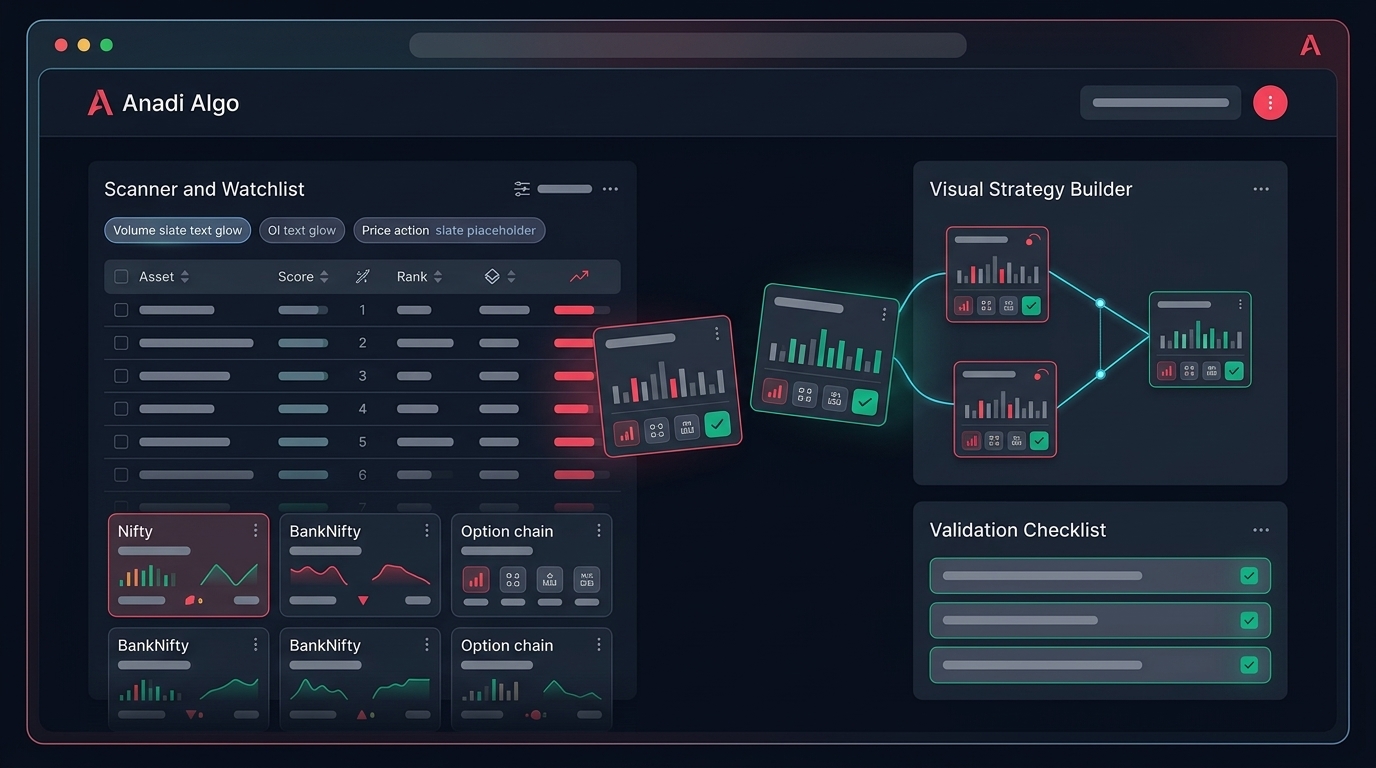
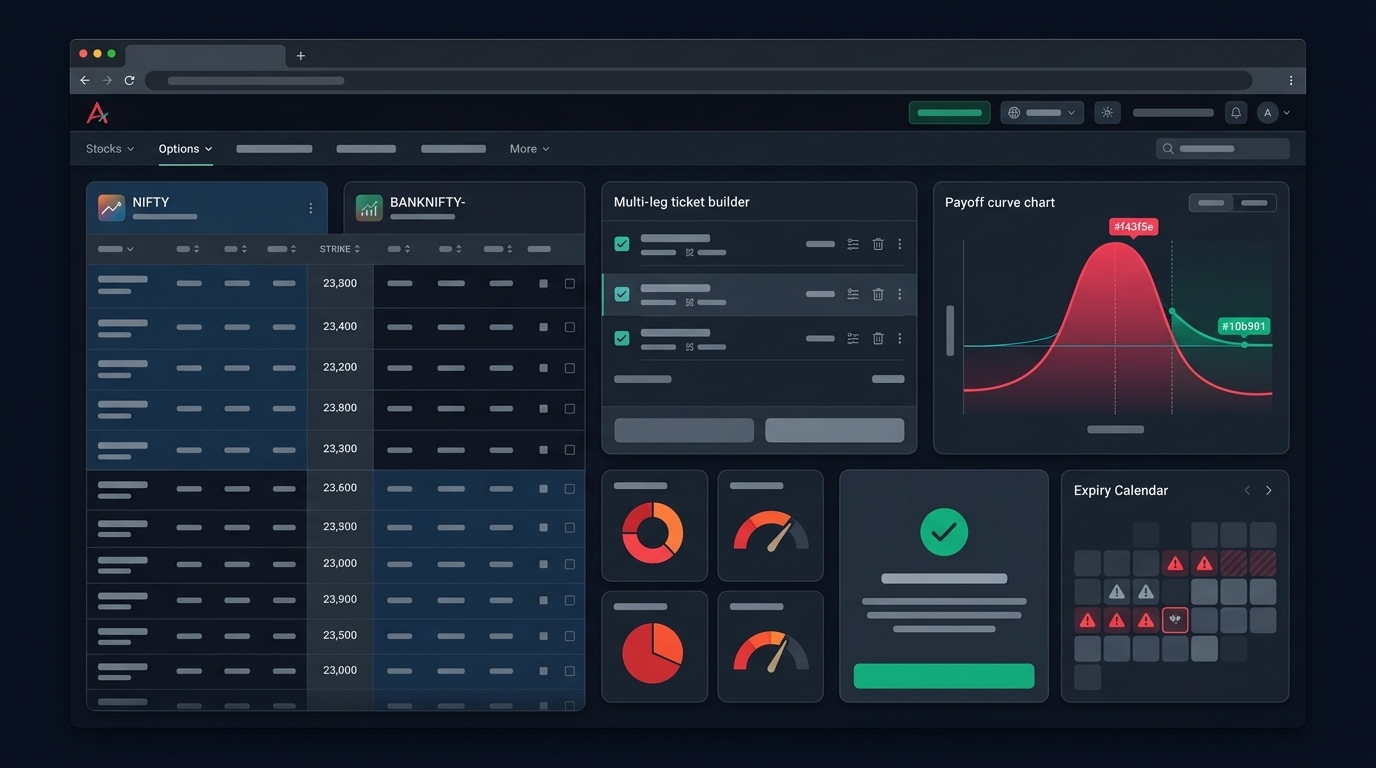
If you want to test your option selling setup against real expiry data and build in hard risk controls before going live, explore Anadi Algo's early access — built for Indian retail traders who want structure before scale.
Word count: ~980 words. Suggested slug: option-selling-risk-theta-gamma-nifty. Two internal links included (/risk-management/, /options-backtesting-india/), one /early-access/ CTA near the end.