If you have spent any time backtesting Nifty or Bank Nifty option strategies, you have probably used StockMock. It is a clean, no-code, expiry-focused backtester, and for a lot of traders it does exactly what they need: run a straddle or strangle idea over historical expiries and see how it would have behaved.
So why look for an alternative at all?
Usually because the tool answers one question well — "would this strategy have worked?" — but leaves the next five questions open. What do I scan today? How do I size it? When do I go live? How do I place and manage the actual orders? A backtest is one station in a longer workflow, and the honest way to compare tools is to ask which station you are actually stuck at.
This post is a workflow-based comparison, not a "who wins" list. Be clear about what you need before you switch anything.
What StockMock is genuinely good at
Credit where it is due. StockMock focuses on options backtesting for Indian indices, and that focus is its strength.
- No-code strategy building. You define legs, entry/exit times, stop-loss and target logic without writing Python.
- Expiry-aware simulation. It is built around weekly and monthly expiry behaviour on NIFTY, BANKNIFTY, FINNIFTY and similar indices — which is exactly where most retail option strategies live.
- Fast idea validation. You can throw a short-straddle or iron-condor idea at years of data and get an equity curve, drawdown and win-rate read quickly.
If your entire need is "test an expiry strategy on index options before I commit," a dedicated backtester covers a large part of that. There is nothing wrong with using the right narrow tool for a narrow job.
Where a backtest-only tool stops
The gap shows up the moment your backtest looks good and you ask "now what?"
A pure backtesting platform typically does not deploy live, does not scan the market for setups, and does not manage a running position. Per public comparisons of Indian backtesting tools, StockMock sits in the backtesting-first bucket without native live deployment — which is fine by design, but it means the rest of the workflow lives somewhere else.
That "somewhere else" is where retail traders lose the plot:
- The backtest assumed a fill; live, you get slippage, rejection, or a session that expired.
- The backtest picked strikes with hindsight; live, you are choosing them at 9:20 with real Greeks moving.
- The backtest never blocked a late chase; live, you enter 40 points past your level because the signal "looked fresh."
None of these are backtesting problems. They are workflow problems, and no amount of extra backtest tuning fixes them. This is the real reason people search for an alternative — not because the backtest is wrong, but because the workflow around it is missing.
The two questions a "StockMock alternative" really answers
Before comparing products, split the decision into two honest buckets.
Do you only need a better/different backtester?
If you genuinely just want another engine to test expiry strategies — maybe different data assumptions, different cost modelling, or a second opinion on a straddle — then you want a like-for-like backtesting tool. Compare on data quality, slippage/brokerage modelling, expiry handling, and how it treats options backtesting assumptions. That is a narrow, fair comparison and StockMock is a strong incumbent in it.
Or do you need the whole trade to live in one place?
If your real frustration is jumping between a backtester, a broker terminal, a scanner tab, and a notes app, then "a better backtester" is not your answer. You need an end-to-end workflow where the backtest, the live setup, the risk check and the order ticket all reference the same idea.
That is the distinction this comparison hinges on: pure backtesting need vs end-to-end trade workflow need.
Comparing on workflow fit, not features
Here is how the two approaches map against the stations a real options trade passes through.
1. Idea and discovery. A backtester starts after you already have an idea. An end-to-end platform helps you find one — a scanner surfaces optionable setups and ranks them before you commit attention.
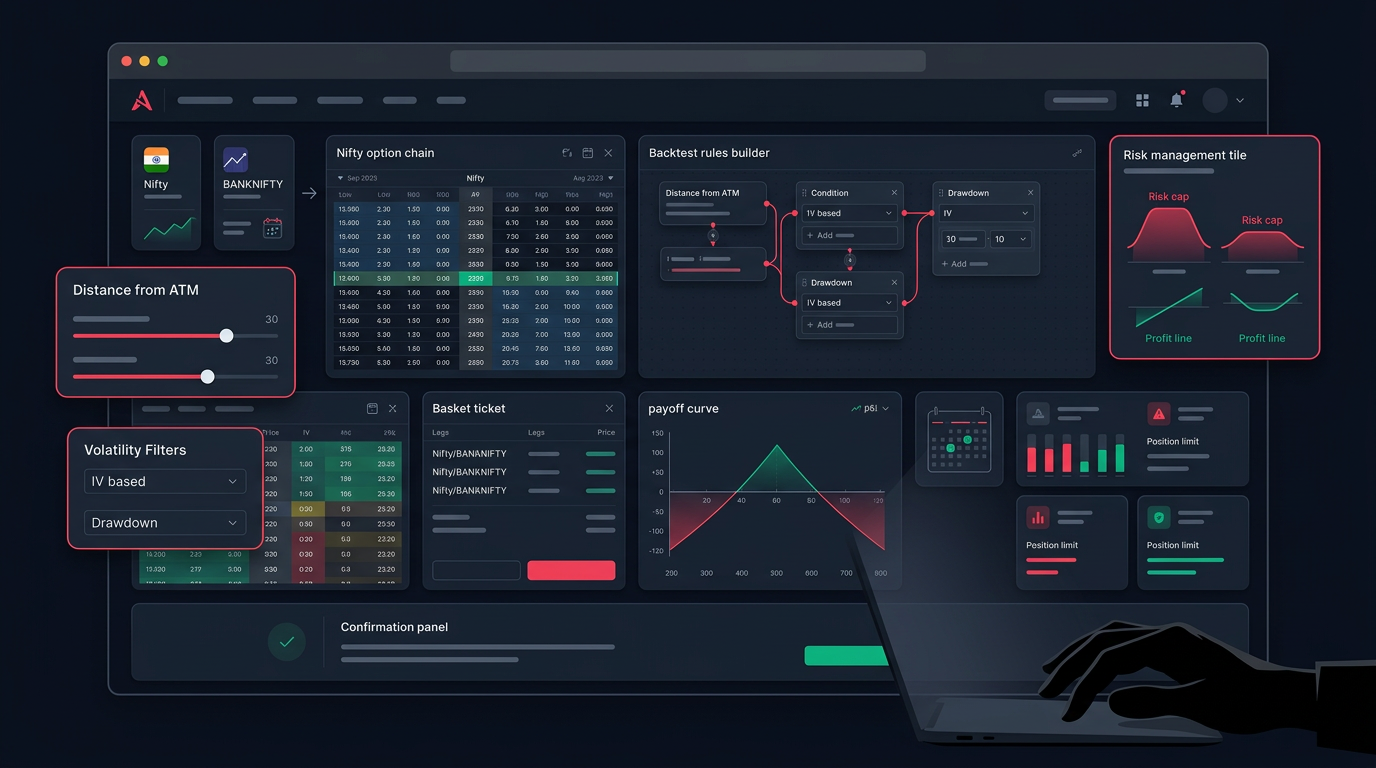
2. Structure and Greeks. StockMock tests the structure historically. In a live workflow, you still need to read IV and theta today. Anadi Algo keeps chain, OI, IV/theta and a strategy finder in one options desk, so the volatility context sits next to the structure you are about to trade — not in a separate tab you forget to open.
3. Backtest. Both worlds agree here: test before you risk money. The difference is whether the tested strategy can then move forward without being re-entered by hand.
4. Sizing and risk. A backtest reports drawdown after the fact. A workflow enforces it before the order — budget fit, max loss on a defined-risk spread, and a daily loss guardrail. Treat risk management as a station, not a footnote.
5. Execution and paper-first. This is the cliff a backtest-only tool cannot cross. An end-to-end tool lets you route the same idea into paper trading first, then live, with the position context carried through instead of retyped.
6. Manage the open position. After entry, the backtest is done but the trade is not. Someone has to watch the position, respect the stop, and decide on adjustments. That belongs in the same workspace, not a broker screen you switch to blind.
The point is not that a backtester is bad. It is that a backtester answers station 3 and goes quiet on 1, 4, 5 and 6.
A quick self-check before you switch
Run through this honestly. Your answers tell you which tool you actually need.
- Do I already have strategies, and just want to test them? A focused backtester may be enough. Judge it on data and cost realism.
- Do I re-type the same trade across three tools? You have a workflow problem, not a backtesting problem.
- Do I go live straight from a backtest with no paper stage? You need a paper-first execution path, which pure backtesters do not provide.
- Do I skip position sizing because "the backtest was profitable"? You need risk enforced at order time.
- Do I chase late entries the backtest never allowed? You need a discovery-to-execution filter, not more backtest tuning.
If most of your ticks fall on the first line, stick with a dedicated backtester — that is the fair answer. If they fall lower down, a single end-to-end workflow will save you more than any backtesting engine swap.
The takeaway
"StockMock alternative" is the wrong search if you only want a second backtester — StockMock is already good at that narrow job. It becomes the right search when the thing failing you is everything around the backtest: discovery, sizing, paper-to-live, and managing the position.
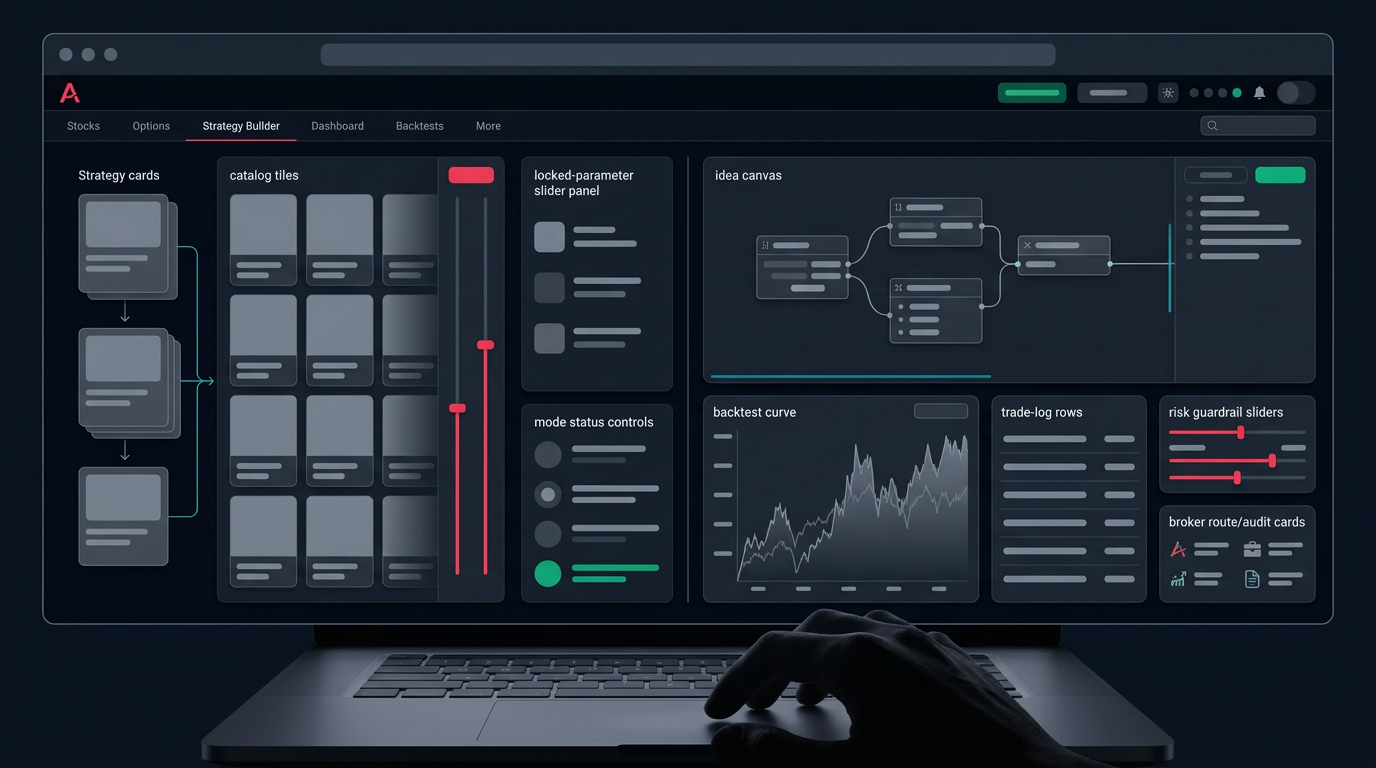
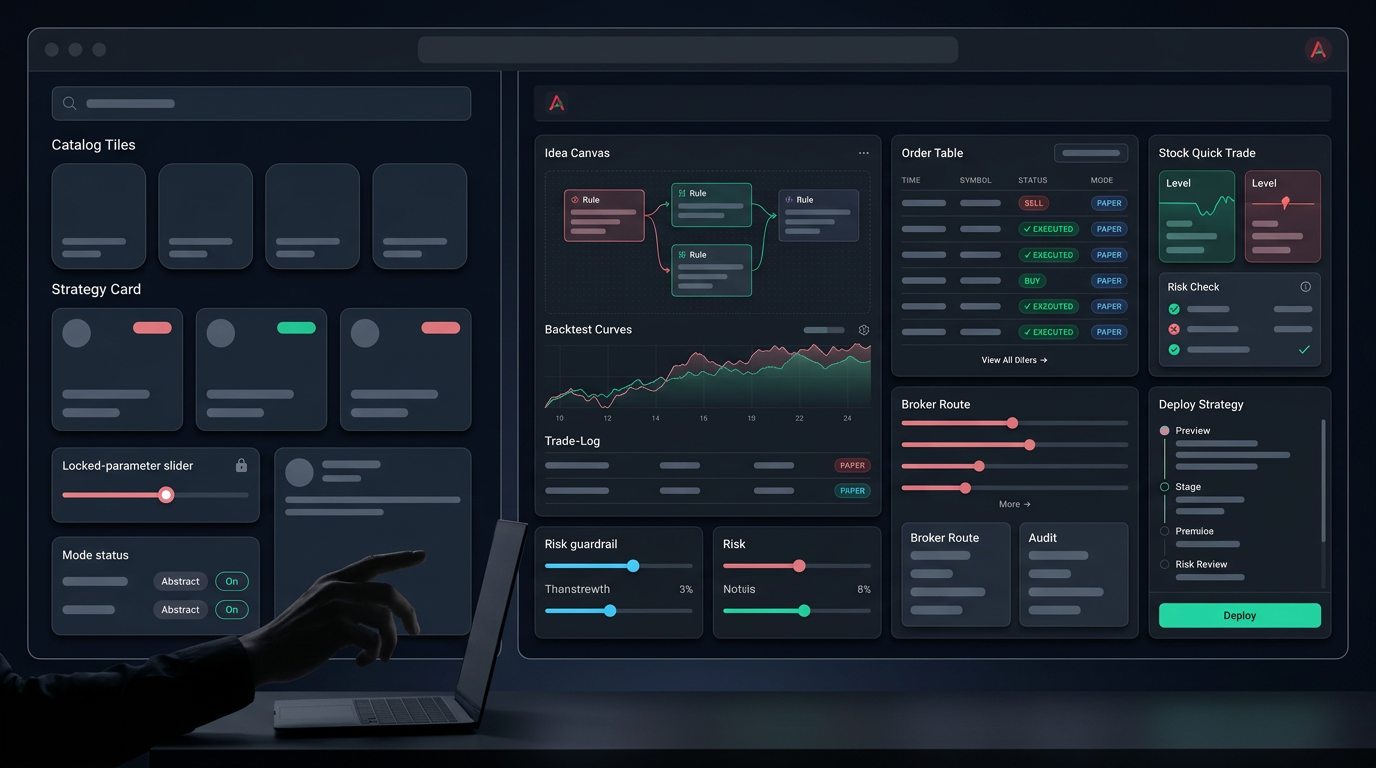
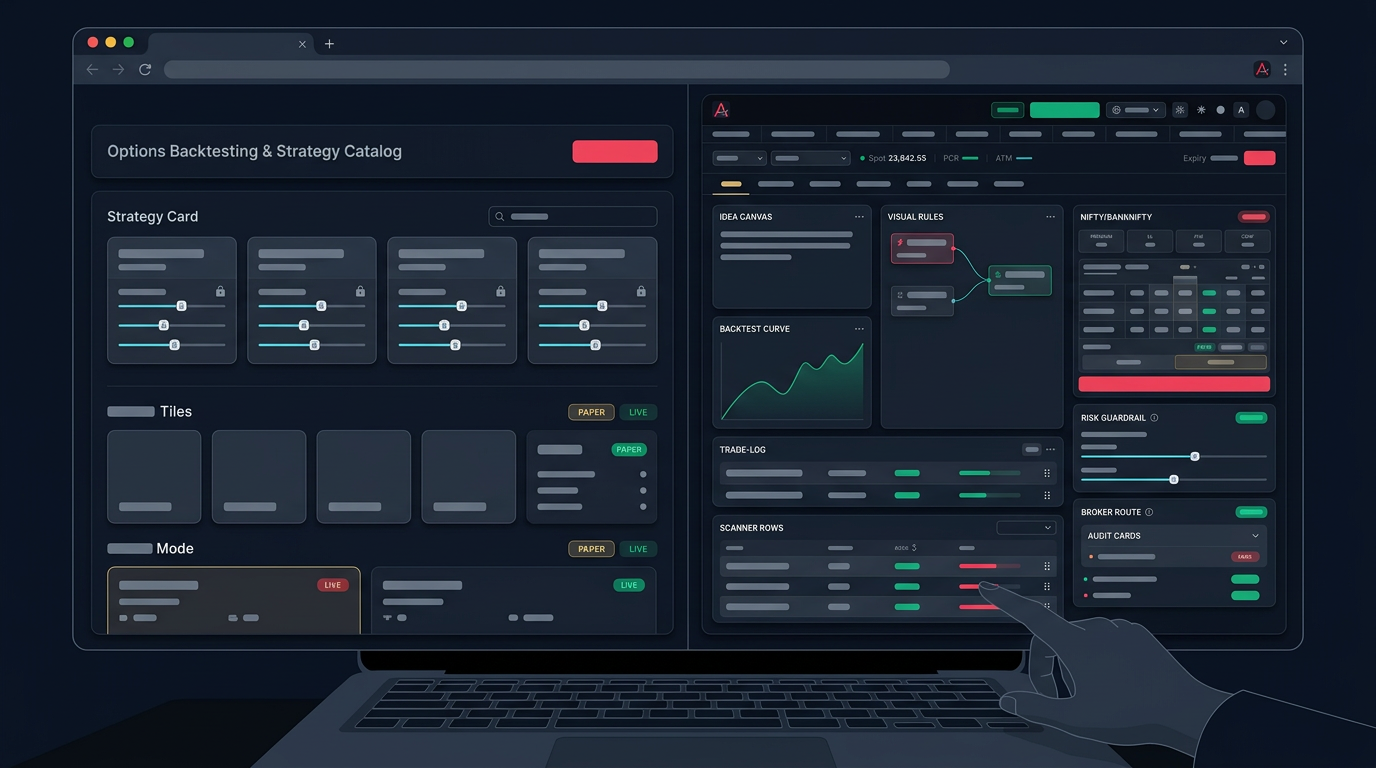
Anadi Algo is built for that second case — one workspace from scanner to backtest to risk-checked execution — while still respecting that the backtest itself has to be honest. If you want to see how the end-to-end version feels versus a backtest-only setup, you can request early access and test the full workflow on your own Nifty and Bank Nifty ideas before deciding.
Pick the tool that fits the station you are stuck at. If it is the backtest, tune the backtest. If it is everything after it, no backtester alone will fix that.