Every Sunday, a wave of "Nifty prediction for next week" posts hits your feed. Support here, resistance there, "stay cautious amid global cues." Some of it is useful context. Most of it gets read, nodded at, and forgotten by Monday's first candle.
The problem is not the content. It's that most traders consume an outlook instead of building one. A market outlook is only valuable when it changes what you do — your watchlist, your position size, your event-day rules. Otherwise it's just weekend reading.
This post lays out a weekly preparation routine you can run in 30–40 minutes before the week starts. It is a process around three things: trend, events, and risk. No predictions, no trade calls — just a repeatable checklist that turns market context into decisions.
Why a weekly routine beats reacting daily
Daily prep is necessary, but it's reactive. By the time you open the chart at 9:10 AM, the week's structure is already set — you're just responding to it candle by candle.
A weekly outlook does the opposite. It forces you to decide in advance what kind of week you're walking into, before any P&L pressure exists. When you've already written down "this is a range, fade extremes" or "this is a trending tape, only take continuation," you stop improvising mid-session.
The goal is not to forecast where Nifty closes on Friday. Nobody can do that reliably. The goal is to define the conditions you'll trade in and the conditions you'll sit out. That's preparation, not prediction.
Step 1: Map the trend and structure
Start with structure across timeframes, not a single chart. Pull up the weekly and daily for Nifty and Bank Nifty, then the broader picture using your scanner and index context.
Ask plain questions:
- Is the index in a clear trend, a range, or a transition? A weekly higher-high/higher-low sequence is a different regime from a sideways box.
- Where are the obvious levels the whole market is watching? Published outlooks are useful here. In late June 2026, for instance, Nifty was consolidating near 24,000 with resistance clustered around 24,300–24,500 and support near 23,700–23,800. You don't trade those numbers because someone posted them — you note them as zones where behaviour might change.
- Is participation broad or narrow? An index can drift up while most stocks go nowhere. The Indices sector heatmap helps you see whether one or two sectors are carrying the tape.
Write one sentence: "Nifty is range-bound between X and Y on the daily; banks leading, broader market mixed." That sentence is your trend frame for the week.
Step 2: List the week's events
Most "surprise" volatility isn't a surprise. It's on a calendar you didn't check.
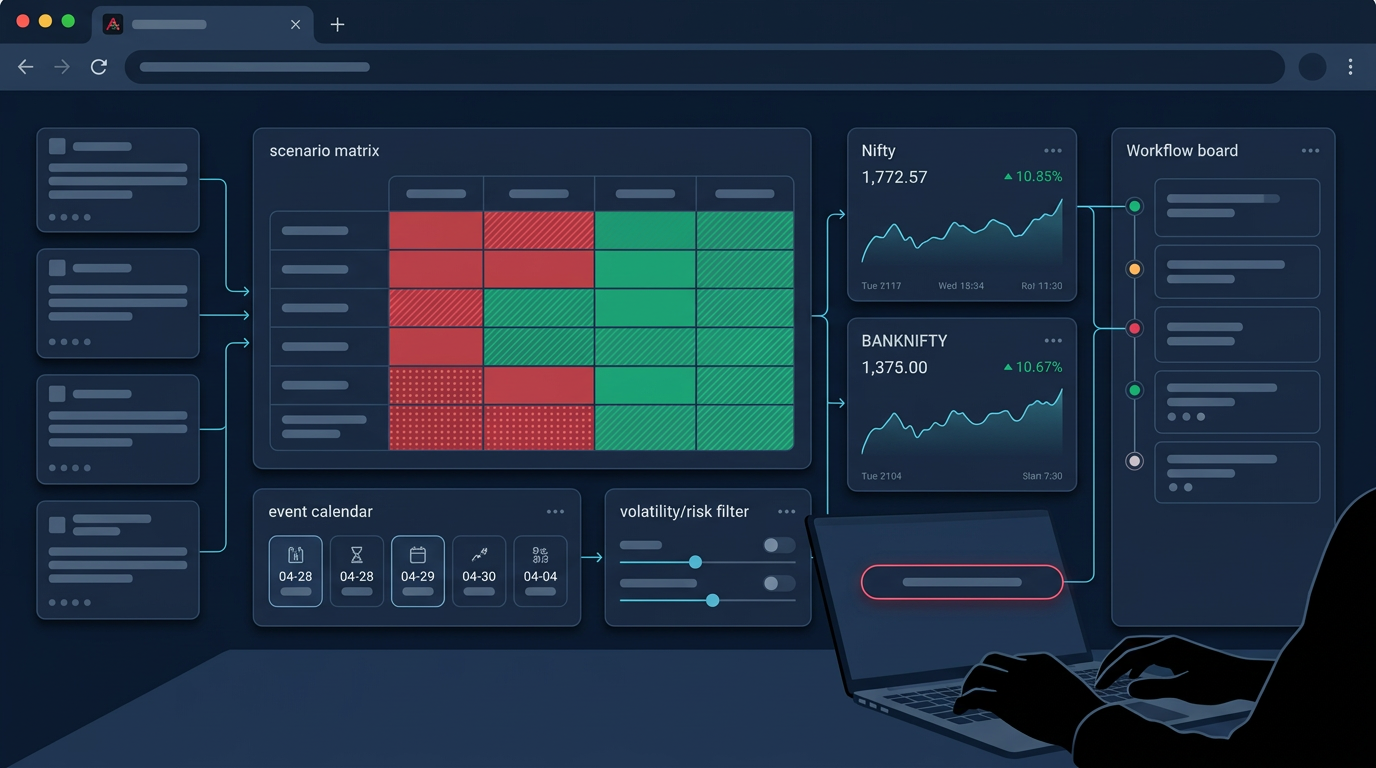
Spend five minutes listing every scheduled event that can reprice the market this week:
- RBI MPC decisions, inflation and GDP prints, and other domestic data.
- F&O expiry — weekly and, at month-end, monthly. Expiry days behave differently and deserve their own rules.
- Global cues: US Fed events, major data, and ongoing themes like tariff or geopolitical headlines that the current tape is sensitive to.
- Stock-specific triggers if you trade single names — results dates, ex-dividend, corporate actions.
For each event, write what you'll do, not what you predict. "MPC on Wednesday 10 AM — no fresh option-selling positions held into the announcement; reduce automation that morning." That's an actionable rule. "Market might be volatile" is not.
If you want a structured way to convert recurring news into rules instead of reacting each time, this is the same logic behind a weekly market outlook: context first, then rules.
Step 3: Set the risk frame for the week
This is the step most traders skip, and it's the one that actually protects the account.
Before the week starts, decide your risk envelope based on the regime you mapped in Step 1:
- Volatility check. Where is India VIX? Elevated VIX inflates option premiums and widens ranges — your stops and position sizes should adapt, not stay fixed from a calmer regime.
- Per-trade and weekly loss limits. Define the rupee or percentage loss that ends your trading day, and the weekly drawdown that makes you stand down entirely. Write the numbers down.
- Exposure caps. How many positions, how much margin, how much correlated risk (multiple bank trades are one bet, not three). A range-bound week usually warrants smaller size than a clean trend.
Conservative defaults matter more than clever ones. A common, sensible starting frame is risking only a small fraction of capital per trade so that a string of losses can't end your account in a single week. Your exact numbers should come from your own tested risk management rules, not from how confident a weekend post made you feel.
Step 4: Turn the outlook into a watchlist, not trade calls
The output of all this is not "buy X, target Y." It's a short, ranked watchlist of setups that fit the week you've described — and the conditions under which each one is valid.
For each candidate, note three things:
- The setup and trigger (what has to happen before you act).
- The invalidation (the level or condition that says you're wrong — your stop, decided before entry).
- The context that supports it: scanner signal, breadth, sector strength, and option-chain or OI confirmation where relevant. Treat OI as confirmation alongside price, never as a standalone prediction.
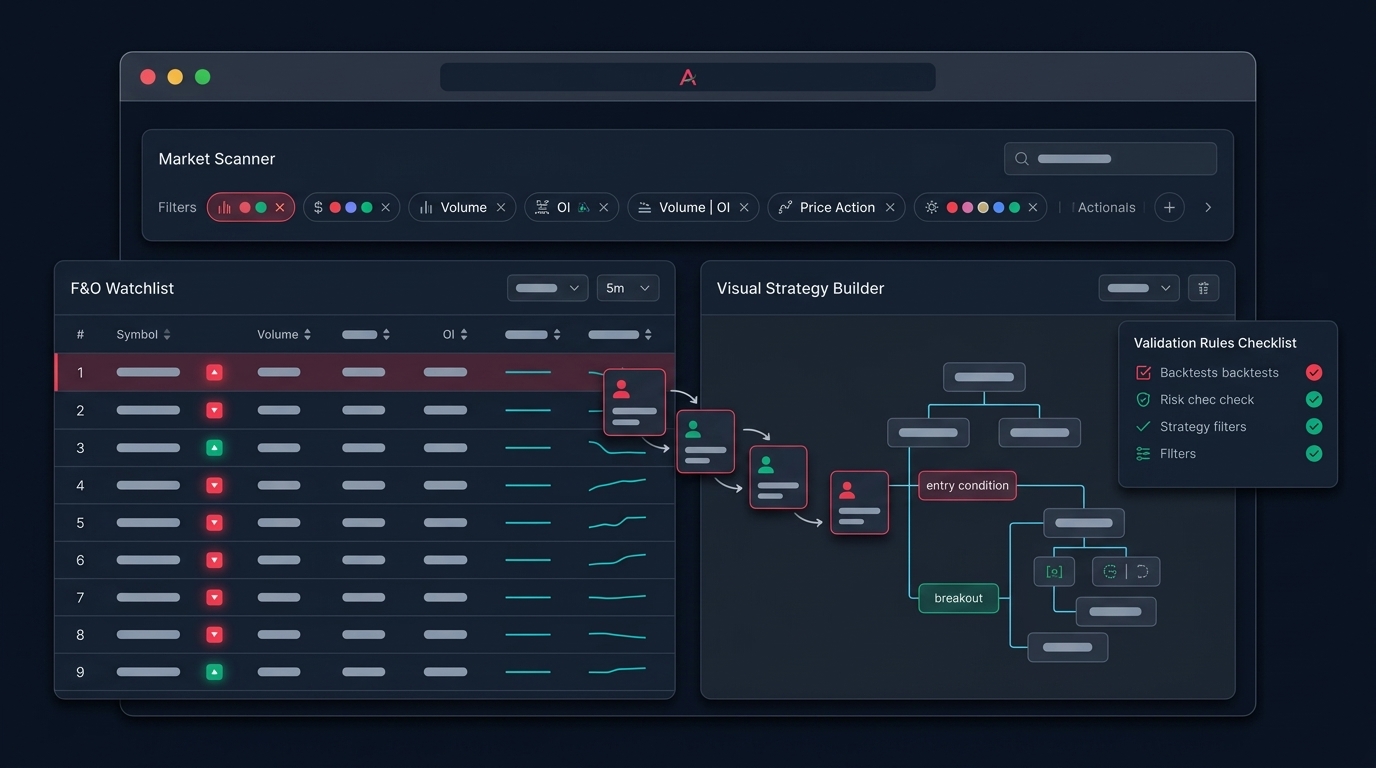
A decision-oriented watchlist that carries scanner badges, position context, and option-chain context next to each symbol keeps you from random intraday switching — you only act on names that already passed your weekend filter. Anything that wasn't on the list on Sunday needs a very good reason to be traded on Tuesday.
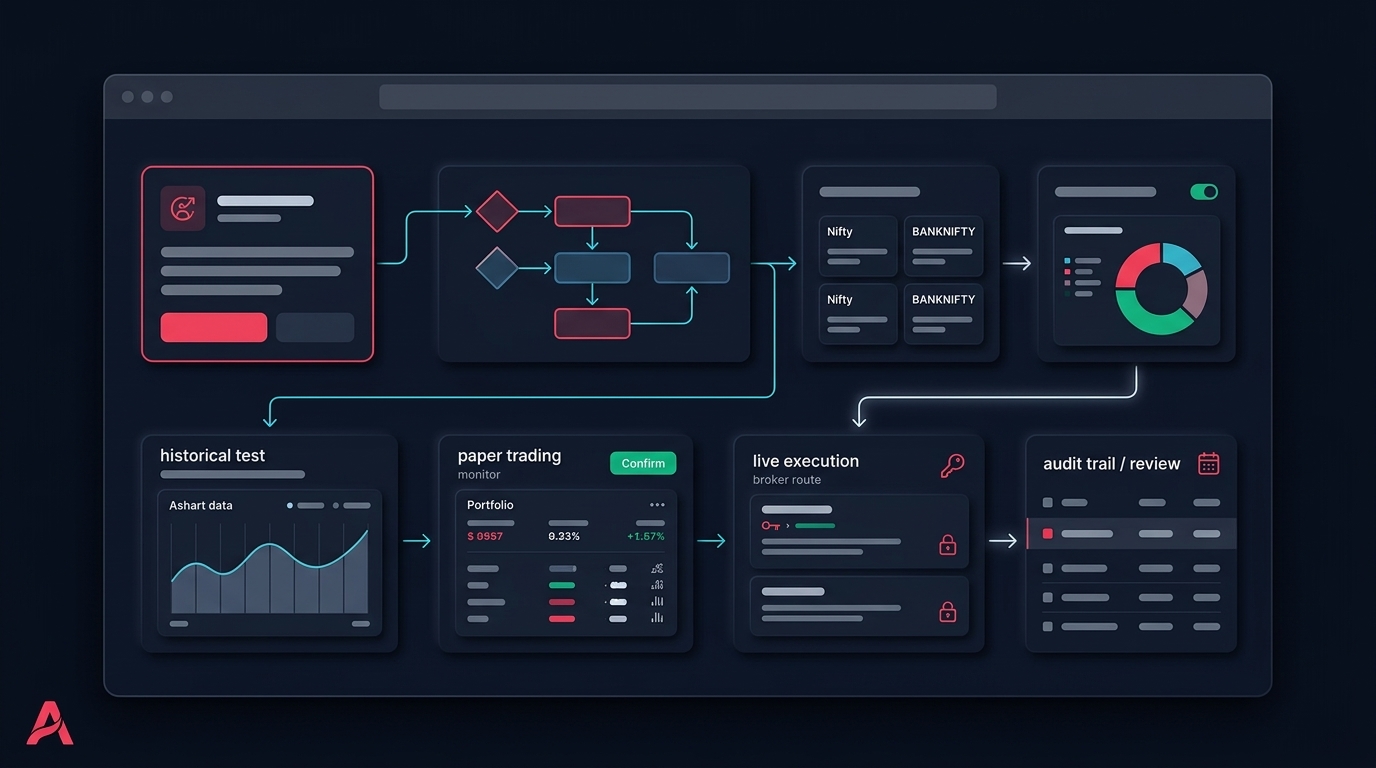
And if a setup looks attractive but you've never tested its logic, the honest answer is to send it to backtesting before it touches live capital — not to size up because the outlook felt convincing.
The weekly prep checklist
Run this every weekend before the market opens:
- Trend: Weekly and daily structure mapped for Nifty/Bank Nifty. Regime named: trend, range, or transition.
- Levels: Key support/resistance zones noted as behaviour-change areas, not targets.
- Breadth: Participation checked — broad or narrow, which sectors leading.
- Events: Every scheduled domestic and global event listed, with a rule for each.
- Expiry: Weekly/monthly expiry flagged with its own handling.
- Volatility: India VIX level noted; stops and sizing adapted to it.
- Risk limits: Per-trade, daily, and weekly loss limits written down. Exposure and correlation caps set.
- Watchlist: Ranked setups with trigger, invalidation, and supporting context. Untested ideas routed to backtest, not live.
Done consistently, this routine changes the question you ask on Monday morning. Instead of "what's the market going to do today?" you ask "does today fit the plan I already wrote?" That shift — from prediction to preparation — is the entire point.
If you want to build this kind of context-first preparation into your own algo workflow, you can get early access and try the outlook, scanner, and risk tools together. Just remember the rule that makes any outlook useful: prepare with it, don't chase it.