It is Wednesday, August 19, 2026. If you opened the NSE option chain for Nifty this morning, it did not look like it did on Monday. Nifty's weekly and monthly expiries currently land on Tuesday, which means yesterday's near-week series settled and died. Today's chain is showing a fresh series: thinner open interest, a jumpy put-call ratio, and "support and resistance" strikes that nobody has actually committed to yet.
For a manual trader, that is a curiosity. For an algo trader whose signals consume chain data — OI walls, PCR thresholds, IV filters — it is a data-quality event. The chain did not change because the market changed. It changed because the series changed. A system that cannot tell the difference will act on noise.
This post looks at what the official NSE option chain gives you, why the day after expiry is the easiest day to misread it, and how to turn that into concrete risk filters rather than predictions.
What the official NSE option chain page actually is
The chain at nseindia.com/option-chain is the reference view for equity derivatives in India: pick a symbol, pick an expiry or a strike, and you get calls on the left, puts on the right, with OI, change in OI, IV, volume, and LTP per strike. There is a streaming toggle, a CSV download, and an indicative close during the closing window.
Three things follow from that description, and all three matter for automation.
First, it is a reference snapshot, not an execution feed. The page is built for humans verifying the market, not for systems timing entries. If your workflow involves scraping it for live signals, you have built a strategy on top of a page that was never designed to feed one — refresh cadence, session handling, and format can change without notice.
Second, the CSV download is genuinely useful for process work. Pulling the chain at fixed times — say 9:30, 12:30, and 15:15 — and storing it gives you a record of how OI actually built through a series. That record is what lets you later check whether your entry-time assumptions in a backtest match how the chain really looked at entry time.
Third, your live system should consume chain data through a proper broker API or data feed, and the NSE page becomes your cross-check — the place you go when a broker's OI number looks odd. One source feeds decisions; the official page audits it. Mixing sources inside one strategy, where the backtest used one feed and live uses another, is how small numeric drift becomes unexplained live losses.
The morning after expiry: why the chain resets
Understanding today's chain requires understanding what happened yesterday. When the weekly series expired on Tuesday, every open position in it settled. The contracts your filters were reading on Monday no longer exist.
Today's near-week expiry was, until yesterday, a far series. Far series carry much less open interest, so the new front week starts life thin. That has direct consequences for every popular chain-derived signal:
- PCR is unstable early in a series. Put-call ratio is a fraction, and when the OI base underneath it is small, modest trades swing it hard. A PCR reading that would be meaningful on day four of a series can be pure noise on day one.
- OI "walls" have not been built yet. The highest-call-OI and highest-put-OI strikes are read as the range option writers are defending. On the first day of a series, writers have barely started defending anything. The walls form over the next few sessions.
- Max pain is close to meaningless early. It is computed from the same thin OI and moves around as positioning builds.
- Fresh OI beats carried OI. As chain-reading guides point out, a strike adding OI intraday tells you more than one carrying stale positions from days ago. On day one of a series, almost everything you see build is fresh — which sounds good, until you realise the totals are still too small to lean on.
The practical translation for an algo: put a floor under your chain signals. For example, do not let a PCR- or OI-imbalance-based condition fire unless total OI in the series has crossed a minimum threshold you calibrated from past first-days, or route structure reads through the monthly series until the weekly has matured. The exact threshold matters less than having one. A system with no floor treats a 10:05 reading on series day one exactly like a 10:05 reading on expiry morning, and those are not the same market.
Nifty and Bank Nifty are in opposite chain states this week
Here is the part that catches people who treat "the option chain" as one thing.
Nifty today is at the very start of a weekly series. Its chain will spend the next few sessions building OI toward next Tuesday. Early readings are thin; structure emerges gradually.
Bank Nifty runs on a monthly contract cycle, so its August series has been building positioning for weeks. Its chain state is the opposite: mature OI, established walls, and — as its expiry approaches — rising gamma sensitivity, where small index moves cause fast option repricing near the money.
Same day, same screen, two indices whose chains should be read with different rules. If your system applies one set of chain filters to both underlyings, it is misreading at least one of them today.
This is also the week to fix a quieter bug: hardcoded expiry assumptions. India's expiry calendar has moved before — traders who automated years ago remember Thursday muscle memory — and any system that assumes a weekday instead of reading expiry dates from the instrument master or the chain's own expiry dropdown carries a silent failure waiting for the next change. Read the calendar from data, every day. Never from memory.
Five checks before your algo trusts chain data
Whether your chain data comes from a broker feed, a data vendor, or scheduled NSE snapshots, run these checks before any signal built on it is allowed to act.
1. Which expiry is the system actually reading?
After settlement, default expiry selections roll forward. Tools, caches, and saved queries can lag. A scanner condition or strategy leg still pointed at the expired series produces rejections at best and wrong-strike orders at worst. Verify the expiry your system resolved today matches the expiry your strategy intends to trade.
2. Is there enough OI and volume behind the number?
Every derived metric — PCR, OI difference, max pain, support/resistance strikes — inherits the quality of the OI underneath it. Set explicit minimums. If the series or strike does not clear them, the signal abstains rather than guesses.
3. Are you separating fresh OI from carried OI?
Change-in-OI is the column that shows where positioning is happening today. Total OI shows history. A strategy that reacts to intraday positioning should read the change view, not the totals, and a strategy reading totals should know it is reading history.
4. Is IV at your strike sensible against its neighbours?
An option priced at inflated IV relative to adjacent strikes has to overcome both direction and volatility decay. Before a buy leg goes out, compare strike IV to its neighbours and to where IV has recently sat for that series. Elevated IV is not a reason to skip a trade — it is a number your position sizing and strategy selection should see before the order does.
5. Is the LTP fresh, and does the spread agree with it?
Illiquid strikes show stale last-traded prices. Payoff previews and margin math built on a stale LTP look fine and fill badly. Sanity-check LTP against the bid-ask before any basket estimate is treated as real.
Turning chain context into machine-readable risk states
None of the above tells you where Nifty or Bank Nifty goes this week. Nobody knows that, and the chain does not either — it shows positioning, not the future. What the chain supports is defining risk states your system can check mechanically:
- Series age: if the front series is under two sessions old, structure-based signals are disabled or sized down.
- IV regime: if IV sits well above its recent range for the series, option-buying strategies and option-selling strategies face different risks, and your active strategy set should reflect which regime you are in.
- Event proximity: if a known event — policy announcement, major global data, monthly expiry session — is inside your holding window, the system flattens, hedges, or stands aside by rule, decided before the day starts.
- Liquidity state: strikes failing OI or spread floors are excluded from selection, whatever the signal says.
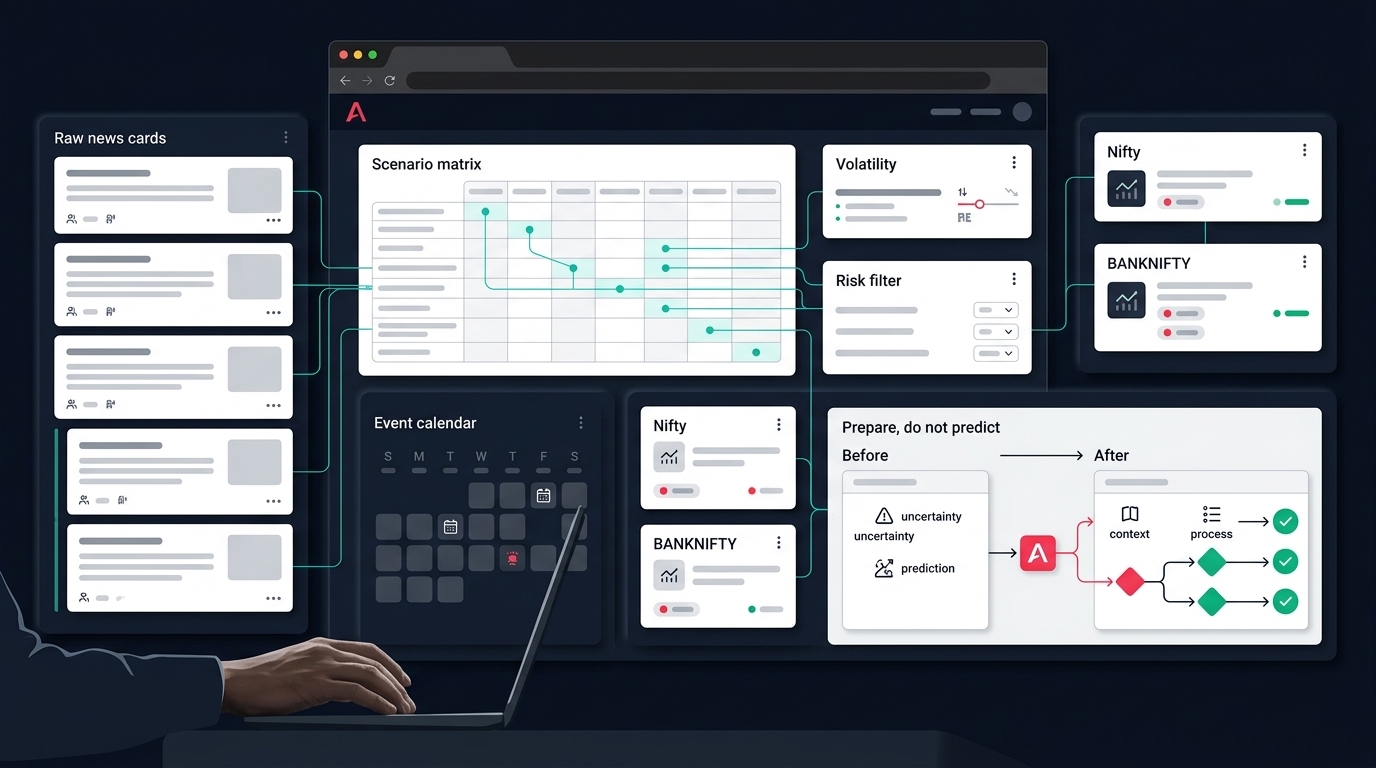
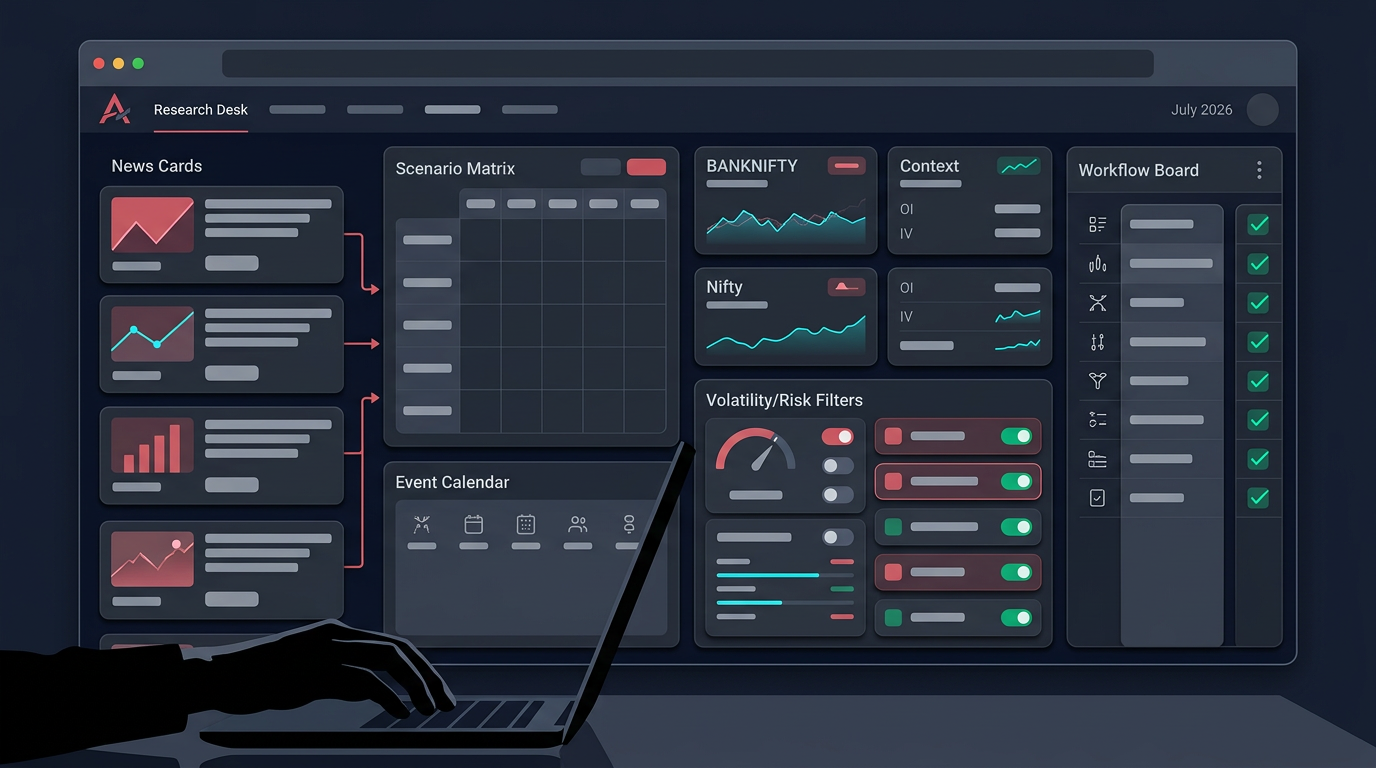
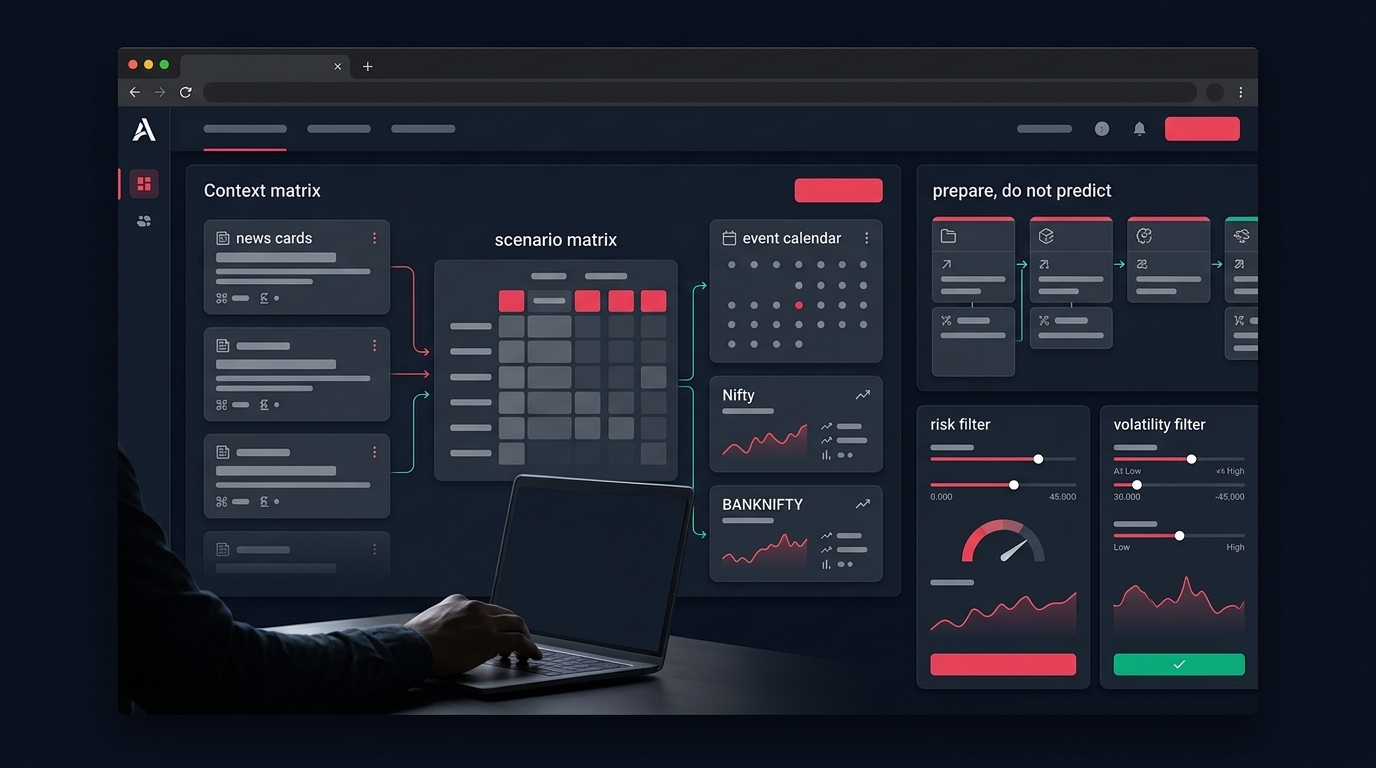
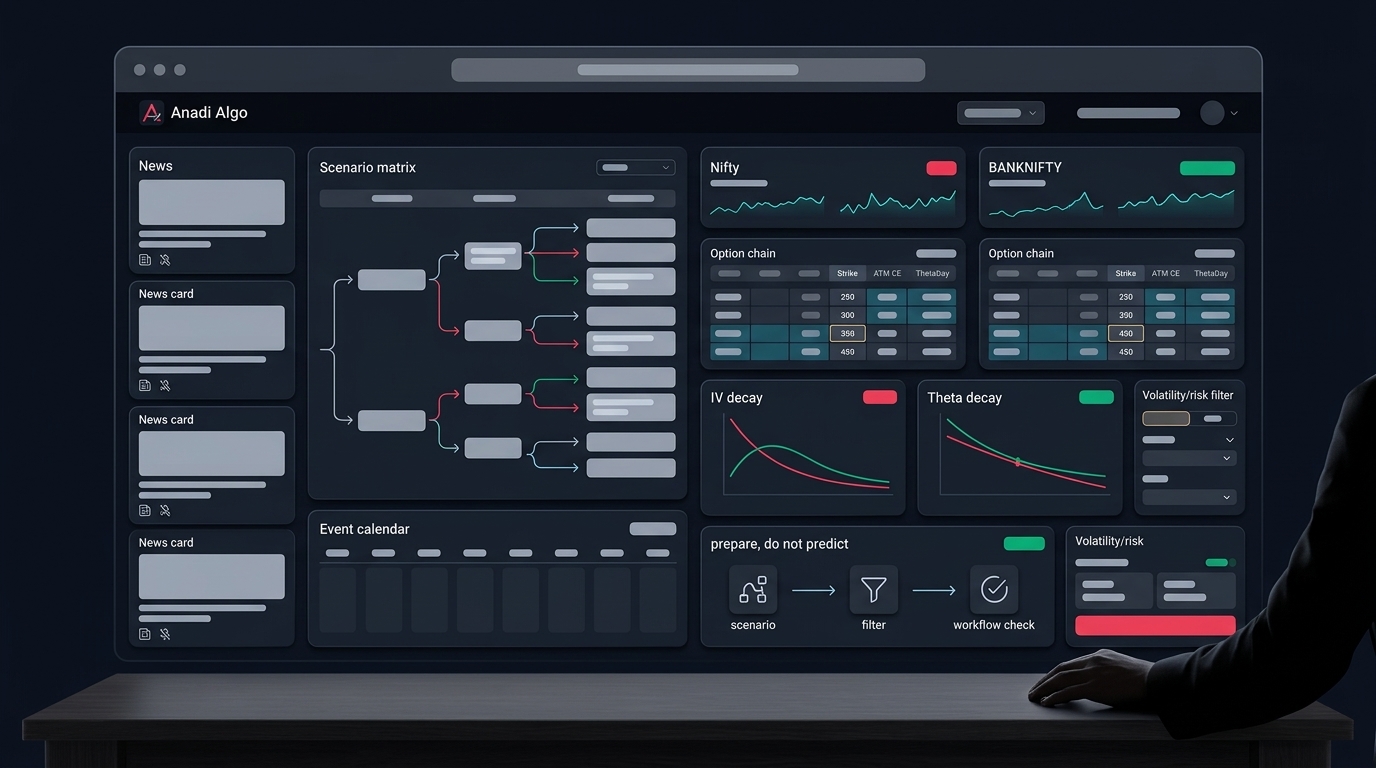
This is also where workflow design matters more than any single reading. A signal from a scanner should not go straight to an order; it should pass through chain validation first — the expiry, OI, IV, and spread checks above. In Anadi's options workspace, that sequence is deliberate: a candidate from the scanner or Action Center (which already tags signal freshness and blocked reasons like chase distance) leads into the option chain view, then into a strategy shortlist filtered by your market view, risk appetite, and capital, then into a basket preview with a margin estimate — before anything executes. The order of those steps is the risk control.
And before any expiry-week logic goes live, test it against history. Expiry-week behaviour — thin early-series OI, end-of-series gamma, IV crush after events — is exactly the behaviour a casual backtest glosses over. Run it through options backtesting with expiry weeks examined separately from normal weeks, and if Bank Nifty is your instrument, build and test those rules in a BANKNIFTY strategy builder rather than assuming Nifty-calibrated thresholds transfer. They usually don't — different OI cycle, different volatility character.
Process for the rest of this week
A reasonable week for a systematic options trader from here looks like process, not prediction:
- Today and tomorrow: let the fresh Nifty weekly series build. Log chain snapshots. Keep structure-dependent signals on reduced size or off until OI floors clear.
- Midweek: review where fresh OI has concentrated versus your strategy's assumptions. Check the weekly market outlook style questions — what events sit inside your holding window, and which sessions are you choosing to skip?
- Into the Bank Nifty series close: confirm remaining sessions from the expiry dropdown, not memory. Tighten stops or reduce size on rules you defined in advance, because gamma near expiry punishes improvisation.
- After next Tuesday: the cycle repeats. The day-after-expiry checks in this post apply again.
If you want this kind of chain-validation and risk-state workflow built into how you trade — scanner to chain to strategy to margin check, with risk management rules enforced before execution rather than remembered after — you can request early access to Anadi Algo and test it on paper first.
The takeaway checklist
Before your system acts on option chain data this week:
- Confirm the expiry it resolved is the expiry you intend to trade.
- Treat day-one-of-series chain metrics as provisional; enforce OI and volume floors.
- Read Nifty (fresh weekly series) and Bank Nifty (maturing monthly series) with separate rules.
- Prefer change-in-OI for intraday positioning; treat total OI as history.
- Compare strike IV to neighbours and recent context before buying premium.
- Verify LTP against bid-ask before trusting payoff or margin math.
- Feed live decisions from one consistent data source; use the official NSE chain as the audit, not the trigger.
- Encode event avoidance and series-age rules before the session, not during it.
The option chain is the best public record of positioning in Indian derivatives. It is not a forecast. Algos that treat it as structured, imperfect data — and validate it before acting — get the benefit. Algos that treat it as a signal machine inherit its noise.