A stop-loss is easy to talk about and hard to automate well. In manual trading you can "feel" when to exit. An algo cannot feel anything — it only does what your rule says, tick by tick. So the type of stop you code becomes the actual risk personality of your system.
Most retail traders in India pick one stop type, usually a fixed percentage, and reuse it everywhere. That is where systems quietly leak money. A stop that works for an intraday NIFTY momentum trade is wrong for a short straddle, and a stop that suits BANKNIFTY options is often too tight for a slow swing trade on a cash stock.
Let us compare the five stop types that matter for automated systems, and where each one fits.
Why stop-loss type matters more in an algo
In discretionary trading, a bad stop can be rescued by manual judgement. In an algo, the stop is the judgement. It fires on data, not on your mood.
Three things change when you automate a stop:
- It executes without hesitation, which is good, but it also executes on bad ticks, spread spikes, and thin liquidity — which is not always good.
- It repeats the same logic across every trade, so a subtle flaw compounds over hundreds of trades.
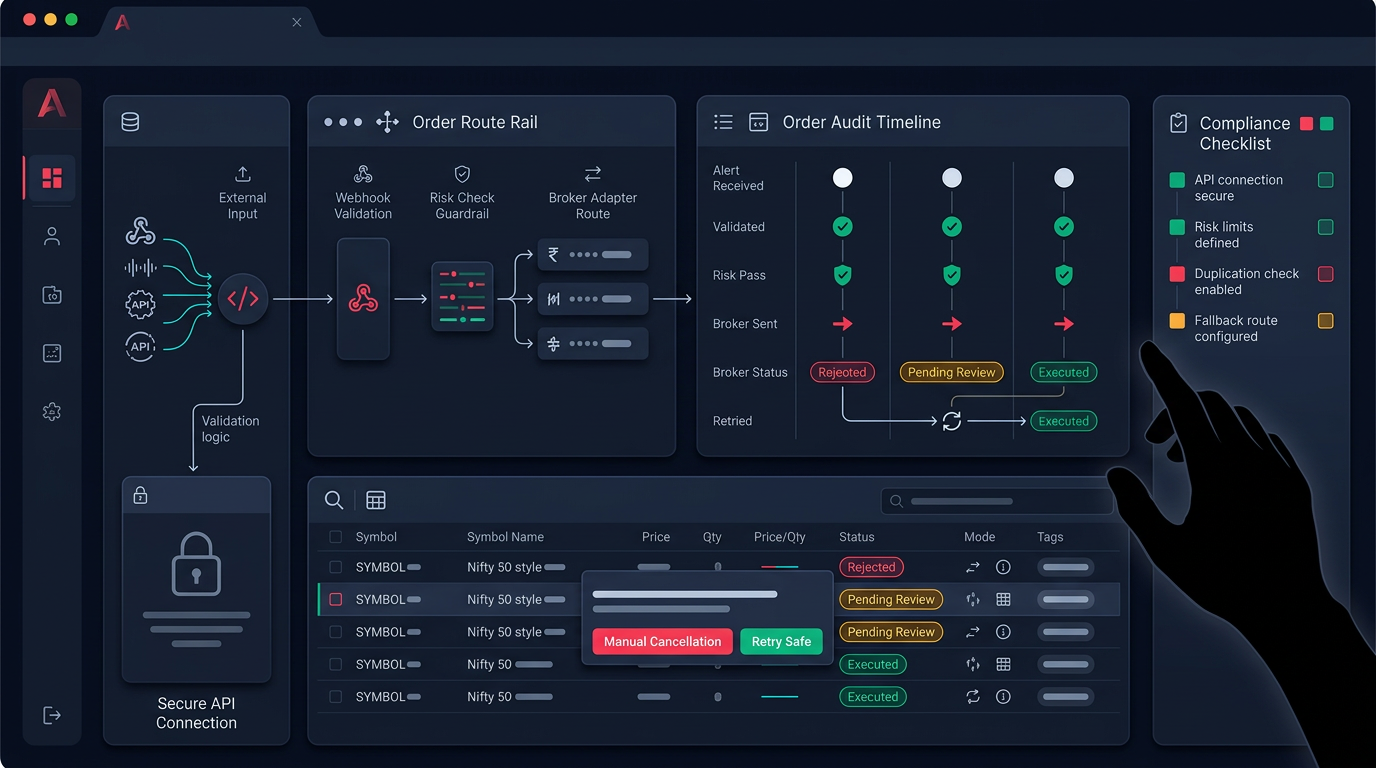
- It interacts with slippage and order rejection. A stop level in your logic is not the same as your fill.
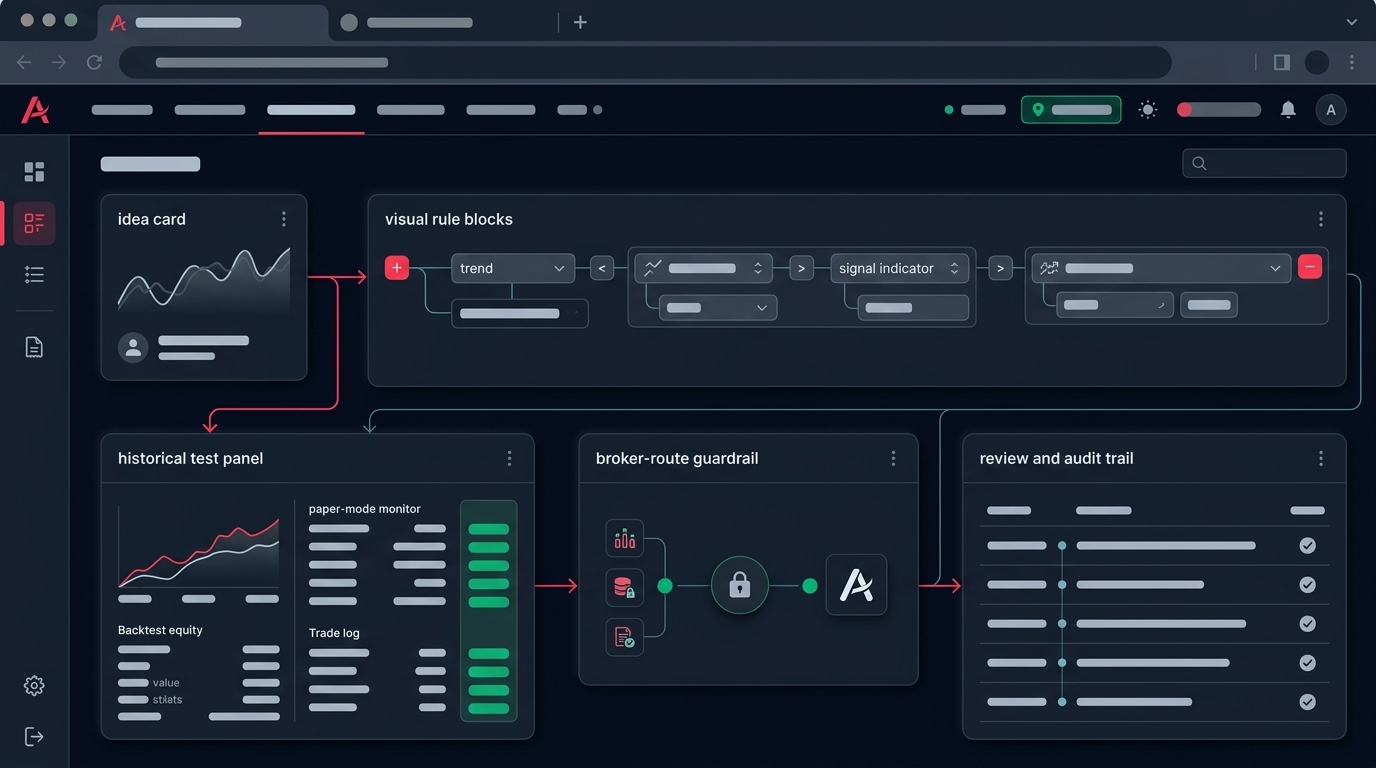
That is why stop design belongs inside your strategy builder and your backtesting work, not as an afterthought bolted on before you go live.
Fixed stops: simple, predictable, often too rigid
A fixed stop exits at a set distance from entry — a percentage, a points value, or a rupee amount.
Example: you buy a stock at ₹500 and set a fixed stop at ₹475, risking ₹25 or 5% per share. The percentage rule is the most widely used stop approach precisely because it is easy to reason about and easy to size around.
Where fixed stops fit:
- Clean, rule-based intraday systems where you want identical risk on every trade.
- Position sizing that depends on a known risk per unit, so your capital math stays clean.
The weakness: a fixed stop ignores volatility. The same 5% stop is loose on a calm day and gets hit constantly on a high-VIX day. For options especially, a fixed premium-based stop can be wiped out by a normal IV swing that has nothing to do with your direction being wrong.
Trailing stops: lock in profit, but mind the noise
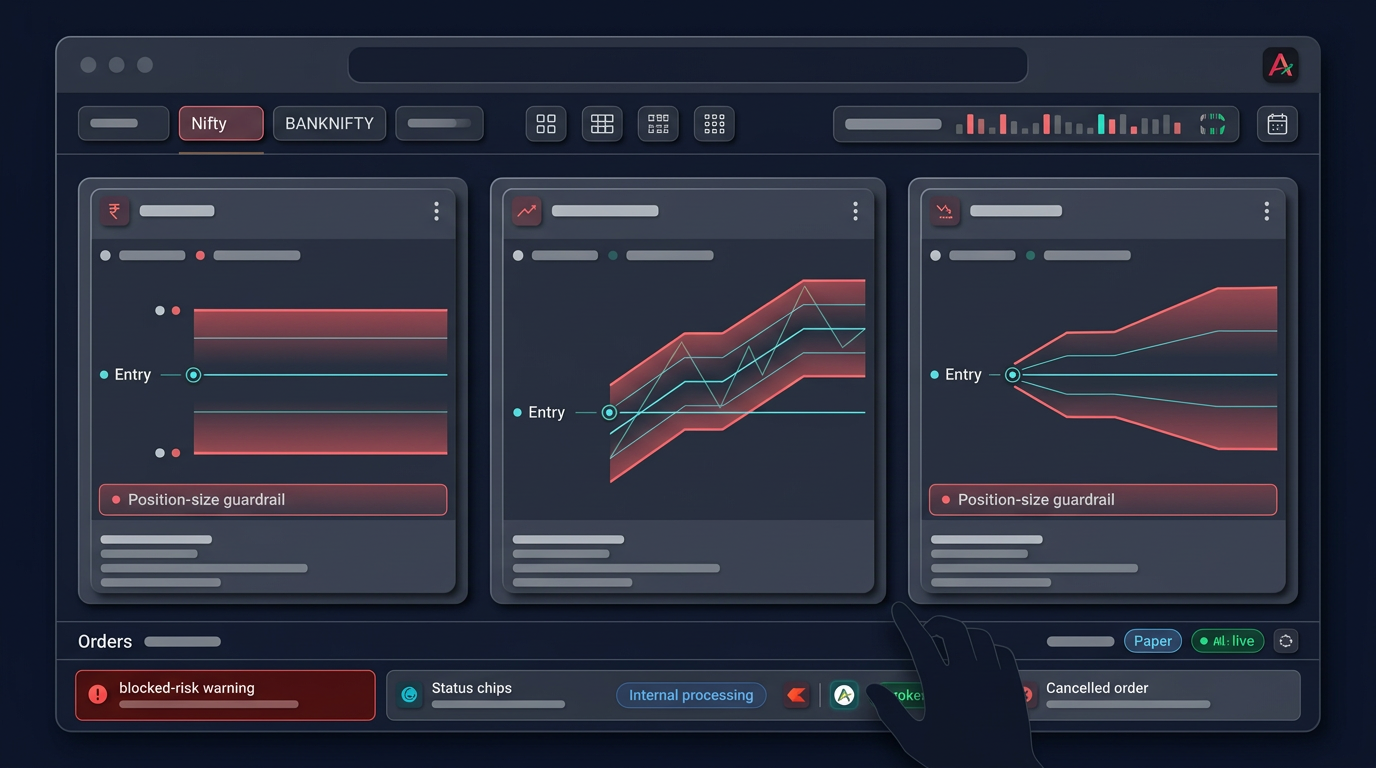
A trailing stop moves in your favour and never against you. For a long, the stop sits a fixed distance below price and ratchets up as price rises; it does not move down. This is why trailing stops are also called profit-protecting stops — they let winners run until the market actually turns.
Example: long at ₹500 with a 20-point trail. Price runs to ₹560, so the stop has trailed up to ₹540. If price now reverses, you exit at ₹540 instead of your original ₹480 stop.
Where trailing stops fit:
- Trend and momentum systems where the edge is in catching the extended move.
- Any system where giving back open profit is the main failure mode.
The trap in automation: too tight a trail exits you on normal noise and turns a good trend trade into a scratch. Too wide a trail gives back most of the move. This is a parameter you must tune on real data, not guess — walk-forward testing matters here more than a single backtest number.
Volatility-based stops: let the market set the distance
A volatility stop, usually built on ATR (Average True Range), sets the stop distance from how much the instrument is actually moving. Wider stop in a volatile regime, tighter stop in a calm one.
Example logic: stop distance equals 2× the current ATR. On a quiet NIFTY day ATR might be small, so the stop sits close. On an event day — RBI policy, budget, expiry — ATR expands and the stop widens automatically, so you are not knocked out by normal swings.
Where volatility stops fit:
- Systems traded across changing regimes, where a fixed distance is wrong half the time.
- Instruments like BANKNIFTY that shift volatility fast.
The cost is a wider stop in volatile conditions, which means larger rupee risk per trade unless you shrink position size to match. Volatility stops and position sizing have to be designed together, never separately.
Time-based stops: exit on the clock, not just price
A time stop closes a position after a defined period, regardless of price. The trade thesis had a shelf life; if it has not worked by then, you are out.
Examples:
- Square off every intraday position by 3:15 PM, no exceptions.
- Exit an options structure if it has not moved in your favour within a set number of minutes or by a certain time before expiry.
Where time stops fit:
- Intraday systems that must be flat before close to avoid overnight and gap risk.
- Theta-sensitive option trades where sitting too long changes the whole risk profile.
Time stops are underused by retail traders and are one of the cheapest guardrails to add. They cost nothing and quietly remove your worst "hope trades."
Basket and portfolio stops: risk at the account level
The stops above manage one position. A basket stop manages the whole set at once. This matters when your algo runs several correlated legs or several strategies together, because individual stops can all be "fine" while the account bleeds.
Two forms worth having:
- A basket stop that exits a multi-leg options structure as one unit when combined loss hits a limit, rather than legging out unevenly.
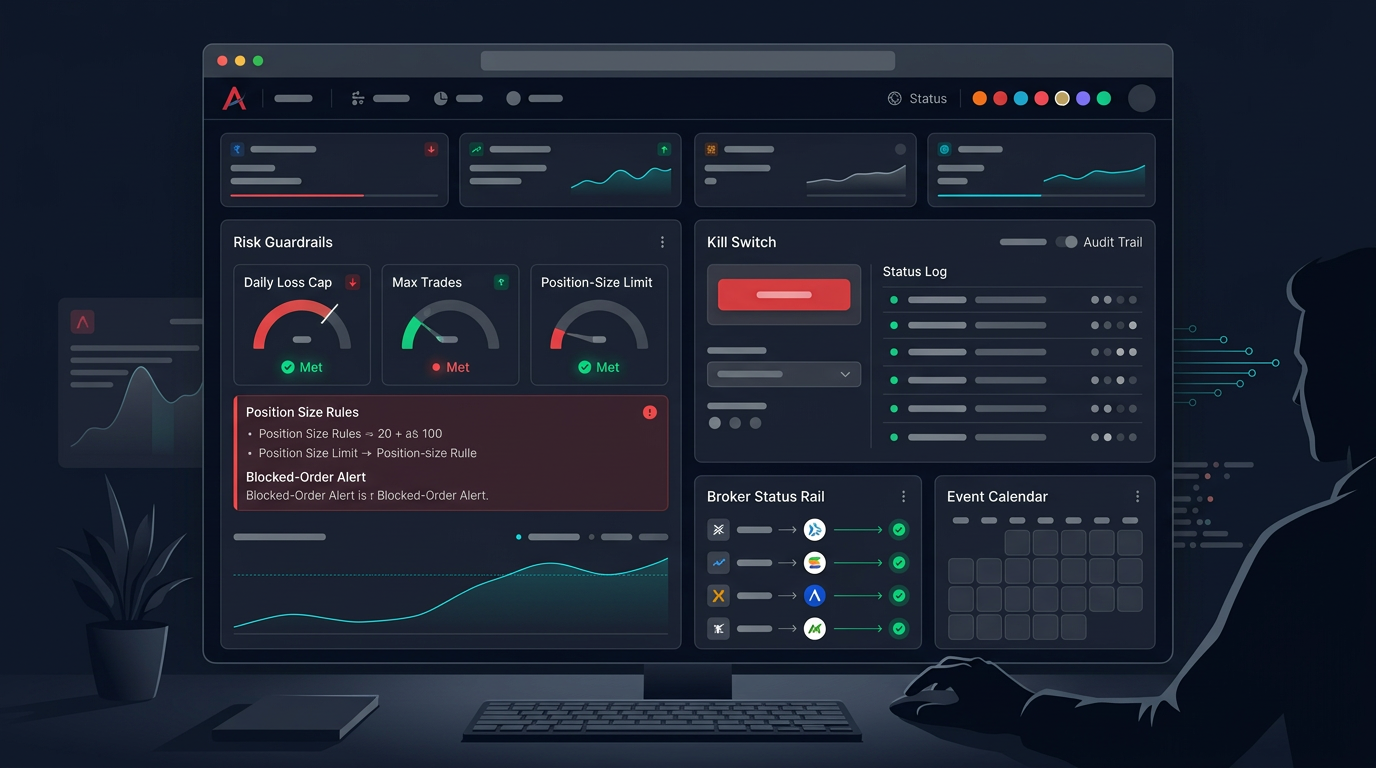
- A daily loss limit and kill-switch that halts all new orders once account drawdown crosses a set figure for the day.
Where basket stops fit:
- Multi-leg options (straddles, iron condors) where leg-by-leg stops distort the hedge.
- Any account running more than one strategy, where correlation can stack losses.
Portfolio-level control is the layer most retail systems skip, and it is the one that prevents a bad day from becoming a bad month. Anadi treats stop-loss, position sizing, kill-switch, and daily limits as risk management settings to configure before you scale automation — not knobs to add after a loss.
Which stop fits which system
There is no single best stop. There is a stop that matches the trade's edge and holding period.
- Fixed: simple intraday rules where equal risk per trade matters most.
- Trailing: trend and momentum systems where giving back profit is the risk.
- Volatility (ATR): systems traded across changing regimes and volatile instruments.
- Time: intraday and theta-sensitive trades that must not overstay.
- Basket/portfolio: multi-leg options and multi-strategy accounts.
Most robust systems combine them — for example, an ATR stop for the individual trade, a time stop for the session, and a daily loss limit over the whole account.
A practical checklist before you go live
- Does each strategy have a stop type that matches its holding period and edge?
- Have you tested the stop on volatile and calm data, not just a friendly period?
- Did you account for slippage and rejection, so your fill can differ from your level?
- Is there a portfolio-level daily loss limit and kill-switch above the individual stops?
- Are position sizing and stop distance designed together, so wider stops mean smaller size?
- Can you paper-trade the full stop logic before risking real capital?
Test your stop logic on real conditions with paper trading first, and only scale automation once the guardrails hold. If you want to build and stress-test these stop rules on Indian market data, you can request early access and start with a paper-first workflow.
The takeaway: the stop-loss type is not a detail you add at the end. It is the risk design of the system itself. Pick it on purpose, match it to the trade, and always keep an account-level limit above every single-trade stop.